+
Perinjanam to Launch India’s First Panchayat-Level BESS Project
ECONOMY & POLICY

Perinjanam to Launch India’s First Panchayat-Level BESS Project

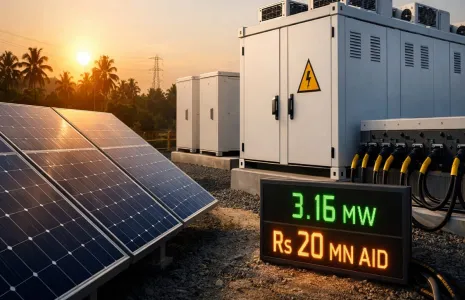
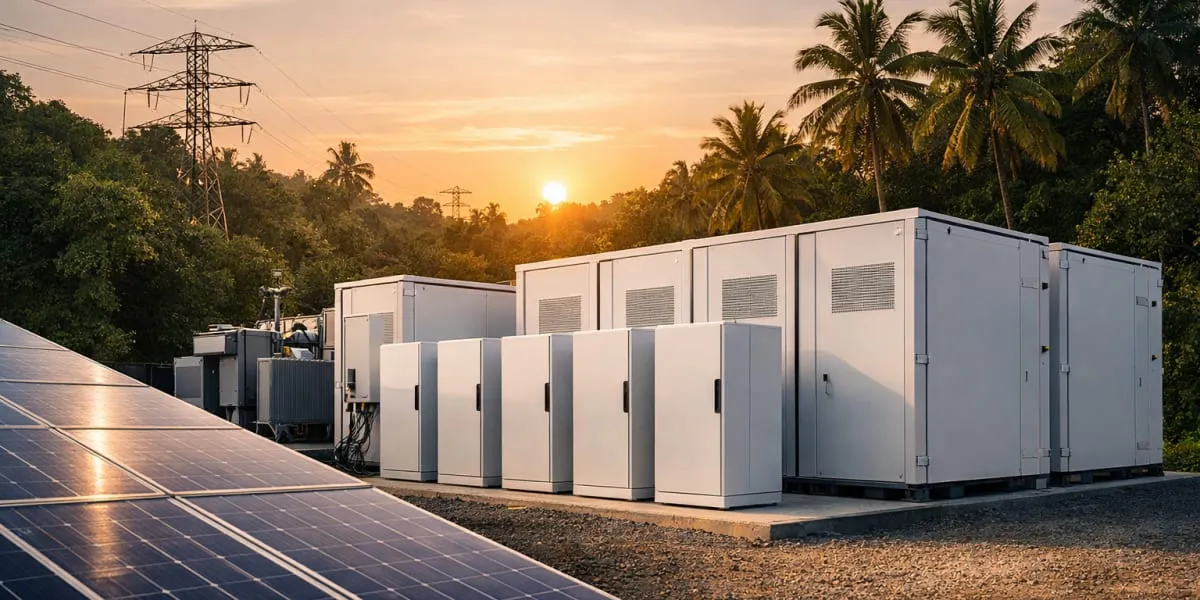
Perinjanam gram panchayat in Kerala is preparing to implement India’s first panchayat-level Battery Energy Storage System (BESS) with a government sanction of Rs20 mn for the pilot project. The system will store three point one six megawatt (MW) of solar energy generated every month and supply it to the Electricity Department during peak night hours. The initiative is described as a pioneering model for decentralised renewable energy at local government level.

Under the BESS model, solar power produced during the day will be stored in a large lithium battery system and dispatched during hours of high demand when tariffs rise. The Electricity Department currently pays an average of Rs three point zero four per unit for direct solar supply while tariffs increase to Rs seven per unit during peak demand. The project is expected to increase revenue for the panchayat and participating households by enabling sales at higher tariffs.

Perinjanam’s solar transition began in 2018 under the leadership of K K Sachith and has expanded through rooftop installations on houses and public buildings. The programme now includes 860 households and more than 100 institutions that collectively generate three point one six MW every month. Community uptake was supported by local financing and administrative coordination.

The Perinjanam Cooperative Bank provided collateral free loans to participants, and all beneficiaries repaid their loans within four years and began earning income from surplus generation. A nine point five kilowatt (kW) installation at the Perinjanam Government School now powers around 800 streetlights and has reduced monthly street lighting expenditure from Rs90,000 to Rs32,000. The pilot BESS is expected to consolidate the panchayat’s role as a national exemplar of decentralised solar adoption and community led energy finance.

Perinjanam gram panchayat in Kerala is preparing to implement India’s first panchayat-level Battery Energy Storage System (BESS) with a government sanction of Rs20 mn for the pilot project. The system will store three point one six megawatt (MW) of solar energy generated every month and supply it to the Electricity Department during peak night hours. The initiative is described as a pioneering model for decentralised renewable energy at local government level. Under the BESS model, solar power produced during the day will be stored in a large lithium battery system and dispatched during hours of high demand when tariffs rise. The Electricity Department currently pays an average of Rs three point zero four per unit for direct solar supply while tariffs increase to Rs seven per unit during peak demand. The project is expected to increase revenue for the panchayat and participating households by enabling sales at higher tariffs. Perinjanam’s solar transition began in 2018 under the leadership of K K Sachith and has expanded through rooftop installations on houses and public buildings. The programme now includes 860 households and more than 100 institutions that collectively generate three point one six MW every month. Community uptake was supported by local financing and administrative coordination. The Perinjanam Cooperative Bank provided collateral free loans to participants, and all beneficiaries repaid their loans within four years and began earning income from surplus generation. A nine point five kilowatt (kW) installation at the Perinjanam Government School now powers around 800 streetlights and has reduced monthly street lighting expenditure from Rs90,000 to Rs32,000. The pilot BESS is expected to consolidate the panchayat’s role as a national exemplar of decentralised solar adoption and community led energy finance.

Next Story
Resources

Deepak Halder Appointed CEO Of Sarvottam India

Sarvottam India has appointed Deepak Halder as its Chief Executive Officer. With over 23 years of professional experience, including nearly two decades in the real estate sector, Halder brings extensive leadership and strategic expertise to the organisation. Halder began his career in real estate in 2007 and has held senior leadership roles with developers such as Bestech Group, Paras Buildtech, Hero Realty, ATS Infrastructure and Rajdarbar Group. During his career, he has been involved in strategic expansion, brand positioning, major project launches and revenue growth across residential and..

Next Story
Real Estate

India Drives APAC Office Leasing Growth in 2025: Colliers

Office demand across Asia Pacific’s 11 major markets reached 9.8 million sq m (105.5 million sq ft) in 2025, marking an 11 per cent year-on-year increase, according to Colliers’ Asia Pacific Office Market Insights February 2026 report. India, Mainland China and Japan accounted for over 90 per cent of the region’s total demand during the year, with India emerging as the dominant leasing market.India alone contributed nearly 68 per cent of total office leasing across the region and accounted for 55 per cent of new office supply among the top 11 APAC markets in 2025. The report highlights t..

Next Story
Infrastructure Urban

Ramky Infra Wins Rs 14.01 Billion Dighi Port Project

Ramky Infrastructure has secured an EPC contract worth Rs 14.01 billion from Maharashtra Industrial Township Limited (MITL) for infrastructure development works at the Dighi Port Industrial Area (DPIA) Phase 1 under the Delhi Mumbai Industrial Corridor (DMIC). The contract value includes GST and revenues from operations and maintenance (O&M).The project will be executed within 930 days from the appointed date, followed by a four-year O&M period starting from the commercial operation date (COD), with the possibility of extension through mutual agreement.MITL is a special purpose vehicle..

Advertisement

Subscribe to Our Newsletter

Get daily newsletters around different themes from Construction world.

STAY CONNECTED

Advertisement

Advertisement

Advertisement

Open In App