+
Piyush Goyal to Visit Brussels for Key India-EU FTA Talks
ECONOMY & POLICY

Piyush Goyal to Visit Brussels for Key India-EU FTA Talks

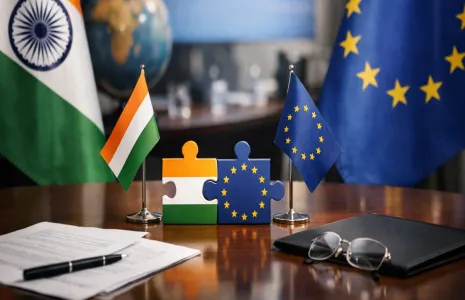
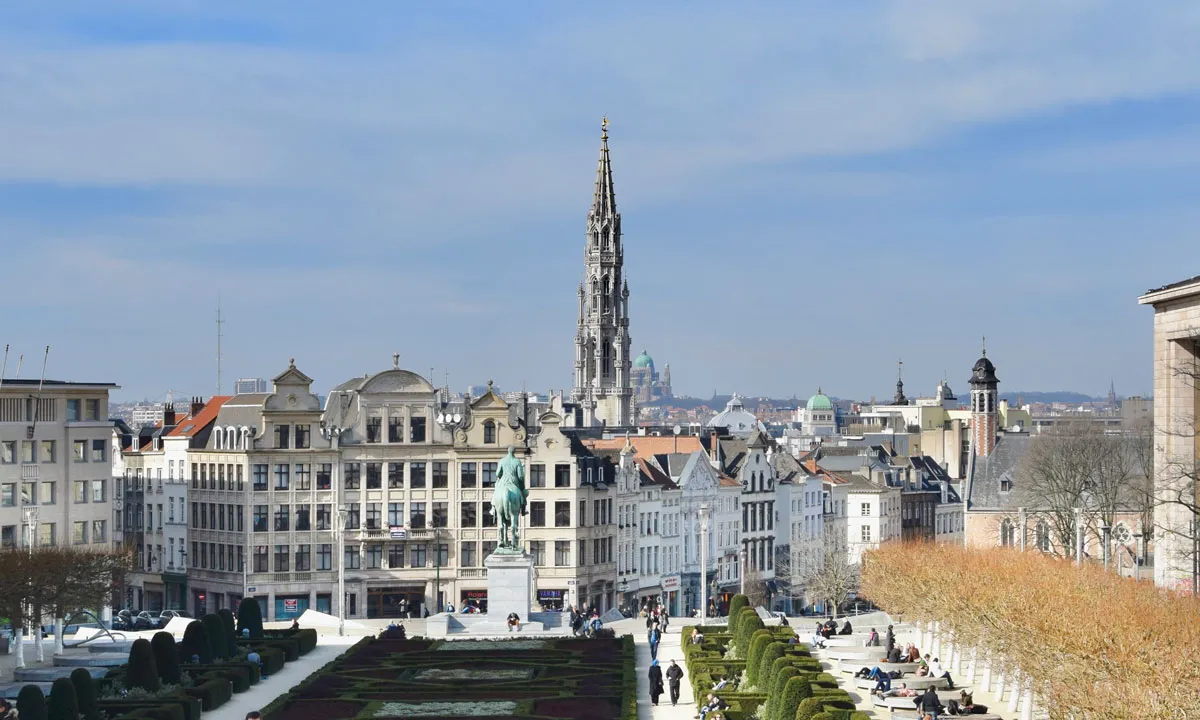
Union Minister of Commerce and Industry Piyush Goyal will visit Brussels on January 8–9, 2026, for high-level discussions aimed at advancing negotiations on the long-pending India-European Union Free Trade Agreement (FTA). The visit reflects intensified diplomatic and technical engagement between New Delhi and Brussels as both sides seek to accelerate efforts towards concluding a comprehensive trade pact.

India-EU FTA negotiations were formally re-launched in June 2022 after a gap of more than nine years, signalling renewed political intent to deepen economic ties. Since then, the two partners have completed 14 rounds of negotiations, supported by several ministerial-level interactions, with the most recent engagement taking place in December 2025.

The European Union remains India’s largest trading partner and a major source of foreign investment. Bilateral trade in goods saw notable growth during the 2024–25 financial year, underscoring the economic relevance of the proposed agreement. The FTA is being positioned not merely as a tariff-reduction exercise, but as a broad-based partnership aligned with contemporary global trade dynamics.

During the Brussels visit, Goyal will hold discussions with Maroš Šefčovič, Commissioner for Trade and Economic Security, European Union. The meetings are expected to provide strategic direction to negotiating teams, address unresolved issues, and inject momentum into the talks to achieve a balanced and ambitious outcome.

The ministerial engagement follows a week of intensive technical discussions in Brussels, building on deliberations held on January 6–7 between Rajesh Agrawal, Commerce Secretary, Government of India, and Sabine Weyand, Director-General for Trade, European Commission.

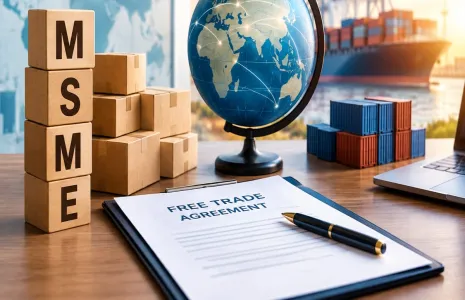
India is pressing for zero-duty market access for labour-intensive sectors such as textiles, leather, apparel, gems and jewellery, and handicrafts, with the objective of generating employment and delivering tangible benefits to citizens. Both sides have reiterated strong political commitment to a rules-based trade framework that protects farmers and MSMEs while integrating Indian industry into global value chains.

Union Minister of Commerce and Industry Piyush Goyal will visit Brussels on January 8–9, 2026, for high-level discussions aimed at advancing negotiations on the long-pending India-European Union Free Trade Agreement (FTA). The visit reflects intensified diplomatic and technical engagement between New Delhi and Brussels as both sides seek to accelerate efforts towards concluding a comprehensive trade pact.India-EU FTA negotiations were formally re-launched in June 2022 after a gap of more than nine years, signalling renewed political intent to deepen economic ties. Since then, the two partners have completed 14 rounds of negotiations, supported by several ministerial-level interactions, with the most recent engagement taking place in December 2025.The European Union remains India’s largest trading partner and a major source of foreign investment. Bilateral trade in goods saw notable growth during the 2024–25 financial year, underscoring the economic relevance of the proposed agreement. The FTA is being positioned not merely as a tariff-reduction exercise, but as a broad-based partnership aligned with contemporary global trade dynamics.During the Brussels visit, Goyal will hold discussions with Maroš Šefčovič, Commissioner for Trade and Economic Security, European Union. The meetings are expected to provide strategic direction to negotiating teams, address unresolved issues, and inject momentum into the talks to achieve a balanced and ambitious outcome.The ministerial engagement follows a week of intensive technical discussions in Brussels, building on deliberations held on January 6–7 between Rajesh Agrawal, Commerce Secretary, Government of India, and Sabine Weyand, Director-General for Trade, European Commission.India is pressing for zero-duty market access for labour-intensive sectors such as textiles, leather, apparel, gems and jewellery, and handicrafts, with the objective of generating employment and delivering tangible benefits to citizens. Both sides have reiterated strong political commitment to a rules-based trade framework that protects farmers and MSMEs while integrating Indian industry into global value chains.

Next Story
Infrastructure Transport

Second Mountain Tunnel Breakthrough in Palghar Advances High Speed Rail

The Mumbai-Ahmedabad high speed rail (MAHSR) project reached a milestone with the breakthrough of a mountain tunnel in Palghar, Maharashtra. Mountain tunnel MT-six measures 454 metres long and 14.4 metres wide and will accommodate up and down tracks. The breakthrough follows MT-five near Saphale on second January 2026 and the MT-six excavation was completed from both ends using the New Austrian Tunnelling Method. The ministry reported that the tunnelling was completed within 12 months. The New Austrian Tunnelling Method is favoured for its flexibility in complex geology and irregular tunnel s..

Next Story
Infrastructure Transport

Modi Government Pushes Atmanirbhar Container Drive With BCSL MoU

The Union Government advanced a plan to create an integrated, domestically anchored container ecosystem with the signing of a Memorandum of Understanding to establish the Bharat Container Shipping Line (BCSL). The MoU was signed by key agencies including the Shipping Corporation of India and Container Corporation of India alongside major port authorities and Sagarmala Finance Corporation Limited under the Ministry of Ports, Shipping and Waterways, in the presence of senior ministers. The initiative aligns with the Container Manufacturing Assistance Scheme announced in the Union Budget 2026–2..

Next Story
Infrastructure Urban

Ministry Reports Gains In Mobility For Marginalised Communities

The Ministry of Social Justice and Empowerment is implementing skill development, education and rehabilitation schemes to promote socio-economic mobility and sustainable livelihoods for marginalised and disadvantaged communities across the country. Programmes target Scheduled Castes, Other Backward Classes, Economically Weaker Sections, De-notified Tribes and Safai Karamcharis through specialised implementing corporations and empanelled training institutes. Pradhan Mantri Dakshata Aur Kushalta Sampann Hitgrahi Yojana, or PM-DAKSH, provided skill training and placement support through the Nati..

Advertisement

Subscribe to Our Newsletter

Get daily newsletters around different themes from Construction world.

STAY CONNECTED

Advertisement

Advertisement

Advertisement

Open In App