PM Modi announces Rs 230 billion in maritime projects
ECONOMY & POLICY

PM Modi announces Rs 230 billion in maritime projects

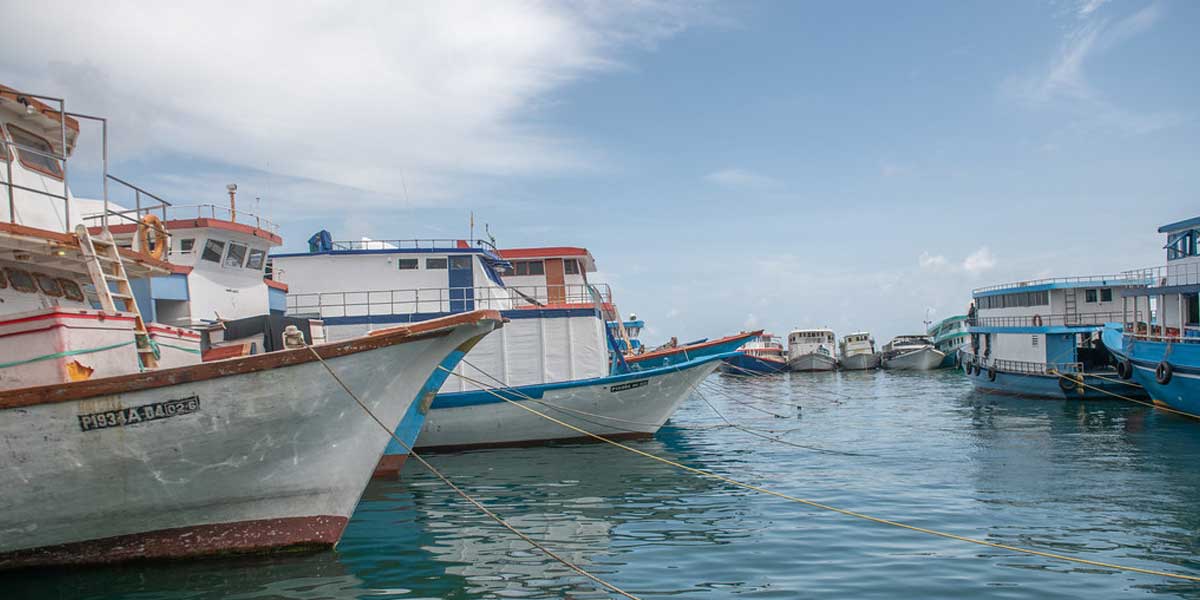
Prime Minister Narendra Modi announced the long-term strategy for the blue economy and launched maritime projects worth Rs 230 billion. According to a formal release, the strategy highlights strategic measures targeted at boosting sustainable practises, improving port infrastructure, and streamlining international cooperation.

During the third Global Maritime India Summit, he also dedicated, inaugurated, and laid the cornerstone for projects totaling more than Rs 230 billion that are in line with the "Amrit Kaal Vision 2047" for the Indian maritime blue economy.

Future ports, decarbonisation, coastal shipping, inland water transportation, shipbuilding, repair and recycling, finance, maritime clusters, and maritime tourism are just a few of the important topics that will be covered during the summit. At Gujarat's Deendayal Port Authority, the Prime Minister lay the cornerstone for the construction of the Tuna-Tekra all-weather deep-draft port, which is expected to cost more than Rs 450 billion.

Public-private partnerships (PPPs) will be used to create this new terminal. The port, which is projected to become a major international trade hub, will handle new ships larger than 18,000 twenty-foot equivalent units (TEUs) and serve as a hub for trade between India and the Middle East and Europe (IMEEC).

Additionally, the prime minister committed more than 300 Memorandums of Understanding (MoUs) for national and international cooperation in the maritime industry, totalling more than Rs 7.16 trillion.

Prime Minister Narendra Modi announced the long-term strategy for the blue economy and launched maritime projects worth Rs 230 billion. According to a formal release, the strategy highlights strategic measures targeted at boosting sustainable practises, improving port infrastructure, and streamlining international cooperation. During the third Global Maritime India Summit, he also dedicated, inaugurated, and laid the cornerstone for projects totaling more than Rs 230 billion that are in line with the Amrit Kaal Vision 2047 for the Indian maritime blue economy. Future ports, decarbonisation, coastal shipping, inland water transportation, shipbuilding, repair and recycling, finance, maritime clusters, and maritime tourism are just a few of the important topics that will be covered during the summit. At Gujarat's Deendayal Port Authority, the Prime Minister lay the cornerstone for the construction of the Tuna-Tekra all-weather deep-draft port, which is expected to cost more than Rs 450 billion. Public-private partnerships (PPPs) will be used to create this new terminal. The port, which is projected to become a major international trade hub, will handle new ships larger than 18,000 twenty-foot equivalent units (TEUs) and serve as a hub for trade between India and the Middle East and Europe (IMEEC). Additionally, the prime minister committed more than 300 Memorandums of Understanding (MoUs) for national and international cooperation in the maritime industry, totalling more than Rs 7.16 trillion.

Next Story
Infrastructure Urban

Implementation Status of Jal Jeevan Mission

Since August 2019 the Government has implemented Jal Jeevan Mission to provide assured potable water through household tap connections in rural India. At the start of the mission only 32.3 million (mn) rural households, representing 16.7 per cent, were reported to have tap water connections. States and union territories have reported that 125.8 mn additional rural households have since been provided with tap connections. As a result, of about 193.6 mn rural households roughly 158.2 mn, or 81.71 per cent, are reported to have tap water supply at home.\n\nThe State, district and village level st..

Next Story
Infrastructure Urban

Jal Jeevan Mission Reaches Eighty One Per Cent Rural Coverage

The Government reported substantial progress under the Jal Jeevan Mission, launched in August 2019 to provide tap water to every rural household. At launch only 32.3 million (mn) rural households had tap connections and states and Union territories reported provision of 125.8 mn additional households by March 2026. Consequently, out of about 193.6 mn rural households around 158.2 mn, or 81.71 per cent, are reported to have tap water at home. The Finance Minister announced extension of the mission until 2028 in the 2025-26 budget speech. The Swachh Bharat Mission Grameen, launched in October 20..

Next Story
Infrastructure Urban

Empowering Local Governance for Sustainable Rural Water Supply

The Ministry of Jal Shakti has aligned the Jal Jeevan Mission (JJM) with the 73rd Amendment to strengthen village level planning and community ownership of water supply. Gram Panchayats, village water and sanitation committees and Pani Samitis are to plan, implement, manage and maintain piped water systems, with gram sabha processes formalising handover and oversight. Implementation support agencies including non government organisations, community based organisations and self help groups have been empanelled to train local committees and promote women participation. Under JJM, the department ..

Advertisement

Subscribe to Our Newsletter

Get daily newsletters around different themes from Construction world.

STAY CONNECTED

Advertisement

Advertisement

Advertisement