PM-SETU Industry Meet Advances ITI Reforms in Maharashtra
ECONOMY & POLICY

PM-SETU Industry Meet Advances ITI Reforms in Maharashtra

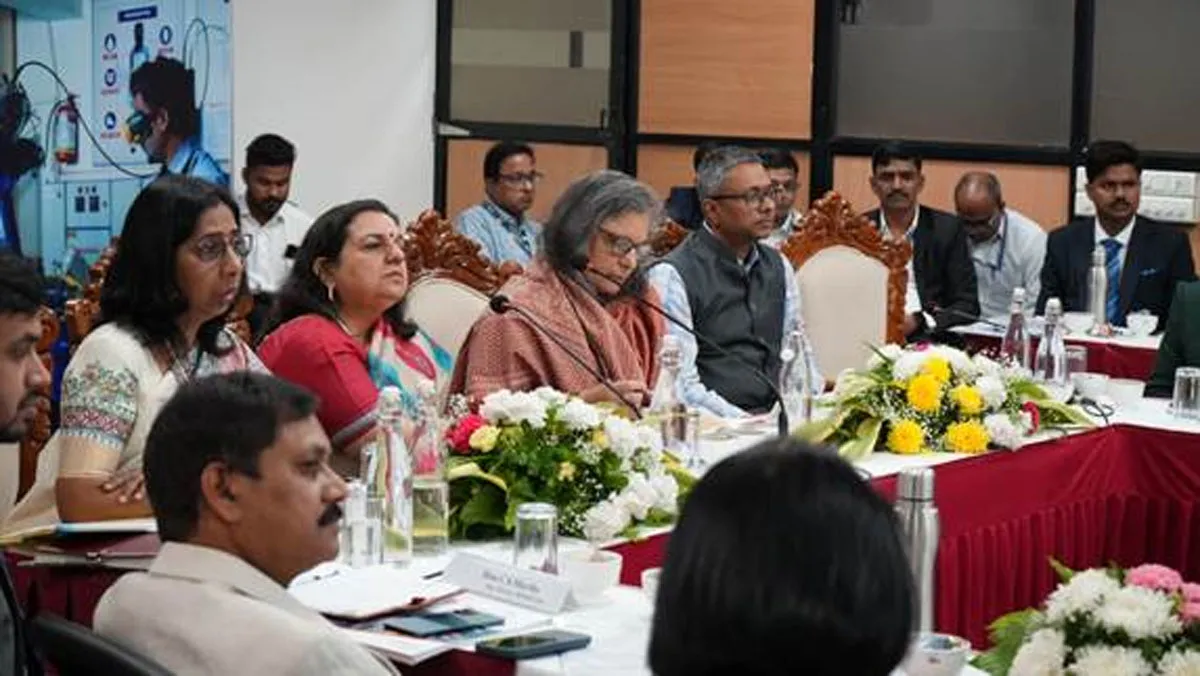
The Ministry of Skill Development and Entrepreneurship convened a major industry consultation in Pune as part of the rollout of the PM-SETU (Pradhan Mantri Skilling and Employability Transformation through Upgraded ITIs) scheme. The programme, hosted at the Yashwantrao Chavan Academy of Development Administration, was led by Debashree Mukherjee, Secretary, MSDE, Government of India, and Manisha Verma, Additional Chief Secretary, Skills, Employment, Entrepreneurship and Innovation Department, Government of Maharashtra.

More than 40 companies from sectors such as automotive, construction, textiles, FMCG, electronics, oil and gas, and renewable energy participated in the consultation. Leading industry partners, including Mahindra Group, Tata Group, Tata Motors, Bharat Electronics, Godrej Group and Fiat, were present. Discussions centred on the hub-and-spoke ITI model, industry-led governance through Special Purpose Vehicles, curriculum innovation, trainer upskilling and strengthening employment outcomes.

Addressing the gathering, Ms Mukherjee stressed the importance of active industry participation under PM-SETU, noting that the scheme is anchored in making Industrial Training Institutes more industry-relevant, aspirational and outcome-driven. She highlighted that the focus extends beyond infrastructure upgrades to training quality, trainer performance, modern pedagogy and measurable placement outcomes.

She further underlined that PM-SETU is designed to foster sustained partnerships in which industry plays a central role in governance, curriculum alignment and trainer upskilling. This approach is intended to keep training aligned with evolving technologies and real shopfloor requirements, while offering industry tangible benefits such as a steady pipeline of job-ready trainees, lower recruitment and onboarding costs, and access to modern laboratories and advanced equipment.

Reiterating the State’s commitment, Ms Verma said Maharashtra would provide an enabling environment for industry to participate actively in the scheme. She noted that implementation would be supported through close coordination with stakeholders, facilitative state-level arrangements and continuous engagement with industry partners, enabling ITIs across the State to emerge as high-quality skill institutions with strong industry linkages and improved employment outcomes.

Industry feedback reflected strong interest in the collaborative framework envisaged under PM-SETU, with participants emphasising the value of deeper industry involvement in the skilling ecosystem. Representatives from the automotive and renewable energy sectors pointed to the scheme’s potential to jointly develop a future-ready talent pool, while supporting the evolution of ITIs into centres for production-linked training and innovation.

The consultations also highlighted strategic gains for industry, including greater participation in governance structures, opportunities to contribute to curriculum development and training delivery, enhanced employer visibility, and closer alignment with corporate social responsibility and ESG objectives, ensuring skilling remains responsive to changing workforce needs.

The engagement included field visits to ITI Aundh Pune, ITI Girls Pune, ITI Pimpri Chinchwad and Fronius India in Bhosari, offering participants first-hand exposure to institutional infrastructure, training ecosystems and industry-integrated skilling models.

PM-SETU, launched by Narendra Modi in October 2025 with an outlay of Rs 600 billion over five years, aims to transform ITIs into government-owned but industry-managed institutions. Through infrastructure upgrades, new courses and industry-led governance, the scheme seeks to create a skilled and employable youth workforce aligned with India’s growth sectors and the vision of Viksit Bharat 2047.

The Ministry of Skill Development and Entrepreneurship convened a major industry consultation in Pune as part of the rollout of the PM-SETU (Pradhan Mantri Skilling and Employability Transformation through Upgraded ITIs) scheme. The programme, hosted at the Yashwantrao Chavan Academy of Development Administration, was led by Debashree Mukherjee, Secretary, MSDE, Government of India, and Manisha Verma, Additional Chief Secretary, Skills, Employment, Entrepreneurship and Innovation Department, Government of Maharashtra. More than 40 companies from sectors such as automotive, construction, textiles, FMCG, electronics, oil and gas, and renewable energy participated in the consultation. Leading industry partners, including Mahindra Group, Tata Group, Tata Motors, Bharat Electronics, Godrej Group and Fiat, were present. Discussions centred on the hub-and-spoke ITI model, industry-led governance through Special Purpose Vehicles, curriculum innovation, trainer upskilling and strengthening employment outcomes. Addressing the gathering, Ms Mukherjee stressed the importance of active industry participation under PM-SETU, noting that the scheme is anchored in making Industrial Training Institutes more industry-relevant, aspirational and outcome-driven. She highlighted that the focus extends beyond infrastructure upgrades to training quality, trainer performance, modern pedagogy and measurable placement outcomes. She further underlined that PM-SETU is designed to foster sustained partnerships in which industry plays a central role in governance, curriculum alignment and trainer upskilling. This approach is intended to keep training aligned with evolving technologies and real shopfloor requirements, while offering industry tangible benefits such as a steady pipeline of job-ready trainees, lower recruitment and onboarding costs, and access to modern laboratories and advanced equipment. Reiterating the State’s commitment, Ms Verma said Maharashtra would provide an enabling environment for industry to participate actively in the scheme. She noted that implementation would be supported through close coordination with stakeholders, facilitative state-level arrangements and continuous engagement with industry partners, enabling ITIs across the State to emerge as high-quality skill institutions with strong industry linkages and improved employment outcomes. Industry feedback reflected strong interest in the collaborative framework envisaged under PM-SETU, with participants emphasising the value of deeper industry involvement in the skilling ecosystem. Representatives from the automotive and renewable energy sectors pointed to the scheme’s potential to jointly develop a future-ready talent pool, while supporting the evolution of ITIs into centres for production-linked training and innovation. The consultations also highlighted strategic gains for industry, including greater participation in governance structures, opportunities to contribute to curriculum development and training delivery, enhanced employer visibility, and closer alignment with corporate social responsibility and ESG objectives, ensuring skilling remains responsive to changing workforce needs. The engagement included field visits to ITI Aundh Pune, ITI Girls Pune, ITI Pimpri Chinchwad and Fronius India in Bhosari, offering participants first-hand exposure to institutional infrastructure, training ecosystems and industry-integrated skilling models. PM-SETU, launched by Narendra Modi in October 2025 with an outlay of Rs 600 billion over five years, aims to transform ITIs into government-owned but industry-managed institutions. Through infrastructure upgrades, new courses and industry-led governance, the scheme seeks to create a skilled and employable youth workforce aligned with India’s growth sectors and the vision of Viksit Bharat 2047.

Next Story
Infrastructure Urban

Panasonic Showcases Connected Display Solutions

Panasonic Life Solutions India showcased its integrated display, projection, broadcast and communication technologies at Panasonic Tech Summit 2026 in New Delhi. Hosted through its System Solutions Division, the two-day event highlighted connected technology solutions for education, healthcare, retail, transportation, corporate offices and entertainment.The summit, themed ‘Turning Technology into Value’, featured experience-led zones covering QSR, retail, transit, corporate offices, healthcare, education, security, projection, home theatre and professional displays. Panasonic also introduc..

Next Story
Infrastructure Transport

Kapsch to Deliver India’s First C-ITS Project

"Kapsch TrafficCom will deliver India’s first Cooperative Intelligent Transport Systems project on a key expressway near New Delhi. The project will be implemented with Superwave Communication And Infrasolution Limited to demonstrate how connected mobility can improve road safety and traffic efficiency.The pilot will use real-time connectivity and AI-enabled situational awareness to support road users, especially in high-risk areas such as temporary work zones. Drivers will receive alerts on roadworks, maintenance vehicles, hazardous locations, traffic queues and temporary virtual signage di..

Next Story
Infrastructure Urban

Eurobond Net Profit Rises 44 Per Cent

Euro Panel Products, the parent company of Eurobond, reported a 44.13 per cent year-on-year rise in net profit for FY25–26. The company’s revenue from operations grew 18.91 per cent to Rs 503.20 crore, compared to Rs 423.18 crore in the previous financial year.The company’s full-year EBITDA stood at Rs 56.67 crore, marking a 31.82 per cent increase. Profit after tax rose to Rs 26.56 crore, while net worth increased 20.15 per cent to Rs 160.07 crore. Earnings per share for the year stood at Rs 10.84.Divyam Rajesh Shah, Whole Time Director and CFO, Euro Panel Products, said the company’s..

Advertisement

Subscribe to Our Newsletter

Get daily newsletters around different themes from Construction world.

STAY CONNECTED

Advertisement

Advertisement

Advertisement

-->