+
Pralhad Joshi, Nitin Gadkari Take Ride in Hydrogen Car
ECONOMY & POLICY

Pralhad Joshi, Nitin Gadkari Take Ride in Hydrogen Car

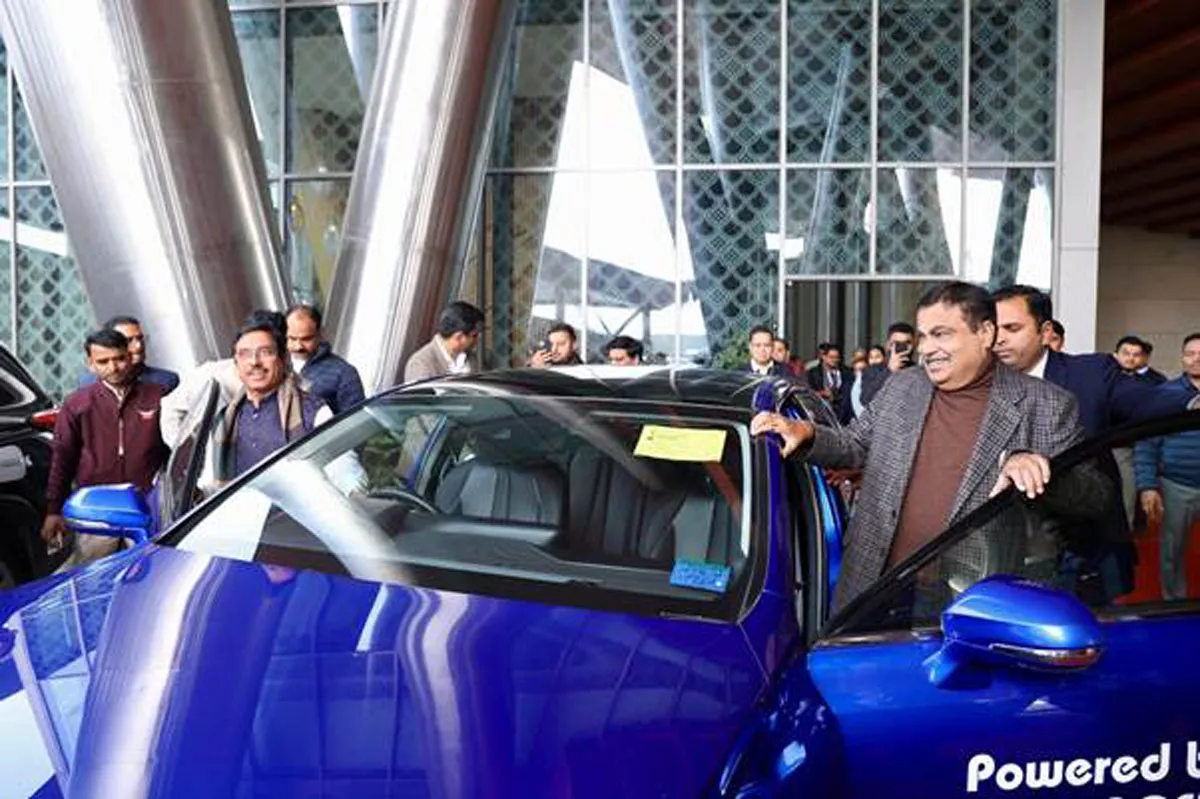
Union Minister for New and Renewable Energy Pralhad Joshi and Union Minister for Road Transport and Highways Nitin Gadkari took a joint ride in a hydrogen fuel cell electric vehicle (FCEV), underscoring the government’s commitment to promoting green hydrogen and clean mobility solutions in India.

The ministers travelled in the Toyota Mirai, a hydrogen-powered fuel cell electric vehicle, with Joshi himself driving the car from Bharat Mandapam to the residence of Gadkari. The demonstration was aimed at highlighting the viability of hydrogen-based mobility as a key component of India’s transition towards low-carbon and sustainable transport systems.

The Toyota Mirai is a second-generation hydrogen FCEV that generates electricity through a chemical reaction between hydrogen and oxygen. The only by-product of this process is water vapour, making it a zero-emission vehicle with no tailpipe pollutants. With a driving range of around 650 km on a full tank and a refuelling time of less than five minutes, the Mirai is considered one of the most advanced hydrogen-powered passenger vehicles globally.

Officials said the demonstration aligns with the government’s broader efforts to build a green hydrogen ecosystem, covering production, storage, transportation and end-use applications. Hydrogen-based mobility is being positioned as a complementary solution to battery electric vehicles, particularly for long-range and heavy-duty transport segments where quick refuelling and extended range are critical.

The joint ride by the two ministers also reflects inter-ministerial coordination to promote clean energy adoption across sectors. While the Ministry of New and Renewable Energy is leading efforts on green hydrogen production, the Ministry of Road Transport and Highways is working on enabling infrastructure and regulatory frameworks to support alternative fuel vehicles.

The initiative is expected to raise awareness about hydrogen fuel cell technology and encourage greater industry participation, innovation and investment in clean mobility solutions, supporting India’s climate commitments and long-term energy transition goals.

Union Minister for New and Renewable Energy Pralhad Joshi and Union Minister for Road Transport and Highways Nitin Gadkari took a joint ride in a hydrogen fuel cell electric vehicle (FCEV), underscoring the government’s commitment to promoting green hydrogen and clean mobility solutions in India.The ministers travelled in the Toyota Mirai, a hydrogen-powered fuel cell electric vehicle, with Joshi himself driving the car from Bharat Mandapam to the residence of Gadkari. The demonstration was aimed at highlighting the viability of hydrogen-based mobility as a key component of India’s transition towards low-carbon and sustainable transport systems.The Toyota Mirai is a second-generation hydrogen FCEV that generates electricity through a chemical reaction between hydrogen and oxygen. The only by-product of this process is water vapour, making it a zero-emission vehicle with no tailpipe pollutants. With a driving range of around 650 km on a full tank and a refuelling time of less than five minutes, the Mirai is considered one of the most advanced hydrogen-powered passenger vehicles globally.Officials said the demonstration aligns with the government’s broader efforts to build a green hydrogen ecosystem, covering production, storage, transportation and end-use applications. Hydrogen-based mobility is being positioned as a complementary solution to battery electric vehicles, particularly for long-range and heavy-duty transport segments where quick refuelling and extended range are critical.The joint ride by the two ministers also reflects inter-ministerial coordination to promote clean energy adoption across sectors. While the Ministry of New and Renewable Energy is leading efforts on green hydrogen production, the Ministry of Road Transport and Highways is working on enabling infrastructure and regulatory frameworks to support alternative fuel vehicles.The initiative is expected to raise awareness about hydrogen fuel cell technology and encourage greater industry participation, innovation and investment in clean mobility solutions, supporting India’s climate commitments and long-term energy transition goals.

Next Story
Infrastructure Transport

Second Mountain Tunnel Breakthrough in Palghar Advances High Speed Rail

The Mumbai-Ahmedabad high speed rail (MAHSR) project reached a milestone with the breakthrough of a mountain tunnel in Palghar, Maharashtra. Mountain tunnel MT-six measures 454 metres long and 14.4 metres wide and will accommodate up and down tracks. The breakthrough follows MT-five near Saphale on second January 2026 and the MT-six excavation was completed from both ends using the New Austrian Tunnelling Method. The ministry reported that the tunnelling was completed within 12 months. The New Austrian Tunnelling Method is favoured for its flexibility in complex geology and irregular tunnel s..

Next Story
Infrastructure Transport

Modi Government Pushes Atmanirbhar Container Drive With BCSL MoU

The Union Government advanced a plan to create an integrated, domestically anchored container ecosystem with the signing of a Memorandum of Understanding to establish the Bharat Container Shipping Line (BCSL). The MoU was signed by key agencies including the Shipping Corporation of India and Container Corporation of India alongside major port authorities and Sagarmala Finance Corporation Limited under the Ministry of Ports, Shipping and Waterways, in the presence of senior ministers. The initiative aligns with the Container Manufacturing Assistance Scheme announced in the Union Budget 2026–2..

Next Story
Infrastructure Urban

Ministry Reports Gains In Mobility For Marginalised Communities

The Ministry of Social Justice and Empowerment is implementing skill development, education and rehabilitation schemes to promote socio-economic mobility and sustainable livelihoods for marginalised and disadvantaged communities across the country. Programmes target Scheduled Castes, Other Backward Classes, Economically Weaker Sections, De-notified Tribes and Safai Karamcharis through specialised implementing corporations and empanelled training institutes. Pradhan Mantri Dakshata Aur Kushalta Sampann Hitgrahi Yojana, or PM-DAKSH, provided skill training and placement support through the Nati..

Advertisement

Subscribe to Our Newsletter

Get daily newsletters around different themes from Construction world.

STAY CONNECTED

Advertisement

Advertisement

Advertisement

Open In App