Punjab to Modernise Major Bus Terminals via PPP Model
ECONOMY & POLICY

Punjab to Modernise Major Bus Terminals via PPP Model

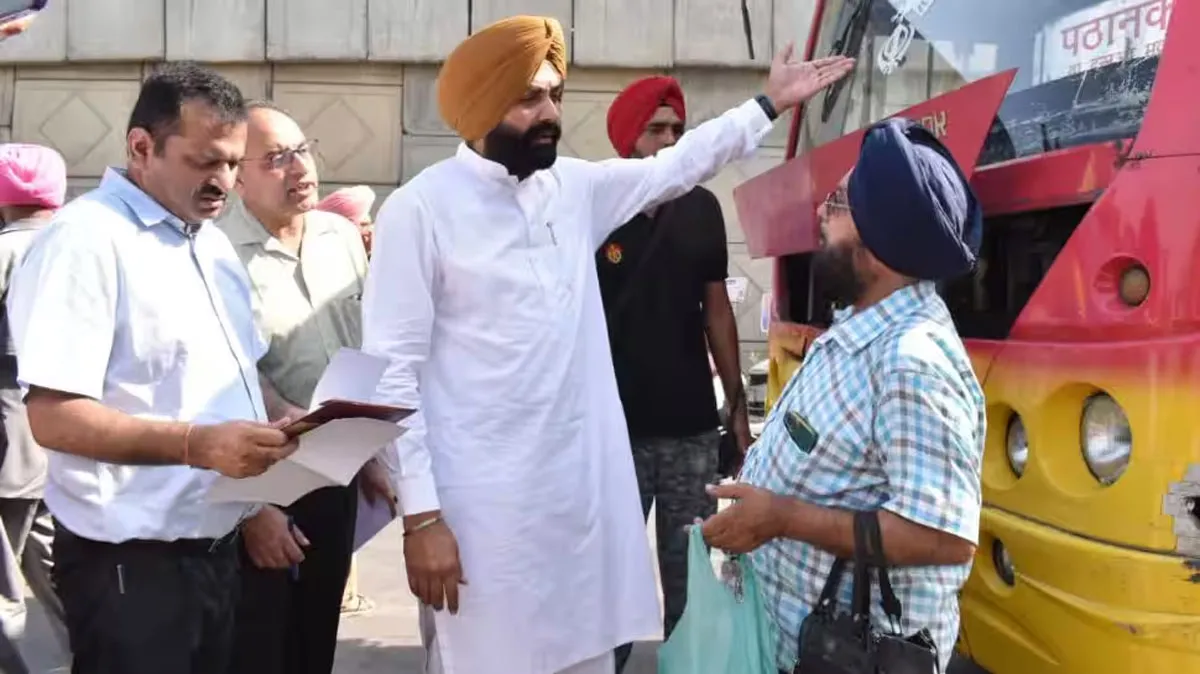
The Punjab Government, led by Chief Minister Bhagwant Singh Mann, has approved a comprehensive plan to modernise key bus terminals across the state, aiming to strengthen public transport infrastructure and enhance passenger convenience. The initiative will be implemented through a structured public–private partnership (PPP) model to improve efficiency, safety and service quality.

Punjab Transport Minister Laljit Singh Bhullar said that bus terminals in Ludhiana, Jalandhar, Sangrur, Patiala and Bathinda will be upgraded as part of the programme. He noted that these terminals serve as critical transport hubs for both rural and urban populations, facilitating daily travel for workers, students, traders, tourists and industrial labourers. They also play a significant role in inter-state connectivity, supporting passenger movement to neighbouring states such as Himachal Pradesh, Jammu and Kashmir, Haryana, Delhi and Rajasthan.

Highlighting passenger volumes, Bhullar said the Ludhiana and Jalandhar terminals handle between 75,000 and 100,000 passengers daily, while Patiala and Bathinda witness around 50,000 passengers each day. These figures underscore the strategic importance of the terminals in Punjab’s mobility ecosystem.

The modernisation programme will be executed using Design–Build–Finance–Operate–Transfer and Build–Operate–Transfer models to ensure sustainability, operational efficiency and better integration with urban transport systems, while maintaining fiscal discipline. The upgrades will focus on improving passenger amenities such as waiting areas, sanitation facilities, lighting, signage, organised boarding arrangements and structured parking. Special emphasis will be placed on safety, circulation and crowd management to ensure smooth operations during peak hours.

Inclusivity is a key priority of the initiative, with provisions for barrier-free access and improved mobility for senior citizens and persons with disabilities. Subject to planning norms and regulatory approvals, the upgraded terminals will be developed as integrated urban hubs, incorporating commercial and service activities such as retail outlets, offices, co-working spaces and logistics facilities. These additions are expected to stimulate economic activity and enhance long-term financial sustainability.

Through this initiative, the Punjab Government aims to modernise everyday public infrastructure, improve the travel experience for millions of citizens and establish new benchmarks for efficient, people-centric bus terminal development across the state.

The Punjab Government, led by Chief Minister Bhagwant Singh Mann, has approved a comprehensive plan to modernise key bus terminals across the state, aiming to strengthen public transport infrastructure and enhance passenger convenience. The initiative will be implemented through a structured public–private partnership (PPP) model to improve efficiency, safety and service quality. Punjab Transport Minister Laljit Singh Bhullar said that bus terminals in Ludhiana, Jalandhar, Sangrur, Patiala and Bathinda will be upgraded as part of the programme. He noted that these terminals serve as critical transport hubs for both rural and urban populations, facilitating daily travel for workers, students, traders, tourists and industrial labourers. They also play a significant role in inter-state connectivity, supporting passenger movement to neighbouring states such as Himachal Pradesh, Jammu and Kashmir, Haryana, Delhi and Rajasthan. Highlighting passenger volumes, Bhullar said the Ludhiana and Jalandhar terminals handle between 75,000 and 100,000 passengers daily, while Patiala and Bathinda witness around 50,000 passengers each day. These figures underscore the strategic importance of the terminals in Punjab’s mobility ecosystem. The modernisation programme will be executed using Design–Build–Finance–Operate–Transfer and Build–Operate–Transfer models to ensure sustainability, operational efficiency and better integration with urban transport systems, while maintaining fiscal discipline. The upgrades will focus on improving passenger amenities such as waiting areas, sanitation facilities, lighting, signage, organised boarding arrangements and structured parking. Special emphasis will be placed on safety, circulation and crowd management to ensure smooth operations during peak hours. Inclusivity is a key priority of the initiative, with provisions for barrier-free access and improved mobility for senior citizens and persons with disabilities. Subject to planning norms and regulatory approvals, the upgraded terminals will be developed as integrated urban hubs, incorporating commercial and service activities such as retail outlets, offices, co-working spaces and logistics facilities. These additions are expected to stimulate economic activity and enhance long-term financial sustainability. Through this initiative, the Punjab Government aims to modernise everyday public infrastructure, improve the travel experience for millions of citizens and establish new benchmarks for efficient, people-centric bus terminal development across the state.

Next Story
Infrastructure Urban

9th India–Myanmar Joint Trade Committee Meeting Held in Nay Pyi Taw

The ninth meeting of the India–Myanmar Joint Trade Committee (JTC) was held in Nay Pyi Taw, Myanmar, with a focus on strengthening bilateral trade and deepening economic cooperation. The meeting was co-chaired by U Minn Minn, Deputy Minister, Ministry of Commerce of the Republic of the Union of Myanmar, and Nitin Kumar Yadav, Additional Secretary, Department of Commerce, Ministry of Commerce and Industry, Government of India.Representatives from relevant ministries and stakeholder departments from both countries participated in the discussions. The meeting covered a broad range of issues aim..

Next Story
Infrastructure Urban

DGCA Launches Digital Pilot Licence Services for ATPL

The Directorate General of Civil Aviation (DGCA) has launched Electronic Personnel Licence (EPL) services for the Airline Transport Pilot Licence (ATPL), marking a significant step in the regulator’s ongoing digital transformation of aviation licensing in India. The service was inaugurated at an event held at the DGCA headquarters.Inaugurating the EPL ATPL service, Director General of Civil Aviation Faiz Ahmed Kidwai said the initiative represents a major advancement in strengthening India’s civil aviation regulatory framework through secure, modern and future-ready digital systems. He con..

Next Story
Infrastructure Urban

Cabinet Extends Atal Pension Yojana and Support Till 2030–31

The Union Cabinet, chaired by Prime Minister Narendra Modi, has approved the continuation of the Atal Pension Yojana (APY) up to the financial year 2030–31, along with the extension of government funding support for promotional and developmental activities and gap funding to ensure the scheme’s long-term sustainability.Under the approved framework, APY will continue to receive government support aimed at expanding its reach among unorganised and low-income workers. This includes funding for awareness campaigns, capacity-building initiatives and other developmental activities to strengthen ..

Advertisement

Subscribe to Our Newsletter

Get daily newsletters around different themes from Construction world.

STAY CONNECTED

Advertisement

Advertisement

Advertisement

Advertisement

Open In App