Rural Development Ministry Launches National Push for Women Entrepreneurs
ECONOMY & POLICY

Rural Development Ministry Launches National Push for Women Entrepreneurs

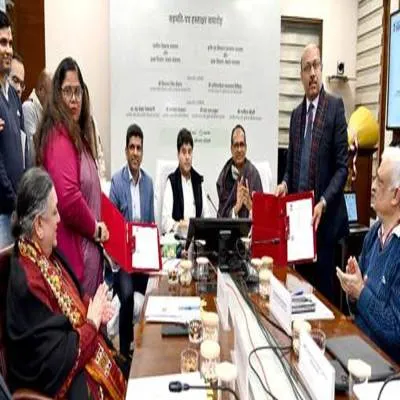
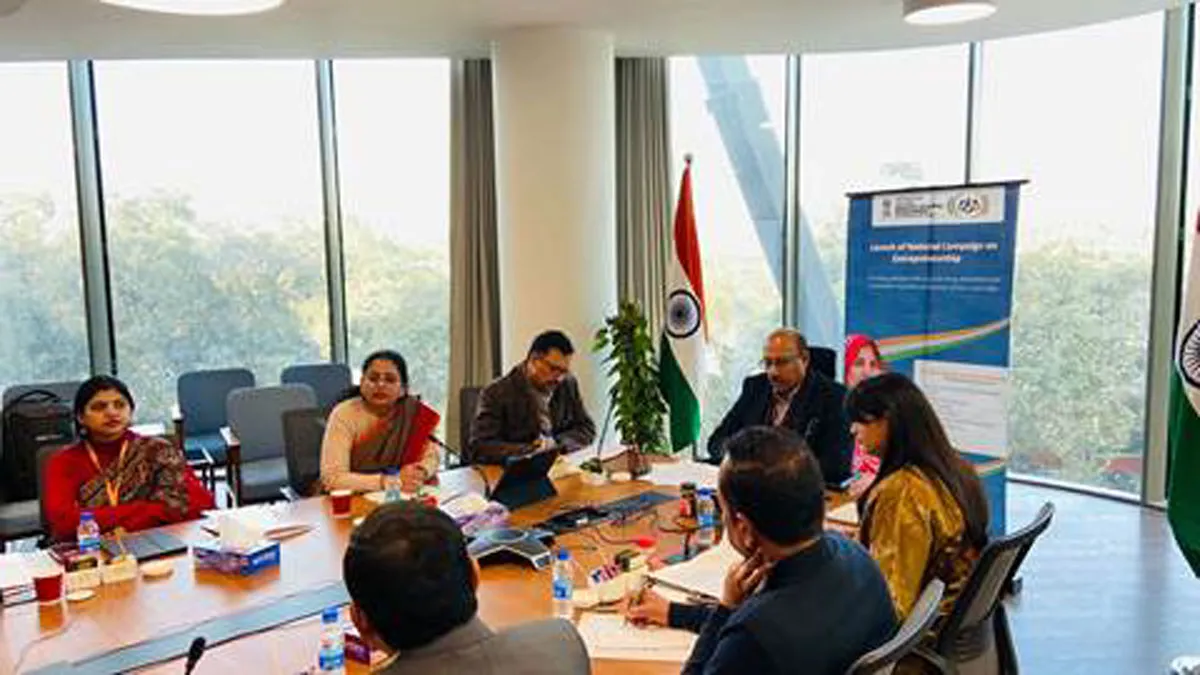
The Ministry of Rural Development has launched a National Campaign on Entrepreneurship to accelerate the promotion of non-farm rural enterprises and boost income generation among women self-help group (SHG) members under the Deendayal Antyodaya Yojana–National Rural Livelihoods Mission (DAY-NRLM). The campaign was launched on January 12, 2026, by the Additional Secretary (Rural Development).

DAY-NRLM aims to bring a transformational change in the income levels of rural women through diversified and sustainable livelihoods. Promotion of non-farm enterprises has emerged as a critical pathway in achieving this objective. Over the years, initiatives such as the Start-up Village Entrepreneurship Programme have demonstrated successful enterprise models supported by trained community cadres, who play a key role in enterprise identification, start-up support, mentoring and handholding at the grassroots level.

The Ministry has committed to enabling at least thirty million ‘Lakhpati Didis’, defined as SHG women members earning Rs 1 lakh or more annually. Achieving this ambitious target requires a significant scale-up of trained community-level enterprise support systems, which the new national campaign seeks to address.

The primary objective of the National Campaign on Entrepreneurship is to train and build the capacity of 50,000 community resource persons (CRPs) in enterprise promotion, while also imparting entrepreneurship development programme (EDP) training to 50 lakh SHG members associated with DAY-NRLM.

The launch event saw participation from senior stakeholders, including Advisor, NITI Aayog (RD&PR); Chairman, NABARD; and representatives from the Bill & Melinda Gates Foundation, IFMR LEAD (KREA University), EDII and IIM Calcutta Innovation Park, along with State Rural Livelihood Mission (SRLM) CEOs and their teams.

The campaign is expected to deepen enterprise development across rural India, foster local economic growth and unlock the entrepreneurial potential of SHG women. By strengthening community institutions and linking grassroots enterprises with formal financial systems, the initiative aims to pave the way for a resilient, inclusive and self-reliant non-farm rural economy.

The Ministry of Rural Development has launched a National Campaign on Entrepreneurship to accelerate the promotion of non-farm rural enterprises and boost income generation among women self-help group (SHG) members under the Deendayal Antyodaya Yojana–National Rural Livelihoods Mission (DAY-NRLM). The campaign was launched on January 12, 2026, by the Additional Secretary (Rural Development).DAY-NRLM aims to bring a transformational change in the income levels of rural women through diversified and sustainable livelihoods. Promotion of non-farm enterprises has emerged as a critical pathway in achieving this objective. Over the years, initiatives such as the Start-up Village Entrepreneurship Programme have demonstrated successful enterprise models supported by trained community cadres, who play a key role in enterprise identification, start-up support, mentoring and handholding at the grassroots level.The Ministry has committed to enabling at least thirty million ‘Lakhpati Didis’, defined as SHG women members earning Rs 1 lakh or more annually. Achieving this ambitious target requires a significant scale-up of trained community-level enterprise support systems, which the new national campaign seeks to address.The primary objective of the National Campaign on Entrepreneurship is to train and build the capacity of 50,000 community resource persons (CRPs) in enterprise promotion, while also imparting entrepreneurship development programme (EDP) training to 50 lakh SHG members associated with DAY-NRLM.The launch event saw participation from senior stakeholders, including Advisor, NITI Aayog (RD&PR); Chairman, NABARD; and representatives from the Bill & Melinda Gates Foundation, IFMR LEAD (KREA University), EDII and IIM Calcutta Innovation Park, along with State Rural Livelihood Mission (SRLM) CEOs and their teams.The campaign is expected to deepen enterprise development across rural India, foster local economic growth and unlock the entrepreneurial potential of SHG women. By strengthening community institutions and linking grassroots enterprises with formal financial systems, the initiative aims to pave the way for a resilient, inclusive and self-reliant non-farm rural economy.

Next Story
Infrastructure Urban

Implementation Status of Jal Jeevan Mission

Since August 2019 the Government has implemented Jal Jeevan Mission to provide assured potable water through household tap connections in rural India. At the start of the mission only 32.3 million (mn) rural households, representing 16.7 per cent, were reported to have tap water connections. States and union territories have reported that 125.8 mn additional rural households have since been provided with tap connections. As a result, of about 193.6 mn rural households roughly 158.2 mn, or 81.71 per cent, are reported to have tap water supply at home.\n\nThe State, district and village level st..

Next Story
Infrastructure Urban

Jal Jeevan Mission Reaches Eighty One Per Cent Rural Coverage

The Government reported substantial progress under the Jal Jeevan Mission, launched in August 2019 to provide tap water to every rural household. At launch only 32.3 million (mn) rural households had tap connections and states and Union territories reported provision of 125.8 mn additional households by March 2026. Consequently, out of about 193.6 mn rural households around 158.2 mn, or 81.71 per cent, are reported to have tap water at home. The Finance Minister announced extension of the mission until 2028 in the 2025-26 budget speech. The Swachh Bharat Mission Grameen, launched in October 20..

Next Story
Infrastructure Urban

Empowering Local Governance for Sustainable Rural Water Supply

The Ministry of Jal Shakti has aligned the Jal Jeevan Mission (JJM) with the 73rd Amendment to strengthen village level planning and community ownership of water supply. Gram Panchayats, village water and sanitation committees and Pani Samitis are to plan, implement, manage and maintain piped water systems, with gram sabha processes formalising handover and oversight. Implementation support agencies including non government organisations, community based organisations and self help groups have been empanelled to train local committees and promote women participation. Under JJM, the department ..

Advertisement

Subscribe to Our Newsletter

Get daily newsletters around different themes from Construction world.

STAY CONNECTED

Advertisement

Advertisement

Advertisement