SECI Floats Tender for 160 MVA Transformers in Gujarat
ECONOMY & POLICY

SECI Floats Tender for 160 MVA Transformers in Gujarat

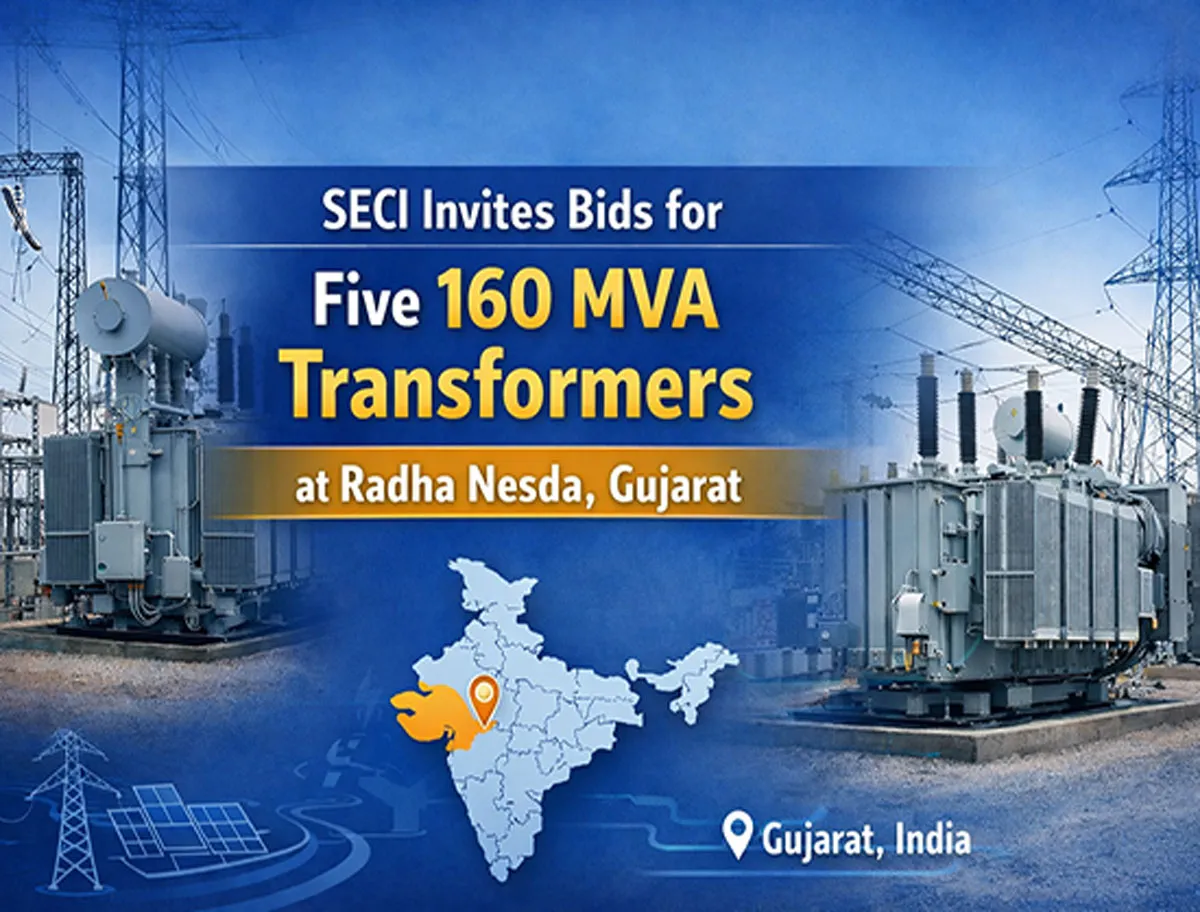
Solar Energy Corporation of India Ltd has issued an online tender for the turnkey supply of five 160 MVA, 220/33–33 kV power transformers with NIFPS at Radha Nesda in Gujarat. The tender will be conducted through an e-reverse auction on SECI’s portal.

The tender carries a fee of Rs 25,000 and requires an earnest money deposit of Rs 15 million. A performance bank guarantee equivalent to 10 per cent of the contract value will also be mandatory. The pre-bid meeting is scheduled for 12 January 2026, while online and offline bid submissions close on 23 January 2026, with bids to be opened the same day. All tender documents, including technical specifications and the schedule of rates, are available on SECI’s website.

Participation is restricted to Indian companies, government-owned enterprises or Indian-registered subsidiaries of foreign firms. Entities under blacklisting, liquidation or similar proceedings are not eligible. Registered micro and small enterprises under NSIC, DIC or Udyog Aadhaar are exempt from the tender fee and EMD. However, LLPs, proprietorships, NGOs, charitable trusts and educational societies are not permitted to participate.

Bidders must be original equipment manufacturers with a minimum of seven years of transformer manufacturing experience in India. Eligibility criteria include a factory capable of producing 220 kV or higher transformers, a proven supply track record for 220 kV class transformers over the past three years, ISO 9001:2015 certification, a minimum annual manufacturing capacity of 4,000 MVA, and servicing and repair facilities within India. Only Class-I local suppliers under the Make in India framework are eligible.

Financial eligibility requires an average annual turnover of at least Rs 230 million over the past three financial years, a positive net worth, and minimum working capital of Rs 143.8 million. Financial credentials of parent, holding, subsidiary or affiliate companies may be considered, subject to audited and certified submissions.

Up to three companies may form a joint venture or consortium. The lead partner must meet 100 per cent of the technical requirements and at least 50 per cent of the financial eligibility, while other partners together must meet 100 per cent of the remaining financial criteria. All partners will be jointly liable, and any changes in the consortium structure will require prior SECI approval.

Solar Energy Corporation of India Ltd has issued an online tender for the turnkey supply of five 160 MVA, 220/33–33 kV power transformers with NIFPS at Radha Nesda in Gujarat. The tender will be conducted through an e-reverse auction on SECI’s portal. The tender carries a fee of Rs 25,000 and requires an earnest money deposit of Rs 15 million. A performance bank guarantee equivalent to 10 per cent of the contract value will also be mandatory. The pre-bid meeting is scheduled for 12 January 2026, while online and offline bid submissions close on 23 January 2026, with bids to be opened the same day. All tender documents, including technical specifications and the schedule of rates, are available on SECI’s website. Participation is restricted to Indian companies, government-owned enterprises or Indian-registered subsidiaries of foreign firms. Entities under blacklisting, liquidation or similar proceedings are not eligible. Registered micro and small enterprises under NSIC, DIC or Udyog Aadhaar are exempt from the tender fee and EMD. However, LLPs, proprietorships, NGOs, charitable trusts and educational societies are not permitted to participate. Bidders must be original equipment manufacturers with a minimum of seven years of transformer manufacturing experience in India. Eligibility criteria include a factory capable of producing 220 kV or higher transformers, a proven supply track record for 220 kV class transformers over the past three years, ISO 9001:2015 certification, a minimum annual manufacturing capacity of 4,000 MVA, and servicing and repair facilities within India. Only Class-I local suppliers under the Make in India framework are eligible. Financial eligibility requires an average annual turnover of at least Rs 230 million over the past three financial years, a positive net worth, and minimum working capital of Rs 143.8 million. Financial credentials of parent, holding, subsidiary or affiliate companies may be considered, subject to audited and certified submissions. Up to three companies may form a joint venture or consortium. The lead partner must meet 100 per cent of the technical requirements and at least 50 per cent of the financial eligibility, while other partners together must meet 100 per cent of the remaining financial criteria. All partners will be jointly liable, and any changes in the consortium structure will require prior SECI approval.

Related Stories

Gold Stories

Next Story
Infrastructure Urban

KONE Opens India's First Digital Experience Centre in Pune

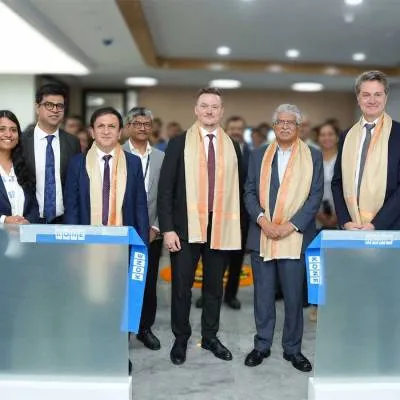
KONE, a global elevator and escalator manufacturer, has inaugurated its first Digital Experience Centre (DEC) in India, located in Pune. The facility aims to showcase how artificial intelligence (AI), connectivity and data-driven technologies can enhance customer experiences and improve building operations.The centre was inaugurated by Jussi Herlin, Executive Vice Chair, KONE Corporation; Philippe Delorme, President and CEO, KONE; and Nandan Nilekani, Co-founder and Chairman of the Board, Infosys.Designed as an interactive customer environment, the facility demonstrates digital solutions cover..

Next Story
Infrastructure Urban

CII GreenCo Launches Circularity Guidelines for Indian Industry

The Confederation of Indian Industry (CII) GreenCo Council has launched the CII GreenCo Circularity Guidelines – Pilot Version at the 17th CII GreenCo Waste & Resource Management Summit 2026 in Chennai. The initiative aims to strengthen resource efficiency, waste reduction and circular economy practices across Indian manufacturing and process industries.The guidelines introduce a structured framework with circularity indices covering raw materials, consumables, packaging and other resource inputs. These indicators will help industries assess existing practices, identify opportunities to ..

Next Story
Infrastructure Energy

Global Electronics Association Launches IPC-1783-CO2E Standard

The Global Electronics Association has introduced IPC-1783-CO2E, a new international standard aimed at improving consistency, transparency and comparability in product carbon footprint reporting across the electronics manufacturing industry.The standard, titled International Standard for Data Collection and Reporting of CO2 Equivalent (CO2e) Emissions for the Electronics Manufacturing Supply Chain, provides industry-specific guidance for collecting, estimating and reporting carbon emissions data.With increasing regulatory requirements and customer expectations, electronics manufacturers face c..

Advertisement

Subscribe to Our Newsletter

Get daily newsletters around different themes from Construction world.

STAY CONNECTED

Advertisement

SPECIAL OFFER
QR Code