




Seven Hoardings Violate BMC Regulations
ECONOMY & POLICY

Seven Hoardings Violate BMC Regulations

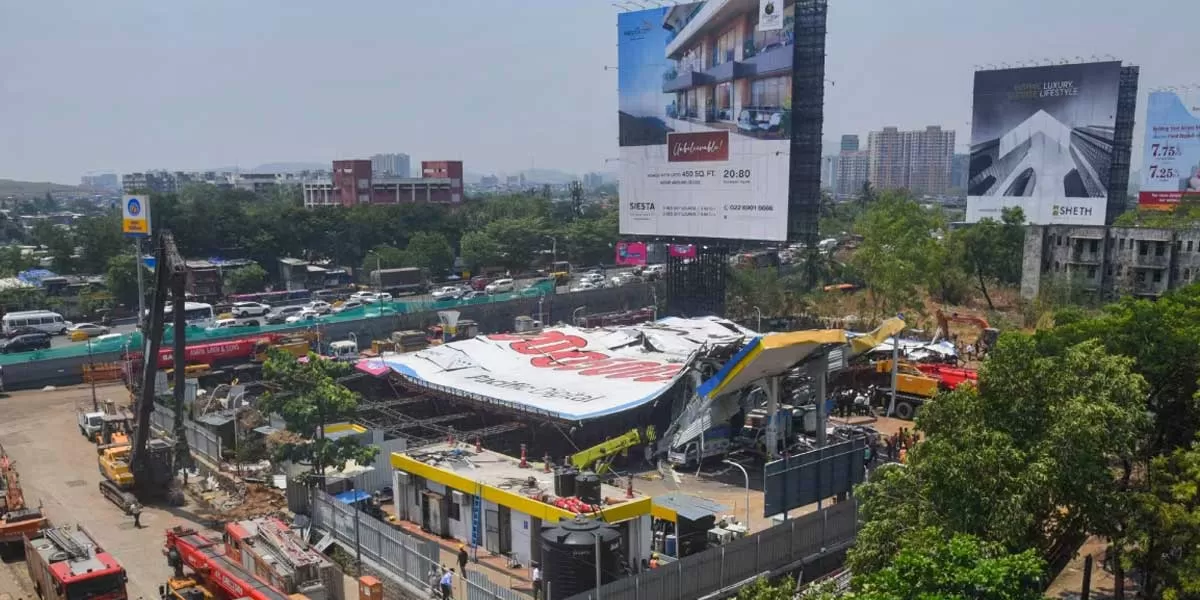
The Brihanmumbai Municipal Corporation (BMC) has identified seven advertising hoardings on railway land that violate its regulations. These hoardings, found on the Western and Central Railway premises, exceed the size limits set by the BMC, raising significant safety concerns. Following a tragic incident where a hoarding collapse led to 14 fatalities, the BMC has intensified its scrutiny of such structures.

The BMC mandates that hoardings should not exceed 40 x 40 feet. However, many on railway land have been found to be much larger, with some exceeding 120 feet in height. These oversized hoardings pose serious risks, especially during adverse weather conditions.

In response to these breaches, the BMC has issued notices to the Divisional Railway Managers (DRMs) of both Central and Western Railways, demanding the removal of the non-compliant hoardings. This action is part of a broader initiative to enforce safety standards and prevent further accidents. The BMC is also collaborating with structural experts to evaluate the stability of existing hoardings and ensure they meet safety requirements.

The situation highlights a long-standing conflict between the BMC and railway authorities over jurisdiction and safety compliance. The railways, under their own policies, have permitted the erection of these large hoardings without consulting the BMC, leading to regulatory conflicts and safety lapses. The BMC is now stepping up efforts to address these issues and ensure all hoardings within its jurisdiction comply with established safety norms.

This crackdown is expected to continue as the BMC aims to eliminate all unsafe hoardings in the city, prioritising public safety and adherence to regulations.

The Brihanmumbai Municipal Corporation (BMC) has identified seven advertising hoardings on railway land that violate its regulations. These hoardings, found on the Western and Central Railway premises, exceed the size limits set by the BMC, raising significant safety concerns. Following a tragic incident where a hoarding collapse led to 14 fatalities, the BMC has intensified its scrutiny of such structures. The BMC mandates that hoardings should not exceed 40 x 40 feet. However, many on railway land have been found to be much larger, with some exceeding 120 feet in height. These oversized hoardings pose serious risks, especially during adverse weather conditions. In response to these breaches, the BMC has issued notices to the Divisional Railway Managers (DRMs) of both Central and Western Railways, demanding the removal of the non-compliant hoardings. This action is part of a broader initiative to enforce safety standards and prevent further accidents. The BMC is also collaborating with structural experts to evaluate the stability of existing hoardings and ensure they meet safety requirements. The situation highlights a long-standing conflict between the BMC and railway authorities over jurisdiction and safety compliance. The railways, under their own policies, have permitted the erection of these large hoardings without consulting the BMC, leading to regulatory conflicts and safety lapses. The BMC is now stepping up efforts to address these issues and ensure all hoardings within its jurisdiction comply with established safety norms. This crackdown is expected to continue as the BMC aims to eliminate all unsafe hoardings in the city, prioritising public safety and adherence to regulations.

Next Story
Infrastructure Urban

India Expands Semiconductor Training To 500 Institutions

Under the Chips to Startups programme of the India Semiconductor Mission, the Union minister responsible for Railways, Information and Broadcasting, and Electronics and IT reported notable progress in talent development. He indicated that over the past four years substantial steps have been taken towards a 10-year target of training 85,000 engineers in semiconductor design. World-class EDA tools have been deployed in 315 academic institutions across the country to provide students with practical exposure to chip design. These EDA tools are supported by leading global firms and are accessible t..

Next Story
Infrastructure Urban

Delhi Institutions Support India Semiconductor Mission

The Government of India has prioritised talent development through training, upskilling and workforce development under the Chips to Startups initiative of the India Semiconductor Mission, with officials noting progress in four years towards a 10-year target of training 85,000 engineers in semiconductor design. Electronic design automation tools provided by Synopsys, Cadence, Siemens, Renesas, Ansys and AMD have been deployed in 315 academic institutions, enabling students to gain practical chip design experience. Chips have been fabricated and tested at the Semiconductor Laboratory, Mohali, a..

Next Story
Infrastructure Urban

NHA Announces Winners Of NHCX Hackathon At IIT Hyderabad

The National Health Authority (NHA) has concluded the NHCX Hackathon under the Ayushman Bharat Digital Mission (ABDM) to stimulate innovation around the National Health Claims Exchange (NHCX). The winning teams presented their solutions at the NHCX Innovation Meet held at IIT Hyderabad during a two-day event in March 2026 that also served as the hackathon grand finale. The hackathon itself ran from 22 to 28 February 2026 and aimed to accelerate paperless, transparent claims processing across India. The event was organised with a range of ecosystem partners, including the Insurance Regulatory a..

Advertisement

Subscribe to Our Newsletter

Get daily newsletters around different themes from Construction world.

STAY CONNECTED

Advertisement

Advertisement

Advertisement