SHANTI Bill Biggest Science Reform of Modi Era: Jitendra Singh
ECONOMY & POLICY

SHANTI Bill Biggest Science Reform of Modi Era: Jitendra Singh

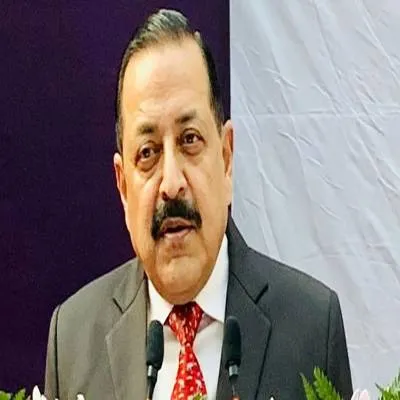
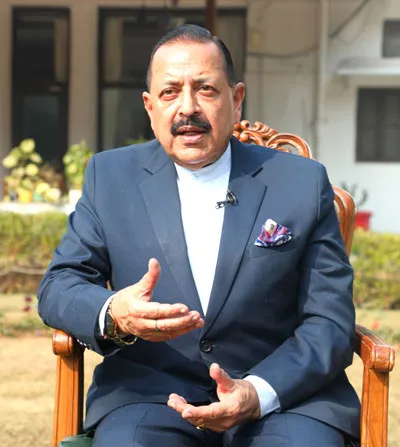
Union Minister for Science & Technology Jitendra Singh has recently said the SHANTI Bill will go down in history as one of the Modi Government’s biggest science reforms, placing science-driven policy at the centre of India’s long-term socio-economic transformation.

Speaking in a media interaction, the Minister said the third term of Prime Minister Narendra Modi, referred to as Modi 3.0, is distinctly marked by bold and structural reforms with a strong focus on science, innovation and entrepreneurship. He noted that while past reform narratives largely centred on welfare and governance, future national growth will increasingly be shaped by reforms in science and technology.

Dr Singh said the SHANTI Bill breaks a six-decade stalemate in India’s nuclear sector, unlocking its potential for peaceful, clean and sustainable energy while maintaining strict standards of safety, sovereignty and public interest. He added that the reform aligns India’s nuclear framework with global best practices and enables civilian expansion in clean power generation, healthcare and advanced research.

Highlighting India’s clean energy roadmap, the Minister said nuclear power capacity has doubled from about 4.4 GW in 2014 to nearly 8.7 GW, with a target of reaching around 100 GW by 2047. He noted that nuclear energy will be critical in supporting emerging technologies such as artificial intelligence, quantum computing and data-driven infrastructure, given its ability to provide reliable round-the-clock power.

Dr Singh also pointed to the growing role of nuclear science in healthcare, particularly in cancer diagnosis and treatment through nuclear medicine and isotopes. He added that the move towards Small Modular Reactors will further strengthen energy security for urban centres, industrial corridors and economic zones.

The Minister said the SHANTI Bill has received wide acceptance across the scientific community, industry and the innovation ecosystem, reflecting a national consensus on reforming and modernising India’s nuclear sector as part of the Modi 3.0 vision for a developed nation by 2047.

Union Minister for Science & Technology Jitendra Singh has recently said the SHANTI Bill will go down in history as one of the Modi Government’s biggest science reforms, placing science-driven policy at the centre of India’s long-term socio-economic transformation. Speaking in a media interaction, the Minister said the third term of Prime Minister Narendra Modi, referred to as Modi 3.0, is distinctly marked by bold and structural reforms with a strong focus on science, innovation and entrepreneurship. He noted that while past reform narratives largely centred on welfare and governance, future national growth will increasingly be shaped by reforms in science and technology. Dr Singh said the SHANTI Bill breaks a six-decade stalemate in India’s nuclear sector, unlocking its potential for peaceful, clean and sustainable energy while maintaining strict standards of safety, sovereignty and public interest. He added that the reform aligns India’s nuclear framework with global best practices and enables civilian expansion in clean power generation, healthcare and advanced research. Highlighting India’s clean energy roadmap, the Minister said nuclear power capacity has doubled from about 4.4 GW in 2014 to nearly 8.7 GW, with a target of reaching around 100 GW by 2047. He noted that nuclear energy will be critical in supporting emerging technologies such as artificial intelligence, quantum computing and data-driven infrastructure, given its ability to provide reliable round-the-clock power. Dr Singh also pointed to the growing role of nuclear science in healthcare, particularly in cancer diagnosis and treatment through nuclear medicine and isotopes. He added that the move towards Small Modular Reactors will further strengthen energy security for urban centres, industrial corridors and economic zones. The Minister said the SHANTI Bill has received wide acceptance across the scientific community, industry and the innovation ecosystem, reflecting a national consensus on reforming and modernising India’s nuclear sector as part of the Modi 3.0 vision for a developed nation by 2047.

Next Story
Infrastructure Transport

Under-construction Ropeway Collapses in Bihar’s Rohtas District

An under-construction ropeway in Bihar’s Rohtas district collapsed on Friday, forcing an immediate halt to the project just days before its scheduled inauguration on New Year’s Day, January 1, 2026. Authorities confirmed that no casualties or injuries were reported in the incident.The ropeway was being developed to improve access for tourists and devotees visiting Rohtas Fort, also known as Rohtasgarh, a prominent tourist destination in the state. The fort, located at an altitude of around 1,400 feet above sea level, attracts large crowds on New Year’s Day, when visitors also throng the ..

Next Story
Infrastructure Urban

NTH and DRDO Lab DMSRDE Sign MoU for Research and Testing Ties

The National Test House (NTH), functioning under the Department of Consumer Affairs, Ministry of Consumer Affairs, Food & Public Distribution, has signed a Memorandum of Understanding (MoU) with the Defence Materials and Stores Research & Development Establishment (DMSRDE), a laboratory of the Defence Research & Development Organisation (DRDO), Ministry of Defence, Government of India, to strengthen cooperation in research, testing and training.The MoU establishes a framework for collaborative research and testing activities, sharing of laboratory and instrumentation facilities, ex..

Next Story
Infrastructure Transport

MoCA Sets up 24x7 Passenger Assistance Control Room for Flyers

The Ministry of Civil Aviation (MoCA) has established a permanent, 24x7 Passenger Assistance Control Room (PACR) to accelerate the redressal of air passenger grievances, responding to the rapid growth of India’s aviation sector and the associated rise in service-related complaints.India’s aviation industry has expanded significantly over the past decade, particularly in the last eleven years, resulting in higher passenger volumes and improved connectivity. However, this growth has also brought persistent challenges such as flight delays, cancellations, refund disputes, baggage issues, cong..

Advertisement

Subscribe to Our Newsletter

Get daily newsletters around different themes from Construction world.

STAY CONNECTED

Advertisement

Advertisement

Advertisement

Advertisement

Open In App