


Taiwanese Gogoro to invest in Maharashtra
ECONOMY & POLICY

Taiwanese Gogoro to invest in Maharashtra

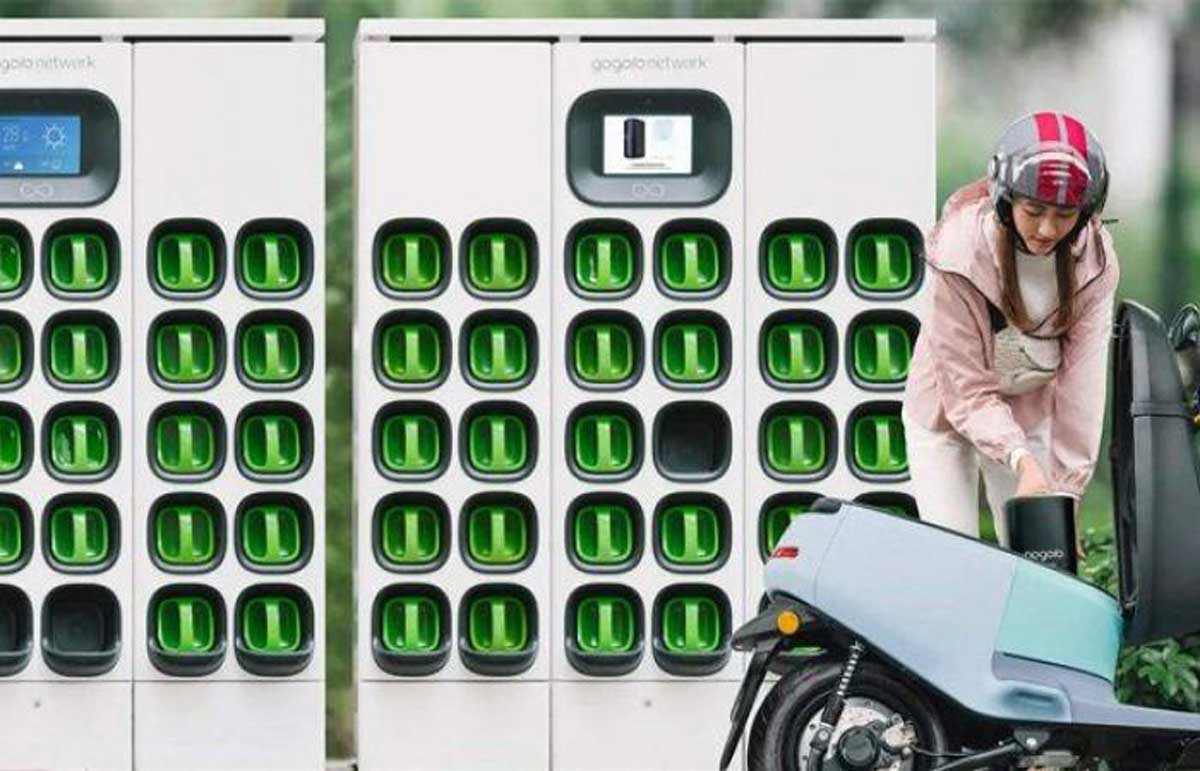
Taiwanese electric mobility giant Gogoro will invest more than $1.5 billion to establish state-wide battery charging and swapping infrastructure in Maharashtra.

The proposed ‘Ultra Mega Project’ deal includes financial incentives and support from the Maharashtra government. The announcement follows Gogoro’s earlier commitment to invest $2.5 billion over eight years in Maharashtra. The proposed investment will start later this year.

The Maharashtra government categorizes Ultra Mega Projects as significant strategic investments exceeding $500 million that usually result in government incentives to ensure successful project execution.

“Gogoro’s request for financial incentives was approved and endorsed by the Maharashtra state cabinet and the two parties expect to complete the agreement soon,” Gogoro said in a statement.

“As the leading State in India for electric vehicles, Maharashtra is demonstrating our strong commitment towards sustainable transportation for all. As part of the project, Gogoro will establish its India vehicle, smart battery, and battery swapping station manufacturing in Maharashtra and deploy their industry-leading smart battery infrastructure in the state, generating approximately 10,000 direct and indirect jobs,” said Maharashtra Chief Minister Eknath Shinde.

Gogoro plans to build a smart energy infrastructure in Maharashtra that is open and accessible and establishes battery swapping and smart battery stations as a leading source for mobility and energy storage.

“We are focused on creating a domestic supplier ecosystem that allows for domestic growth and foreign market expansion,” said Horace Luke, founder, and CEO of Gogoro, adding, “We are excited to be partnering with the Maharashtra government in its vision to transform urban transportation and provide a better path forward for its residents and businesses.”

Taiwanese electric mobility giant Gogoro will invest more than $1.5 billion to establish state-wide battery charging and swapping infrastructure in Maharashtra.The proposed ‘Ultra Mega Project’ deal includes financial incentives and support from the Maharashtra government. The announcement follows Gogoro’s earlier commitment to invest $2.5 billion over eight years in Maharashtra. The proposed investment will start later this year.The Maharashtra government categorizes Ultra Mega Projects as significant strategic investments exceeding $500 million that usually result in government incentives to ensure successful project execution.“Gogoro’s request for financial incentives was approved and endorsed by the Maharashtra state cabinet and the two parties expect to complete the agreement soon,” Gogoro said in a statement.“As the leading State in India for electric vehicles, Maharashtra is demonstrating our strong commitment towards sustainable transportation for all. As part of the project, Gogoro will establish its India vehicle, smart battery, and battery swapping station manufacturing in Maharashtra and deploy their industry-leading smart battery infrastructure in the state, generating approximately 10,000 direct and indirect jobs,” said Maharashtra Chief Minister Eknath Shinde.Gogoro plans to build a smart energy infrastructure in Maharashtra that is open and accessible and establishes battery swapping and smart battery stations as a leading source for mobility and energy storage.“We are focused on creating a domestic supplier ecosystem that allows for domestic growth and foreign market expansion,” said Horace Luke, founder, and CEO of Gogoro, adding, “We are excited to be partnering with the Maharashtra government in its vision to transform urban transportation and provide a better path forward for its residents and businesses.”

Next Story
Infrastructure Urban

Implementation Status of Jal Jeevan Mission

Since August 2019 the Government has implemented Jal Jeevan Mission to provide assured potable water through household tap connections in rural India. At the start of the mission only 32.3 million (mn) rural households, representing 16.7 per cent, were reported to have tap water connections. States and union territories have reported that 125.8 mn additional rural households have since been provided with tap connections. As a result, of about 193.6 mn rural households roughly 158.2 mn, or 81.71 per cent, are reported to have tap water supply at home.\n\nThe State, district and village level st..

Next Story
Infrastructure Urban

Jal Jeevan Mission Reaches Eighty One Per Cent Rural Coverage

The Government reported substantial progress under the Jal Jeevan Mission, launched in August 2019 to provide tap water to every rural household. At launch only 32.3 million (mn) rural households had tap connections and states and Union territories reported provision of 125.8 mn additional households by March 2026. Consequently, out of about 193.6 mn rural households around 158.2 mn, or 81.71 per cent, are reported to have tap water at home. The Finance Minister announced extension of the mission until 2028 in the 2025-26 budget speech. The Swachh Bharat Mission Grameen, launched in October 20..

Next Story
Infrastructure Urban

Empowering Local Governance for Sustainable Rural Water Supply

The Ministry of Jal Shakti has aligned the Jal Jeevan Mission (JJM) with the 73rd Amendment to strengthen village level planning and community ownership of water supply. Gram Panchayats, village water and sanitation committees and Pani Samitis are to plan, implement, manage and maintain piped water systems, with gram sabha processes formalising handover and oversight. Implementation support agencies including non government organisations, community based organisations and self help groups have been empanelled to train local committees and promote women participation. Under JJM, the department ..

Advertisement

Subscribe to Our Newsletter

Get daily newsletters around different themes from Construction world.

STAY CONNECTED

Advertisement

Advertisement

Advertisement