+
Tamil Nadu Awards 1,400 MWh BESS To Eagle Infra And OPG
ECONOMY & POLICY

Tamil Nadu Awards 1,400 MWh BESS To Eagle Infra And OPG

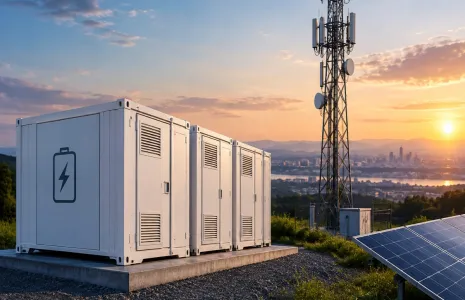
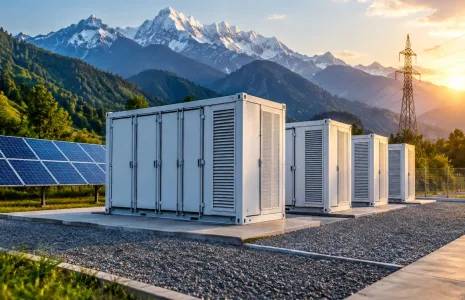
In a state auction conducted by the Tamil Nadu Green Energy Corporation, two developers were awarded a majority of the capacity in a seven standalone Battery Energy Storage System (BESS) tender that originally targeted 375 megawatts (MW) and 1,500 megawatt?hours (MWh) of storage. The final awarded energy capacity amounted to 1,400 MWh and the MW capacity was split almost evenly between the winners, with each developer securing 175 MW and 700 MWh. Eagle Infra India secured capacity at a tariff of Rs315,000 per MW per month and OPG Power Ventures won an equivalent quantum at a tariff of Rs316,000 per MW per month.

Under the contracts the developers will be responsible for designing, financing, installing and operating the battery energy storage systems and for integrating them with the state transmission network. The facilities will draw power from the grid through TANTRANSCO and TNPDCL and will charge and discharge capacity under instructions from the state load dispatch centre to manage peak demand and grid fluctuations. The projects will operate as standalone BESS assets connected to the transmission system.

The tender imposed strict technical standards requiring the batteries to maintain 95 per cent annual availability and to complete one and a half cycles per day while delivering a minimum round?trip efficiency of 85 per cent. To improve financial viability the government will provide viability gap funding equivalent to Rs one point eight million per MWh. Developers have 18 months to complete the construction and the commissioned systems will operate under a 15?year contract.

The allocation is intended to strengthen grid stability, support renewable energy integration and provide additional flexibility to the state network as variable generation grows. The slightly different tariffs signal market dynamics and the reduction from the tender target of 1,500 MWh to an awarded 1,400 MWh reflects the final procurement outcome. Once operational the BESS assets are expected to help manage peak demand and reduce operational pressure on conventional generators.

In a state auction conducted by the Tamil Nadu Green Energy Corporation, two developers were awarded a majority of the capacity in a seven standalone Battery Energy Storage System (BESS) tender that originally targeted 375 megawatts (MW) and 1,500 megawatt?hours (MWh) of storage. The final awarded energy capacity amounted to 1,400 MWh and the MW capacity was split almost evenly between the winners, with each developer securing 175 MW and 700 MWh. Eagle Infra India secured capacity at a tariff of Rs315,000 per MW per month and OPG Power Ventures won an equivalent quantum at a tariff of Rs316,000 per MW per month. Under the contracts the developers will be responsible for designing, financing, installing and operating the battery energy storage systems and for integrating them with the state transmission network. The facilities will draw power from the grid through TANTRANSCO and TNPDCL and will charge and discharge capacity under instructions from the state load dispatch centre to manage peak demand and grid fluctuations. The projects will operate as standalone BESS assets connected to the transmission system. The tender imposed strict technical standards requiring the batteries to maintain 95 per cent annual availability and to complete one and a half cycles per day while delivering a minimum round?trip efficiency of 85 per cent. To improve financial viability the government will provide viability gap funding equivalent to Rs one point eight million per MWh. Developers have 18 months to complete the construction and the commissioned systems will operate under a 15?year contract. The allocation is intended to strengthen grid stability, support renewable energy integration and provide additional flexibility to the state network as variable generation grows. The slightly different tariffs signal market dynamics and the reduction from the tender target of 1,500 MWh to an awarded 1,400 MWh reflects the final procurement outcome. Once operational the BESS assets are expected to help manage peak demand and reduce operational pressure on conventional generators.

Next Story
Infrastructure Urban

Implementation Status of Jal Jeevan Mission

Since August 2019 the Government has implemented Jal Jeevan Mission to provide assured potable water through household tap connections in rural India. At the start of the mission only 32.3 million (mn) rural households, representing 16.7 per cent, were reported to have tap water connections. States and union territories have reported that 125.8 mn additional rural households have since been provided with tap connections. As a result, of about 193.6 mn rural households roughly 158.2 mn, or 81.71 per cent, are reported to have tap water supply at home.\n\nThe State, district and village level st..

Next Story
Infrastructure Urban

Jal Jeevan Mission Reaches Eighty One Per Cent Rural Coverage

The Government reported substantial progress under the Jal Jeevan Mission, launched in August 2019 to provide tap water to every rural household. At launch only 32.3 million (mn) rural households had tap connections and states and Union territories reported provision of 125.8 mn additional households by March 2026. Consequently, out of about 193.6 mn rural households around 158.2 mn, or 81.71 per cent, are reported to have tap water at home. The Finance Minister announced extension of the mission until 2028 in the 2025-26 budget speech. The Swachh Bharat Mission Grameen, launched in October 20..

Next Story
Infrastructure Urban

Empowering Local Governance for Sustainable Rural Water Supply

The Ministry of Jal Shakti has aligned the Jal Jeevan Mission (JJM) with the 73rd Amendment to strengthen village level planning and community ownership of water supply. Gram Panchayats, village water and sanitation committees and Pani Samitis are to plan, implement, manage and maintain piped water systems, with gram sabha processes formalising handover and oversight. Implementation support agencies including non government organisations, community based organisations and self help groups have been empanelled to train local committees and promote women participation. Under JJM, the department ..

Advertisement

Subscribe to Our Newsletter

Get daily newsletters around different themes from Construction world.

STAY CONNECTED

Advertisement

Advertisement

Advertisement