


Tawi Riverfront Phase One Opened In Jammu
ECONOMY & POLICY

Tawi Riverfront Phase One Opened In Jammu

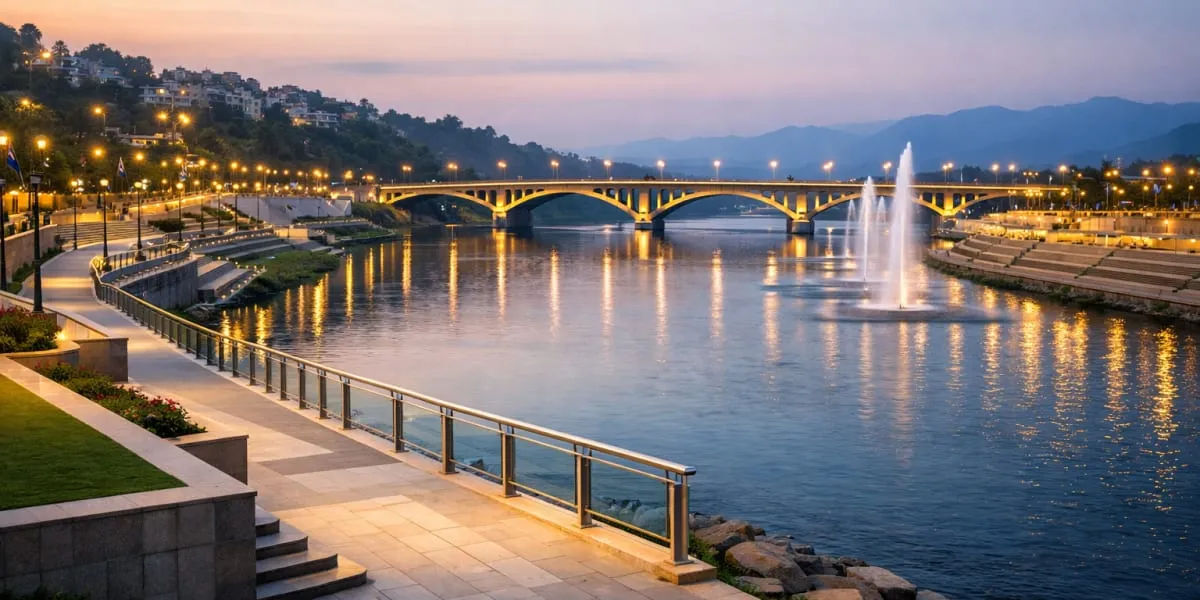
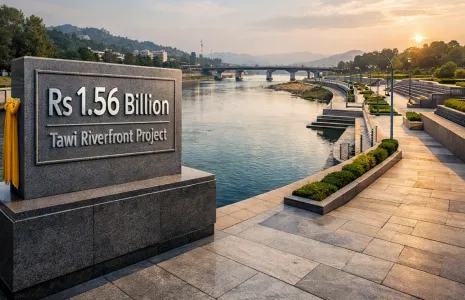
Jammu and Kashmir Lieutenant Governor Manoj Sinha officially opened the first phase of the Tawi Riverfront Project on 15 April, developed at a cost of Rs 1.56 billion (Rs 1.56 bn) and implemented by Jammu Smart City Limited. The inauguration coincided with Baisakhi celebrations and formed part of a three day Tawi Mahotsav organised by the city authority. The project aims to revitalise the river corridor and enhance urban amenities for residents and visitors.

The development provides promenades along the left bank, the right bank and the central island of the Tawi River, forming four continuous stretches intended for walking, jogging and cycling. A dedicated ghat area for the sacred Tawi Aarti has been established to accommodate ritual activities. Support facilities and landscaping have been included to improve accessibility and public enjoyment.

At the event the lieutenant governor laid the foundation stone for a four lane connecting road and a bridge to link the right bank with Jewellery Chowk via Bhagwati Nagar rotary, measures intended to ease congestion on a critical city stretch. He also initiated the development of green spaces along a one kilometre promenade on the left bank to create a vibrant urban waterfront for residents and tourists. Under the Urban Challenge Fund two major projects were launched, namely real estate monetisation of Phase I and an extension of the riverfront from Bikram Chowk Bridge to Har Ki Paudi. Officials described these initiatives as pivotal to transforming the riverfront into a tourist destination, a recreational hub and a dynamic economic centre.

The lieutenant governor administered an anti drug pledge to citizens and honoured winners of a traditional dangal during the festivities. Senior political leaders, administrative officers, religious figures, local representatives and citizens from diverse backgrounds attended the ceremony. Among those present were Jugal Kishore Sharma, Sat Sharma, Satish Sharma, Sunil Sharma, Atal Dulloo, Shaleen Kabra and Mandeep Kaur, with other senior officials and members of the legislative assembly. The authorities indicated the works will proceed in phases to ensure integration with heritage values and contemporary urban needs.

Jammu and Kashmir Lieutenant Governor Manoj Sinha officially opened the first phase of the Tawi Riverfront Project on 15 April, developed at a cost of Rs 1.56 billion (Rs 1.56 bn) and implemented by Jammu Smart City Limited. The inauguration coincided with Baisakhi celebrations and formed part of a three day Tawi Mahotsav organised by the city authority. The project aims to revitalise the river corridor and enhance urban amenities for residents and visitors. The development provides promenades along the left bank, the right bank and the central island of the Tawi River, forming four continuous stretches intended for walking, jogging and cycling. A dedicated ghat area for the sacred Tawi Aarti has been established to accommodate ritual activities. Support facilities and landscaping have been included to improve accessibility and public enjoyment. At the event the lieutenant governor laid the foundation stone for a four lane connecting road and a bridge to link the right bank with Jewellery Chowk via Bhagwati Nagar rotary, measures intended to ease congestion on a critical city stretch. He also initiated the development of green spaces along a one kilometre promenade on the left bank to create a vibrant urban waterfront for residents and tourists. Under the Urban Challenge Fund two major projects were launched, namely real estate monetisation of Phase I and an extension of the riverfront from Bikram Chowk Bridge to Har Ki Paudi. Officials described these initiatives as pivotal to transforming the riverfront into a tourist destination, a recreational hub and a dynamic economic centre. The lieutenant governor administered an anti drug pledge to citizens and honoured winners of a traditional dangal during the festivities. Senior political leaders, administrative officers, religious figures, local representatives and citizens from diverse backgrounds attended the ceremony. Among those present were Jugal Kishore Sharma, Sat Sharma, Satish Sharma, Sunil Sharma, Atal Dulloo, Shaleen Kabra and Mandeep Kaur, with other senior officials and members of the legislative assembly. The authorities indicated the works will proceed in phases to ensure integration with heritage values and contemporary urban needs.

Next Story
Equipment

India CE Industry Ends FY26 on a Steady Recovery Path

India’s construction equipment industry closed FY26 on a stable note, reflecting measured resilience and gradually improving momentum. Total sales in Q4 FY26 rose 4 per cent year on year to 42,906 units, extending the recovery seen over the past two years.Domestic demand for the full year remained under pressure, declining 7 per cent, but exports provided strong support. Overall exports grew 31 per cent, while non-OEM exports increased 13 per cent, highlighting sustained demand from overseas markets.March 2026 further underlined the recovery, with sales rising 6 per cent year on year and 13 ..

Next Story
Infrastructure Urban

Leaders Question FIR Against Anil Agarwal

Several industry and public figures have questioned the FIR filed against Anil Agarwal following the boiler accident in Chhattisgarh, while also expressing condolences over the loss of lives and calling for a thorough investigation.Naveen Jindal said the tragedy was deeply painful and stressed that compensation, livelihood support for affected families and a fair probe were essential. He also questioned naming Agarwal in the FIR before completion of the investigation.Kiran Bedi urged restraint, saying investigations should focus on learning lessons and strengthening systems rather than prematu..

Next Story
Infrastructure Urban

Tier 2, 3 Cities Drive 66% of New D2C Orders

Tier 2 and Tier 3 cities accounted for 66 per cent of new direct-to-consumer (D2C) orders in FY 2026, according to a new analysis by Unicommerce.The report said buyers from smaller cities also contributed 60 per cent of incremental gross merchandise value (GMV) in FY 2026 compared with FY 2025, highlighting rising demand beyond metro markets.Overall, India’s D2C segment recorded strong growth, with order volumes rising 33 per cent and GMV increasing 32 per cent year-on-year. The findings are based on more than 400 million order items processed through brand websites on Unicommerce’s Uniwar..

Advertisement

Subscribe to Our Newsletter

Get daily newsletters around different themes from Construction world.

STAY CONNECTED

Advertisement

Advertisement

Advertisement















