TEXMiN and GIREDMET Sign MoU to Ramp Up Rare Earth Technologies
ECONOMY & POLICY

TEXMiN and GIREDMET Sign MoU to Ramp Up Rare Earth Technologies

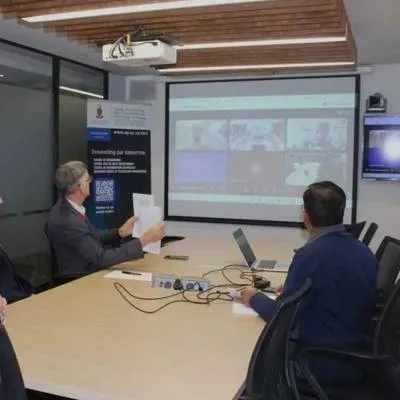
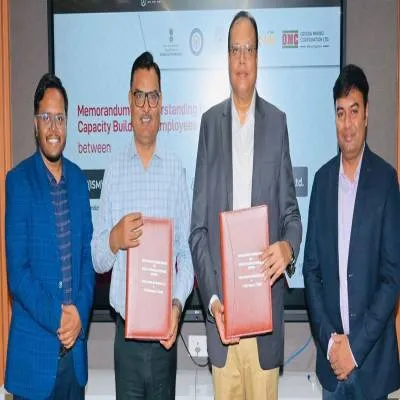
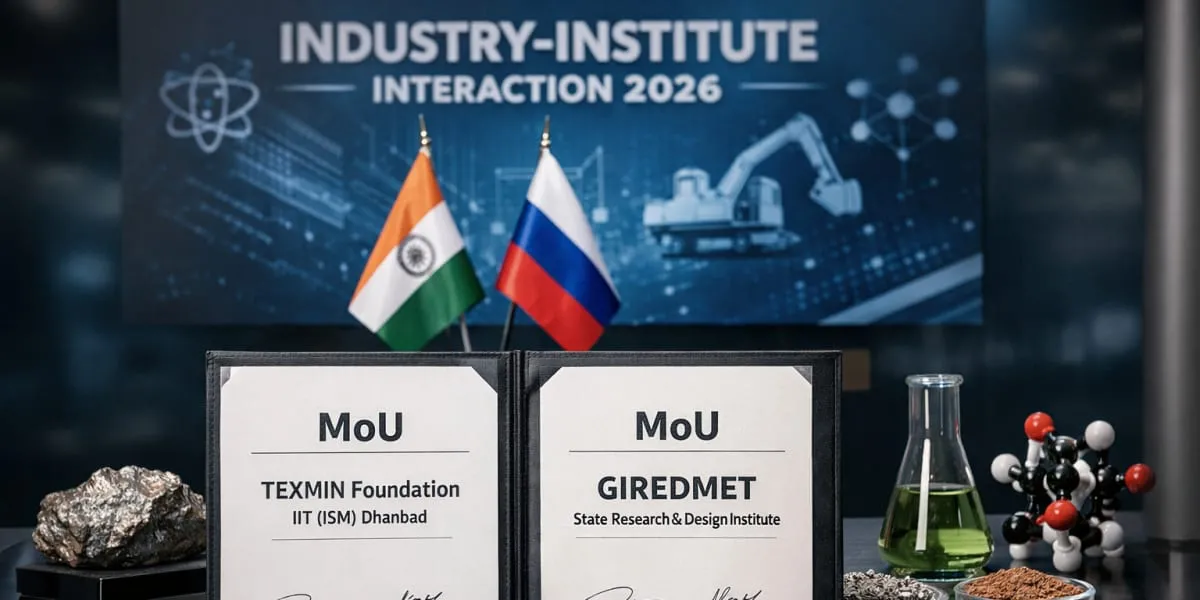
TEXMiN Foundation, the Technology Translation Research Park (TTRP) at IIT (ISM) Dhanbad, signed a memorandum of understanding with the State Research and Design Institute of Rare Metal Industry (GIREDMET) to collaborate on rare earth and critical mineral technologies. The agreement was signed at the Industry-Institute Interaction 2026 conclave and exhibition at IIT (ISM) Dhanbad in the presence of the Chief Executive Officer of the Anusandhan National Research Foundation (ANRF). Officials described the partnership as a step to combine translational research capabilities and global expertise to strengthen domestic self-reliance in rare metals.

The MoU establishes a cooperation framework across the mining value chain, from exploration and mineral beneficiation to extraction, separation, refining and advanced materials development. Under the agreement both institutions will pursue joint research and development on process technologies for rare earth and critical mineral processing, including pilot-scale validation and technology translation of GIREDMET processes at TEXMiN under the TTRP framework. The partnership is intended to accelerate development and industry-facing demonstrations and to raise technologies to higher Technology Readiness Levels.

A key focus is the development of high-coercivity permanent magnet blocks based on neodymium-iron-boron (Nd-Fe-B), supported by a complete rare earth metallurgical cycle and high-purity metals and refractory powders for electronics and optics. The collaboration will explore hydrometallurgical recycling for lithium-ion batteries to recover lithium, nickel and cobalt and will develop recovery solutions for critical minerals from legacy mine dumps and tailings and from low-grade or complex ores. Digital twin-enabled smart processing plants integrating artificial intelligence and sensor systems are included to support pilot validation and industrial deployment.

Officials noted the initiative aligns with India's National Critical Mineral Mission (NCMM) and Russia's Federal Project for the Development of Rare Metal Industry and will include expert exchanges, joint doctoral supervision and specialised training. Representatives from TEXMiN and IIT (ISM) Dhanbad are expected at RAREMET-2026 in Moscow from May 20-22, 2026 and the institutions will aim to translate research into sustainable, industry-ready solutions.

TEXMiN Foundation, the Technology Translation Research Park (TTRP) at IIT (ISM) Dhanbad, signed a memorandum of understanding with the State Research and Design Institute of Rare Metal Industry (GIREDMET) to collaborate on rare earth and critical mineral technologies. The agreement was signed at the Industry-Institute Interaction 2026 conclave and exhibition at IIT (ISM) Dhanbad in the presence of the Chief Executive Officer of the Anusandhan National Research Foundation (ANRF). Officials described the partnership as a step to combine translational research capabilities and global expertise to strengthen domestic self-reliance in rare metals. The MoU establishes a cooperation framework across the mining value chain, from exploration and mineral beneficiation to extraction, separation, refining and advanced materials development. Under the agreement both institutions will pursue joint research and development on process technologies for rare earth and critical mineral processing, including pilot-scale validation and technology translation of GIREDMET processes at TEXMiN under the TTRP framework. The partnership is intended to accelerate development and industry-facing demonstrations and to raise technologies to higher Technology Readiness Levels. A key focus is the development of high-coercivity permanent magnet blocks based on neodymium-iron-boron (Nd-Fe-B), supported by a complete rare earth metallurgical cycle and high-purity metals and refractory powders for electronics and optics. The collaboration will explore hydrometallurgical recycling for lithium-ion batteries to recover lithium, nickel and cobalt and will develop recovery solutions for critical minerals from legacy mine dumps and tailings and from low-grade or complex ores. Digital twin-enabled smart processing plants integrating artificial intelligence and sensor systems are included to support pilot validation and industrial deployment. Officials noted the initiative aligns with India's National Critical Mineral Mission (NCMM) and Russia's Federal Project for the Development of Rare Metal Industry and will include expert exchanges, joint doctoral supervision and specialised training. Representatives from TEXMiN and IIT (ISM) Dhanbad are expected at RAREMET-2026 in Moscow from May 20-22, 2026 and the institutions will aim to translate research into sustainable, industry-ready solutions.

Next Story
Equipment

Herrenknecht TBM Cleared for Mumbai Water Tunnel Project

Afcons Infrastructure, a Shapoorji Pallonji Group company, has cleared the factory acceptance tests for a Herrenknecht Gripper tunnel boring machine (TBM) with a diameter of 5.33 m. The machine will be deployed for the 7.2 km Bhiwandi–Thane water tunnel project connecting Kasheli to Mulund (Bhiwandi to Octroi Naka).The project is expected to strengthen Mumbai’s existing water transport network and help increase fresh water supply for millions of residents. Designed for hard rock excavation, the Gripper TBM is built for high performance, precision and reliability.The entire 7.2 km tunnel dr..

Next Story
Infrastructure Transport

Sector 51-52 Metro skywalk in Noida remains shut despite being ready for over a year

Thousands of commuters travelling between Delhi Metro Rail Corporation’s (DMRC) Sector 52 station and Noida Metro Rail Corporation’s (NMRC) Sector 51 station continue to face daily inconvenience as the 300-metre air-conditioned skywalk connecting the two stations remains closed, despite being completed over a year ago, according to a report.The Noida Metro Rail Corporation built the foot overbridge to enable a seamless interchange between the Delhi Metro and Noida Metro networks. However, pending finishing work and a structural obstruction have delayed its opening.Krishna Karunesh, Chief E..

Next Story
Infrastructure Transport

Maharashtra clears Metro Line 5A, expansion of Mumbai Metro Line 5

The Maharashtra government has approved the expansion of Mumbai Metro Line 5 along with a new integrated corridor, Metro Line 5A, forming a combined 34.2-km metro network across the Thane-Bhiwandi-Kalyan-Ulhasnagar belt. The integrated project has been cleared at an estimated cost of ₹18,130.55 crore, according to a government resolution (GR).Metro Line 5 was originally approved in October 2017 as a 24.9-km fully elevated corridor with 17 stations connecting Thane, Bhiwandi and Kalyan, with an initial project cost of ₹8,416.51 crore. The corridor is being developed in two phases.The first ..

Advertisement

Subscribe to Our Newsletter

Get daily newsletters around different themes from Construction world.

STAY CONNECTED

Advertisement

Advertisement

Advertisement