Tripura To Convert 5,000 Drinking Water Pumps To Solar
ECONOMY & POLICY

Tripura To Convert 5,000 Drinking Water Pumps To Solar

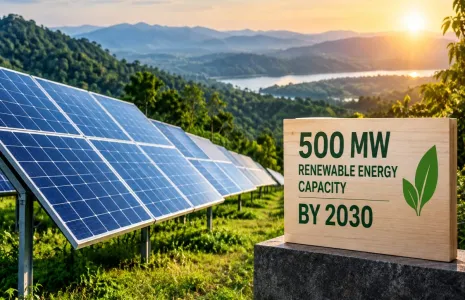
The Tripura Renewable Energy Development Agency has launched a programme to convert around 5,000 electricity powered drinking water pumps to solar energy to cut the state power bill. The Drinking Water and Sanitation department currently spends around Rs 1,250 million (mn) annually on electricity to operate nearly 10,000 conventional water pumps across the state. The move follows a review chaired by the chief minister in which high expenditure on water supply was identified as a priority for reduction.

TREDA director general Debabrata Sukladas said the agency has initiated the conversion of at least 5,000 water pumps and has begun work on a first phase covering 2,300 small bore pumps at an estimated cost of Rs 600 million (mn). The agency has floated a tender and indicated that work is expected to begin shortly and that the first phase is scheduled for completion during FY 2026-28. The project design aims to replace grid dependent units and to lower recurring electricity charges for the water department.

The conversion of the initial 2,300 pumps alone is expected to save the Drinking Water and Sanitation department around Rs 50 million (mn) a year in electricity charges. The director general noted that maintaining conventional supply in remote hilly areas poses logistical and financial challenges and that extending grid connectivity to sparsely populated locations is often not economically viable. Solar powered pumps are being positioned as a solution to ensure reliable supply while reducing operating costs.

TREDA currently generates around 37 megawatt (MW) of solar power in the state and reported strong investor interest in renewable projects at a recent business conclave. The power sector attracted proposals worth Rs 170 billion (bn), a substantial share of which relate to solar energy, and officials said the agency is working to translate proposals into projects on the ground. The programme will prioritise remote locations and aim to integrate local maintenance arrangements to sustain operation.

The Tripura Renewable Energy Development Agency has launched a programme to convert around 5,000 electricity powered drinking water pumps to solar energy to cut the state power bill. The Drinking Water and Sanitation department currently spends around Rs 1,250 million (mn) annually on electricity to operate nearly 10,000 conventional water pumps across the state. The move follows a review chaired by the chief minister in which high expenditure on water supply was identified as a priority for reduction. TREDA director general Debabrata Sukladas said the agency has initiated the conversion of at least 5,000 water pumps and has begun work on a first phase covering 2,300 small bore pumps at an estimated cost of Rs 600 million (mn). The agency has floated a tender and indicated that work is expected to begin shortly and that the first phase is scheduled for completion during FY 2026-28. The project design aims to replace grid dependent units and to lower recurring electricity charges for the water department. The conversion of the initial 2,300 pumps alone is expected to save the Drinking Water and Sanitation department around Rs 50 million (mn) a year in electricity charges. The director general noted that maintaining conventional supply in remote hilly areas poses logistical and financial challenges and that extending grid connectivity to sparsely populated locations is often not economically viable. Solar powered pumps are being positioned as a solution to ensure reliable supply while reducing operating costs. TREDA currently generates around 37 megawatt (MW) of solar power in the state and reported strong investor interest in renewable projects at a recent business conclave. The power sector attracted proposals worth Rs 170 billion (bn), a substantial share of which relate to solar energy, and officials said the agency is working to translate proposals into projects on the ground. The programme will prioritise remote locations and aim to integrate local maintenance arrangements to sustain operation.

Next Story
Real Estate

BXB Estates Sets AED 110 Million Jumeirah Golf Estates Record

BXB Estates has completed an AED 110 million residential transaction at Jumeirah Golf Estates, setting a new sales record for the prestigious Dubai residential community.Negotiated by Alfie Tabrez, Managing Partner of BXB Estates, the deal surpassed the previous record of AED 58 million for a completed ready villa in the development.The six-bedroom residence offers 21,714 sq ft of built-up space on a 15,873-sq-ft plot. It features nine bathrooms, four living lounges, a home office, bar lounge, private cinema and rooftop terrace.The property also includes a dedicated wellness area comprising a ..

Next Story
Infrastructure Urban

SECR Floats Rs 6,019 Mn EPC Tender For Paradol Nagpur Link

South East Central Railway (SECR) has invited bids for an Engineering, Procurement and Construction (EPC) contract to build a new broad gauge single line between Paradol Takeoff Point and Nagpur Road Station in Chhattisgarh. The contract carries an estimated cost of Rs 6,019.0 mn and requires an earnest money deposit of Rs 120.4 mn. The work is framed as an EPC assignment intended to strengthen regional rail infrastructure. The tender, issued under number CAO-C-BSP-26-27-15, specifies a completion period of 730 days and a bid validity of 180 days. Two pre-bid meetings are scheduled for 24 Augu..

Next Story
Infrastructure Transport

Indian Railways Reports Nine Per Cent Rise In July Freight Loading

Indian Railways handled 141.3 million tonnes (141.3 mn t) of freight in July, marking a rise of nine per cent year on year. Freight loading maintained a positive trajectory across the network compared with the same month last year. Passenger traffic also increased in July, contributing to higher overall network utilisation. The July outcome continued a pattern of steady monthly gains, reflecting gradual improvement in industrial and logistics activity. The growth in freight volumes reflected stronger demand across multiple sectors and improvements in logistics and train turnarounds. Enhanced r..

Advertisement

Subscribe to Our Newsletter

Get daily newsletters around different themes from Construction world.

STAY CONNECTED

Advertisement

Advertisement

Advertisement