



+
Union Budget Boosts Odisha Eco-Tourism And Mining
ECONOMY & POLICY

Union Budget Boosts Odisha Eco-Tourism And Mining

The Union Budget 2026-27 outlines a fiscal plan to boost Odisha's eco-tourism and mining sectors and enhance sustainable cargo movement through infrastructure development. The finance minister tabled the budget in Parliament and announced that ecologically sustainable turtle trails will be developed along key nesting sites in coastal Odisha, Karnataka and Kerala. The measure aims to strengthen conservation-linked tourism and to create local livelihoods around protected shorelines.

The annual convergence of millions of Olive Ridley turtles for mass nesting is expected to significantly enhance the eco-tourism potential of their nesting sites. The Gahirmatha rookery in Kendrapara district is widely described as the world's largest nesting beach and the animals also nest at Rushikulya and the Devi river mouth. They arrive each year between February and March and typically lay 120 to 150 eggs from which hatchlings emerge after about 45 to 50 days.

The Centre proposed Rare Earths Corridors to support four mineral-rich states and to promote mining, processing, research and manufacturing. The finance minister noted that a scheme for rare earth permanent magnets was launched in November 2025 and that the corridors would build on that initiative. To enhance domestic chemical production and reduce import dependency, the government will support states in establishing three chemical parks through a challenge-route, cluster-based plug-and-play model. Training institutes will be upgraded into Regional Centres of Excellence to develop a skilled inland water transport workforce.

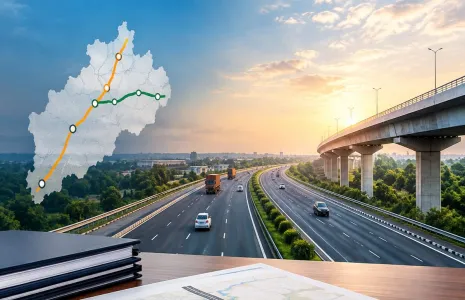
The plan envisages operationalising 20 new National Waterways (NW) over the next five years, beginning with NW-5 in Odisha to connect mineral-rich areas of Talcher, Angul and the industrial centre of Kalinga Nagar to the ports of Paradeep and Dhamra. Training institutes will be established as Regional Centres of Excellence to equip young people across waterways with necessary skills through targeted programmes. The measures are expected to generate employment and foster skill development for youth along the corridor, aligning with the goal of promoting sustainable cargo movement. Implementation will require coordination between central and state agencies.

The Union Budget 2026-27 outlines a fiscal plan to boost Odisha's eco-tourism and mining sectors and enhance sustainable cargo movement through infrastructure development. The finance minister tabled the budget in Parliament and announced that ecologically sustainable turtle trails will be developed along key nesting sites in coastal Odisha, Karnataka and Kerala. The measure aims to strengthen conservation-linked tourism and to create local livelihoods around protected shorelines. The annual convergence of millions of Olive Ridley turtles for mass nesting is expected to significantly enhance the eco-tourism potential of their nesting sites. The Gahirmatha rookery in Kendrapara district is widely described as the world's largest nesting beach and the animals also nest at Rushikulya and the Devi river mouth. They arrive each year between February and March and typically lay 120 to 150 eggs from which hatchlings emerge after about 45 to 50 days. The Centre proposed Rare Earths Corridors to support four mineral-rich states and to promote mining, processing, research and manufacturing. The finance minister noted that a scheme for rare earth permanent magnets was launched in November 2025 and that the corridors would build on that initiative. To enhance domestic chemical production and reduce import dependency, the government will support states in establishing three chemical parks through a challenge-route, cluster-based plug-and-play model. Training institutes will be upgraded into Regional Centres of Excellence to develop a skilled inland water transport workforce. The plan envisages operationalising 20 new National Waterways (NW) over the next five years, beginning with NW-5 in Odisha to connect mineral-rich areas of Talcher, Angul and the industrial centre of Kalinga Nagar to the ports of Paradeep and Dhamra. Training institutes will be established as Regional Centres of Excellence to equip young people across waterways with necessary skills through targeted programmes. The measures are expected to generate employment and foster skill development for youth along the corridor, aligning with the goal of promoting sustainable cargo movement. Implementation will require coordination between central and state agencies.

Next Story
Infrastructure Transport

Lucknow Metro East-West Corridor Consultancy Contract Awarded

The Uttar Pradesh Metro Rail Corporation has awarded the first construction-related consultancy contract for the Lucknow Metro East West Corridor to a joint venture of AYESA Ingenieria Arquitectura SAU and AYESA India Pvt Ltd. The firm was declared the lowest bidder for the Detailed Design Consultant contract for Lucknow Metro Line-2 under Phase 1B and the contract was recommended following the financial bid. The contract is valued at Rs 159.0 million (mn), covering design services for the corridor. Lucknow Metro Line-2 envisages the construction of an 11.165 kilometre corridor connecting Cha..

Next Story
Infrastructure Urban

Div Com Kashmir Urges Fast Tracking Of Jhelum Water Transport Project

The Divisional Commissioner of Kashmir has called for the fast-tracking of the Jhelum water transport project, urging district administrations and relevant agencies to accelerate planning and clearances. In a meeting convened at the divisional headquarters, the commissioner instructed officials from irrigation, public health engineering and municipal departments to prioritise the project and coordinate survey and design work. The directive emphasised removal of administrative bottlenecks and close monitoring to ensure timely mobilisation of resources and contractors. Officials were told to in..

Next Story
Infrastructure Urban

Interarch Reports Strong Q3 And Nine Month Results

Interarch Building Solutions Limited reported unaudited results for the third quarter and nine months ended 31 December 2025, recording strong revenue growth driven by execution and a robust order book. Net revenue for the third quarter rose by 43.7 per cent to Rs 5.225 billion (bn), compared with Rs 3.636 bn a year earlier, reflecting heightened demand in pre-engineered building projects. The company’s total order book as at 31 January 2026 stood at Rs 16.85 bn, supporting near-term visibility. EBITDA excluding other income for the quarter increased by 43.2 per cent to Rs 503 million (mn),..

Advertisement

Subscribe to Our Newsletter

Get daily newsletters around different themes from Construction world.

STAY CONNECTED

Advertisement

Advertisement

Advertisement

Open In App