UP Launches Safe Mobility Programme For Women Drivers
ECONOMY & POLICY

UP Launches Safe Mobility Programme For Women Drivers

The Uttar Pradesh government has launched a Safe Mobility Programme aimed at expanding safe and dignified transport options for girls and women while creating livelihoods for members of Self-Help Groups. The scheme will train female e-rickshaw pilots across the state to provide secure travel to schools, workplaces and other essential destinations. The initiative is presented as one of its kind in the state and is intended to strengthen women’s safety and economic independence.

Initially about 1,000 e-rickshaws are being provided to women belonging to Self-Help Groups. The service has been rolled out in the districts of Ayodhya, Gorakhpur, Varanasi, Kaushambi and Jhansi and will be introduced shortly in further districts including Lucknow, Prayagraj, Mirzapur, Bhadohi, Sonbhadra, Deoria, Lakhimpur Kheri and Sitapur. Officials describe the service as particularly suited to rural areas where female drivers can offer convenient and secure mobility for local residents.

The programme is being implemented under the Uttar Pradesh State Rural Livelihoods Mission with technical assistance from Development Alternatives and has produced early measurable outcomes. Across the five districts, 119 women have been enabled as entrepreneurs through provision of e-rickshaws, 629 women have received operational training and 244 women have been issued driving licences. The average annual income of participating women has exceeded Rs 0.3 million (mn), signalling an emerging source of household revenue.

Beyond transportation, the scheme is expected to improve girls’ access to education, ease daily commutes for working women and generate fresh employment opportunities in villages. Women beneficiaries are reported to be using the service to build more stable livelihoods and to set new benchmarks in self-reliance within their communities. Authorities indicate that scaling the model could extend similar benefits to other parts of the state.

The Uttar Pradesh government has launched a Safe Mobility Programme aimed at expanding safe and dignified transport options for girls and women while creating livelihoods for members of Self-Help Groups. The scheme will train female e-rickshaw pilots across the state to provide secure travel to schools, workplaces and other essential destinations. The initiative is presented as one of its kind in the state and is intended to strengthen women’s safety and economic independence. Initially about 1,000 e-rickshaws are being provided to women belonging to Self-Help Groups. The service has been rolled out in the districts of Ayodhya, Gorakhpur, Varanasi, Kaushambi and Jhansi and will be introduced shortly in further districts including Lucknow, Prayagraj, Mirzapur, Bhadohi, Sonbhadra, Deoria, Lakhimpur Kheri and Sitapur. Officials describe the service as particularly suited to rural areas where female drivers can offer convenient and secure mobility for local residents. The programme is being implemented under the Uttar Pradesh State Rural Livelihoods Mission with technical assistance from Development Alternatives and has produced early measurable outcomes. Across the five districts, 119 women have been enabled as entrepreneurs through provision of e-rickshaws, 629 women have received operational training and 244 women have been issued driving licences. The average annual income of participating women has exceeded Rs 0.3 million (mn), signalling an emerging source of household revenue. Beyond transportation, the scheme is expected to improve girls’ access to education, ease daily commutes for working women and generate fresh employment opportunities in villages. Women beneficiaries are reported to be using the service to build more stable livelihoods and to set new benchmarks in self-reliance within their communities. Authorities indicate that scaling the model could extend similar benefits to other parts of the state.

Related Stories

Gold Stories

Next Story
Resources

Schindler named among Forbes’ World’s Best Employers 2026

Schindler has been named among Forbes’ World’s Best Employers 2026, a global ranking recognising companies for their workplace environments.Compiled by Forbes in partnership with Statista, the ranking is based on independent employee feedback, including whether employees would recommend their organisation to friends and family.The company said the recognition reflected its focus on creating a workplace where employees can develop their expertise and build careers. ..
Next Story
Infrastructure Urban

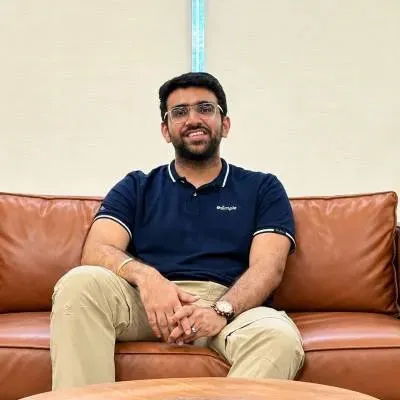
India needs an export-execution mindset: Vishesh Jain

Interview with Vishesh Jain, Founder & CEO, EximpleWhat gaps in India’s global trade ecosystem led you to build Eximple, and what problem did you see businesses struggling with most?Eximple came out of a problem that all three founders had seen from different choke points in the trade ecosystem. India has millions of MSMEs and manufacturers, and many of them can make products that are genuinely competitive on quality. Yet only a small fraction is able to build meaningful international businesses. In our experience, the gap is usually not manufacturing capability; it is the ability to exe..

Next Story
Building Material

Nuvoco reports 13.5% revenue growth in Q2 FY27

Nuvoco Vistas Corp. Ltd. reported consolidated revenue of Rs 27.9 billion for Q2 FY27, up 13.5% year on year. Cement sales volume rose 9% to 4.7 million tonnes (MMT), while EBITDA increased 11% to Rs 4.11 billion.The company said it began its cement operations in 2014 with a 2.3 MMT per annum (MMTPA) operation at Nimbol. It now aims to reach 35 MMTPA of cement capacity by FY28, nearly 15 times its initial capacity. Its portfolio spans cement, ready-mix concrete and modern building materials.On sustainability and cost efficiency, Nuvoco partnered with CleanMax for a 46.4 MW wind-solar hybrid re..

Advertisement

Subscribe to Our Newsletter

Get daily newsletters around different themes from Construction world.

STAY CONNECTED

Advertisement

SPECIAL OFFER
QR Code