



Upstream Reforms Draw Strong Industry Participation
ECONOMY & POLICY

Upstream Reforms Draw Strong Industry Participation

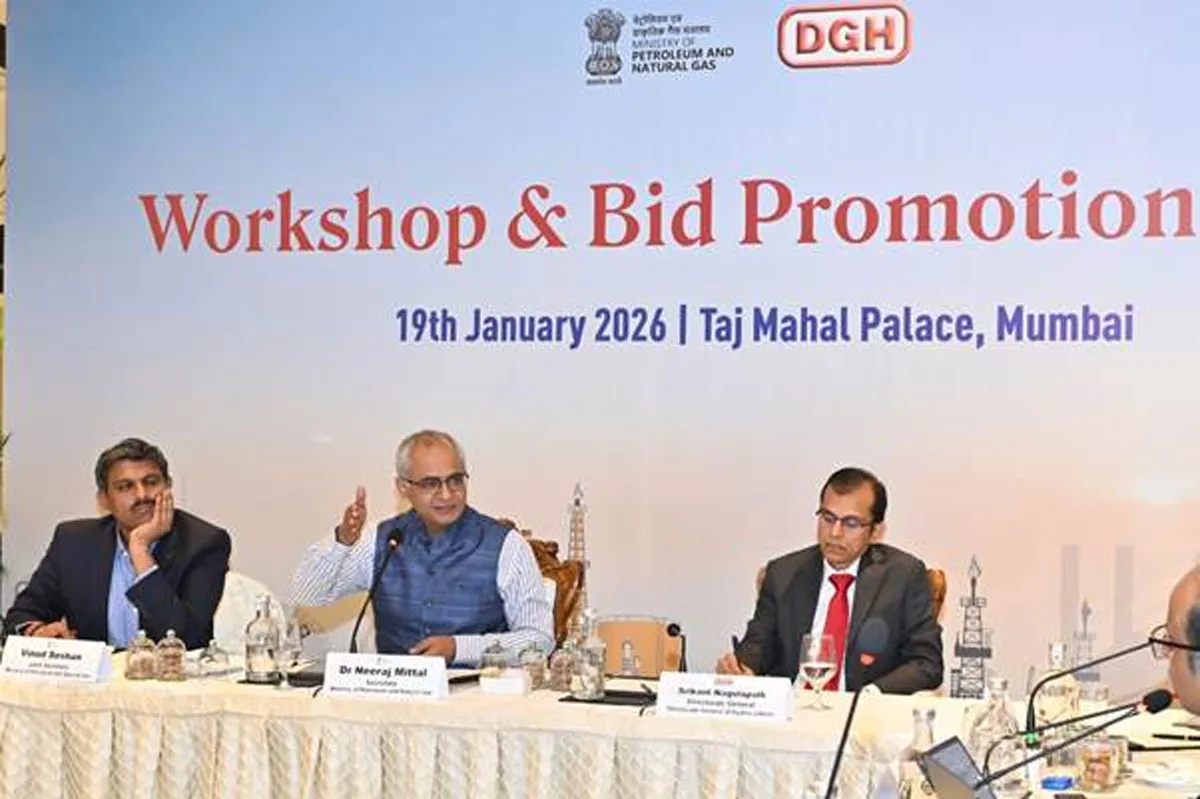
The day-long programme witnessed strong and diverse participation from domestic and international upstream operators, E&P service providers, global consulting firms, public and private sector financial institutions, insurers, academia and industry experts, underlining rising ecosystem-wide interest in India’s upstream reform agenda and investment opportunities.
In his virtual address, Hardeep Singh Puri, Minister for Petroleum and Natural Gas, highlighted that recent legislative, regulatory and policy reforms represent a landmark transformation of India’s upstream sector. He noted that data-led exploration initiatives, combined with policy reforms, have unlocked significant investment opportunities, particularly in offshore and frontier areas, while reaffirming the Government’s commitment to a stable, transparent and globally competitive investment framework.
Key Components of the Programme
The engagements included a workshop on financing India’s E&P growth, a session on the amended Oilfields (Regulation and Development) Act, revised Petroleum and Natural Gas Rules and the Model Revenue Sharing Contract (MRSC), along with a bid promotion event for upcoming upstream rounds. Senior officials from the Ministry of Petroleum and Natural Gas and the Directorate General of Hydrocarbons interacted extensively with participants.
Financing India’s E&P Growth
The financing workshop examined the readiness of India’s financial ecosystem to support expanded upstream investment under initiatives such as Samudra Manthan. Global consulting firms including S&P Global, Deloitte, A.T. Kearney and EY shared international perspectives on upstream financing models, risk allocation and capital mobilisation.
Financial institutions and insurers such as State Bank of India, New India Assurance and Bajaj Allianz discussed risk assessment frameworks, bank guarantee structures and emerging instruments, including insurance-backed surety bonds. It was highlighted that capital requirements are expected to rise sharply and become increasingly front-loaded, necessitating financing structures aligned with upstream risk profiles.
Amended ORD Act, PNG Rules and MRSC
A dedicated session familiarised operators with the amended ORD Act, revised PNG Rules and the updated MRSC. MoPNG noted that the reforms complete a decade-long effort to establish a predictable, investor-aligned regulatory framework, while DGH explained how contractual updates ensure alignment between policy intent and implementation.
New Upstream Bid Rounds
The bid promotion event showcased opportunities arising from regulatory evolution, improved data availability and government-led exploration. Srikant Nagulapalli, Director General, DGH, outlined forthcoming bid rounds, including OALP Bid Round X, DSF Bid Round IV and CBM Bid Rounds 2025–26.
Industry presentations highlighted India’s significant yet-to-find hydrocarbon potential, a growing domestic market with marketing and pricing freedom, access to high-quality data through the National Data Repository, and a strong policy focus on enhancing domestic production and energy security.

The day-long programme witnessed strong and diverse participation from domestic and international upstream operators, E&P service providers, global consulting firms, public and private sector financial institutions, insurers, academia and industry experts, underlining rising ecosystem-wide interest in India’s upstream reform agenda and investment opportunities.In his virtual address, Hardeep Singh Puri, Minister for Petroleum and Natural Gas, highlighted that recent legislative, regulatory and policy reforms represent a landmark transformation of India’s upstream sector. He noted that data-led exploration initiatives, combined with policy reforms, have unlocked significant investment opportunities, particularly in offshore and frontier areas, while reaffirming the Government’s commitment to a stable, transparent and globally competitive investment framework.Key Components of the ProgrammeThe engagements included a workshop on financing India’s E&P growth, a session on the amended Oilfields (Regulation and Development) Act, revised Petroleum and Natural Gas Rules and the Model Revenue Sharing Contract (MRSC), along with a bid promotion event for upcoming upstream rounds. Senior officials from the Ministry of Petroleum and Natural Gas and the Directorate General of Hydrocarbons interacted extensively with participants.Financing India’s E&P GrowthThe financing workshop examined the readiness of India’s financial ecosystem to support expanded upstream investment under initiatives such as Samudra Manthan. Global consulting firms including S&P Global, Deloitte, A.T. Kearney and EY shared international perspectives on upstream financing models, risk allocation and capital mobilisation.Financial institutions and insurers such as State Bank of India, New India Assurance and Bajaj Allianz discussed risk assessment frameworks, bank guarantee structures and emerging instruments, including insurance-backed surety bonds. It was highlighted that capital requirements are expected to rise sharply and become increasingly front-loaded, necessitating financing structures aligned with upstream risk profiles.Amended ORD Act, PNG Rules and MRSCA dedicated session familiarised operators with the amended ORD Act, revised PNG Rules and the updated MRSC. MoPNG noted that the reforms complete a decade-long effort to establish a predictable, investor-aligned regulatory framework, while DGH explained how contractual updates ensure alignment between policy intent and implementation.New Upstream Bid RoundsThe bid promotion event showcased opportunities arising from regulatory evolution, improved data availability and government-led exploration. Srikant Nagulapalli, Director General, DGH, outlined forthcoming bid rounds, including OALP Bid Round X, DSF Bid Round IV and CBM Bid Rounds 2025–26.Industry presentations highlighted India’s significant yet-to-find hydrocarbon potential, a growing domestic market with marketing and pricing freedom, access to high-quality data through the National Data Repository, and a strong policy focus on enhancing domestic production and energy security.

Next Story
Infrastructure Urban

Mineral Auction Rules Amended To Speed Mine Operationalisation

The Ministry of Mines notified the Mineral (Auction) Second Amendment Rules, 2026 on 30 March 2026 to accelerate operationalisation of mines and improve ease of doing business in the mining sector. The amendment follows a prior change to the Mineral (Auction) Rules, 2015 effected on 17 October 2025 that introduced intermediary timelines between issuance of a letter of intent (LoI) and execution of the mining lease. The 2025 change provided that one per cent of performance security would be appropriated for each month of delay by the preferred bidder and introduced incentives for early operatio..

Next Story
Infrastructure Transport

Indian Railways Strengthens Telecom And AI Safety Systems

Indian Railways strengthened its telecom and digital infrastructure during 2025-26 with the aim of improving safety, operational efficiency and the passenger experience. The programme promoted modernisation through advanced technologies, robust communication systems and passenger-centric solutions. These measures were presented as part of a drive to build a digitally integrated rail ecosystem. A key development was the enhancement of the Internet Protocol Multi-Protocol Label Switching (IP MPLS) backbone, commissioned at 1,396 stations to meet bandwidth needs of mission-critical applications. ..

Next Story
Infrastructure Transport

NHAI Holds Workshop on Litigation Management and Coordination

The National Highways Authority of India (NHAI) organised a day-long workshop in New Delhi to strengthen capacity and interdepartmental synergy for faster execution of national highway projects. The event was held under Mission Karmayogi – Sadhana Saptah, an initiative of the Government of India to enhance governance through capacity building and improved processes. The workshop focused on structured and solution oriented deliberations to address implementation constraints. The session was chaired by the NHAI chairman Santosh Kumar Yadav and brought together senior officials from NHAI, the M..

Advertisement

Subscribe to Our Newsletter

Get daily newsletters around different themes from Construction world.

STAY CONNECTED

Advertisement

Advertisement

Advertisement














