



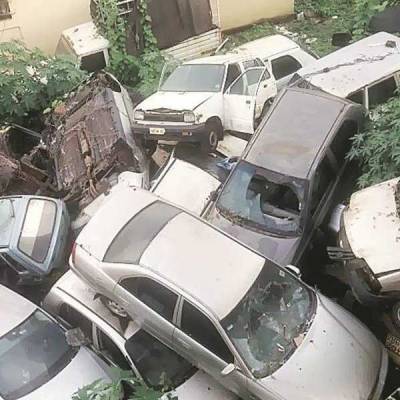



Vehicle Scrappage Scheme Gains Traction
ECONOMY & POLICY

Vehicle Scrappage Scheme Gains Traction

Around 85,000 vehicle owners have availed incentives worth nearly Rs 4.5 billion under the Centre’s voluntary vehicle scrappage policy, officially known as the Vehicle Fleet Modernisation Programme, the Ministry of Finance said.

The benefits have largely been driven by motor vehicle tax concessions offered by states and Union Territories against certificates of deposit issued after scrapping old vehicles. A total of 27 states and Union Territories have announced tax rebates of up to 25 per cent on non-transport vehicles and up to 15 per cent on transport vehicles under the scheme.

The development comes as the automobile industry seeks stronger government incentives, arguing that the current framework is insufficient to generate significant scrappage-led replacement demand. The ministry said 22 automobile manufacturers are also offering discounts of 1.5–3 per cent on ex-showroom prices against scrappage certificates, with around 30,000 vehicles having benefited so far.

Official data shows that nearly 0.36 million vehicles have been scrapped at registered vehicle scrapping facilities across India. Of these, about 0.16 million were government-owned vehicles over 15 years old, indicating early compliance by public-sector fleets.

To accelerate adoption, the Centre has extended the Department of Expenditure’s Scheme for Special Assistance to States for Capital Investment across multiple financial years. The scheme earmarked incentives of Rs 20 billion in FY23, Rs 30 billion each in FY24 and FY25, and Rs 20 billion in FY26, linked to milestones in vehicle scrappage and the rollout of automated vehicle testing infrastructure. Between FY23 and FY25, Rs 25.7 billion has been recommended for disbursement to states under the scheme.

The government also highlighted capacity creation across the country. So far, 180 registered vehicle scrapping facilities have been approved across 23 states and Union Territories, of which 123 are operational. In parallel, 407 automated testing stations have been sanctioned across 24 states and Union Territories, with 160 currently operational, enabling fitness testing of ageing vehicles.

Under the voluntary scrappage policy, private vehicles must undergo automated fitness testing after 20 years, while commercial vehicles are required to be tested after 15 years. Vehicles declared unfit are encouraged to be scrapped through authorised facilities.

The ministry reiterated that the policy aims to phase out old and polluting vehicles, reduce vehicular emissions and fuel imports, and modernise India’s vehicle fleet through market-led replacement.

Around 85,000 vehicle owners have availed incentives worth nearly Rs 4.5 billion under the Centre’s voluntary vehicle scrappage policy, officially known as the Vehicle Fleet Modernisation Programme, the Ministry of Finance said. The benefits have largely been driven by motor vehicle tax concessions offered by states and Union Territories against certificates of deposit issued after scrapping old vehicles. A total of 27 states and Union Territories have announced tax rebates of up to 25 per cent on non-transport vehicles and up to 15 per cent on transport vehicles under the scheme. The development comes as the automobile industry seeks stronger government incentives, arguing that the current framework is insufficient to generate significant scrappage-led replacement demand. The ministry said 22 automobile manufacturers are also offering discounts of 1.5–3 per cent on ex-showroom prices against scrappage certificates, with around 30,000 vehicles having benefited so far. Official data shows that nearly 0.36 million vehicles have been scrapped at registered vehicle scrapping facilities across India. Of these, about 0.16 million were government-owned vehicles over 15 years old, indicating early compliance by public-sector fleets. To accelerate adoption, the Centre has extended the Department of Expenditure’s Scheme for Special Assistance to States for Capital Investment across multiple financial years. The scheme earmarked incentives of Rs 20 billion in FY23, Rs 30 billion each in FY24 and FY25, and Rs 20 billion in FY26, linked to milestones in vehicle scrappage and the rollout of automated vehicle testing infrastructure. Between FY23 and FY25, Rs 25.7 billion has been recommended for disbursement to states under the scheme. The government also highlighted capacity creation across the country. So far, 180 registered vehicle scrapping facilities have been approved across 23 states and Union Territories, of which 123 are operational. In parallel, 407 automated testing stations have been sanctioned across 24 states and Union Territories, with 160 currently operational, enabling fitness testing of ageing vehicles. Under the voluntary scrappage policy, private vehicles must undergo automated fitness testing after 20 years, while commercial vehicles are required to be tested after 15 years. Vehicles declared unfit are encouraged to be scrapped through authorised facilities. The ministry reiterated that the policy aims to phase out old and polluting vehicles, reduce vehicular emissions and fuel imports, and modernise India’s vehicle fleet through market-led replacement.

Next Story
Resources

Archeo Logical Camera’ Opens at Design Ashram, Kozhikode

Design Ashram, Kozhikode, is hosting Archeo Logical Camera, a photographic exhibition by Mohamed A that brings archaeology, photography, memory and the act of seeing into a shared visual discourse. The exhibition, a project by Aazhi Archives with Riyas Komu as Artistic Director, was inaugurated on 22 January 2026 by K. Krishnaraj, Officer, Pazhassiraja Archaeological Museum, and will remain open until 6 February 2026.At the core of Archeo Logical Camera is a central inquiry into the role of photographs in archaeology. Conventionally treated as technical documentation supporting artefacts, phot..

Next Story
Resources

Cushman & Wakefield Appoints Ronita Basu Head of People Partnering

Cushman & Wakefield has announced the appointment of Ronita Majumdar Basu as Head of People Partnering for India, South-East Asia, the Middle East and Africa. In this role, she will lead the firm’s people strategy across these markets, aligning talent initiatives with business priorities and long-term growth plans.Commenting on the appointment, Anshul Jain, Chief Executive, India, SEA, MEA and APAC Office and Retail, said, “As we accelerate growth across diverse markets, building leadership capability and an inclusive, high-performance culture is critical. Ronita’s business insight a..

Next Story
Real Estate

Sai Nisarg Landmark Unveils ‘Skyluxe’ in Central Chinchwad

Sai Nisarg Landmark LLP has unveiled its upcoming project Skyluxe, positioned as PCMC’s first Japanese landscape–inspired residential development, in Central Chinchwad. Envisioned as a park-centric luxury project, Skyluxe integrates Zen, balance and minimalism into its core design philosophy and reflects the region’s shift towards mindful, high-quality urban living. The project is being exclusively marketed by BeyondWalls.The project was unveiled by Sanjay Patel and Sujit Patil, Directors of Sai Nisarg Landmark LLP, who highlighted the intent to blend nature-driven design with contempora..

Advertisement

Subscribe to Our Newsletter

Get daily newsletters around different themes from Construction world.

STAY CONNECTED

Advertisement

Advertisement

Advertisement

Advertisement

Open In App















