



YEIDA reveals Rs 100 billion budget
ECONOMY & POLICY

YEIDA reveals Rs 100 billion budget

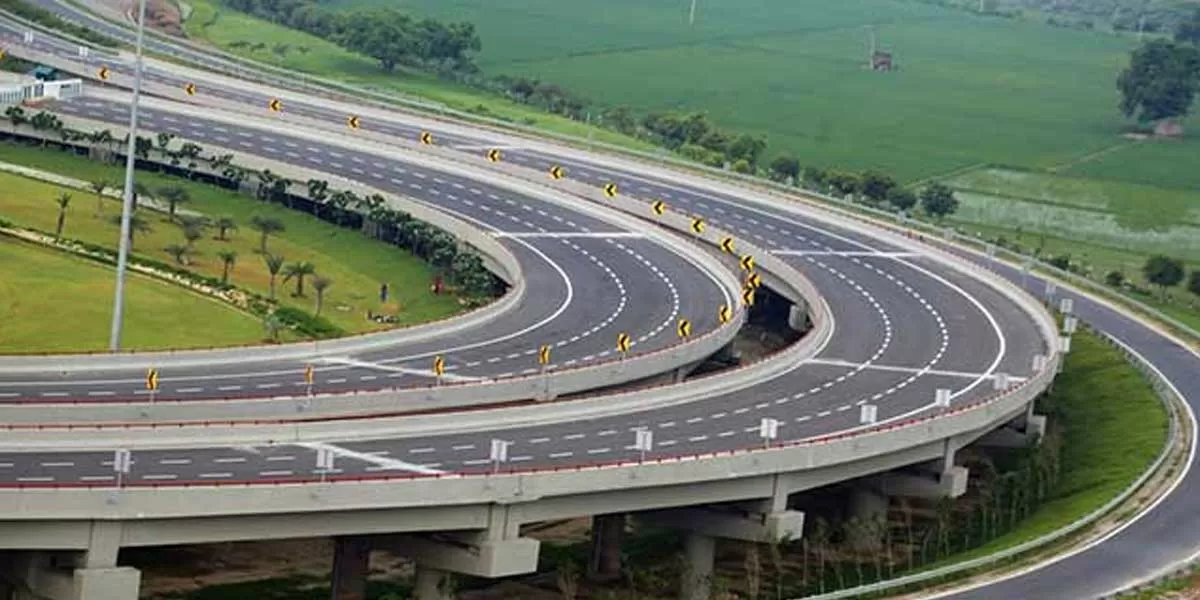
The Yamuna Expressway Industrial Development Authority (YEIDA) announced on March 12 that they had allocated nearly Rs 100 billion for the fiscal year 2024-25. It was disclosed that Rs 7 billion had been earmarked for the expansion of the Noida Airport, and Rs 3 billion had been allocated for rapid rail connectivity.

According to officials, 80 percent of the total budget would be dedicated to land acquisition. YEIDA's plan entails the establishment of manufacturing clusters catering to electric vehicles (EVs), semiconductors, Data Parks, and other specialized industries.

YEIDA, a body under the Uttar Pradesh government overseeing land management along the 165-km-long Yamuna Expressway from Greater Noida to Agra, also declared a 5.41 percent increase in land costs within its jurisdiction.

During the 80th meeting chaired by Anil Sagar, the chairman of YEIDA, the budget was presented to the Board and subsequently approved.

Arun Vir Singh, YEIDA's CEO, stated, We have devised an ambitious developmental plan encompassing the establishment of new sectors and new allotments, particularly in innovative domains such as semiconductors and Data Park. We are in the process of acquiring land for eight new sectors, thereby expanding our land bank.

He further added, Consequently, this year's budget has seen a significant rise from Rs 56.30 billion to Rs 99.92 billion, nearly doubling compared to the previous year. Out of the total budget, more than Rs 60 billion will be utilised for land acquisition, while Rs 20 billion will be allocated for development projects.

The Yamuna Expressway Industrial Development Authority (YEIDA) announced on March 12 that they had allocated nearly Rs 100 billion for the fiscal year 2024-25. It was disclosed that Rs 7 billion had been earmarked for the expansion of the Noida Airport, and Rs 3 billion had been allocated for rapid rail connectivity. According to officials, 80 percent of the total budget would be dedicated to land acquisition. YEIDA's plan entails the establishment of manufacturing clusters catering to electric vehicles (EVs), semiconductors, Data Parks, and other specialized industries. YEIDA, a body under the Uttar Pradesh government overseeing land management along the 165-km-long Yamuna Expressway from Greater Noida to Agra, also declared a 5.41 percent increase in land costs within its jurisdiction. During the 80th meeting chaired by Anil Sagar, the chairman of YEIDA, the budget was presented to the Board and subsequently approved. Arun Vir Singh, YEIDA's CEO, stated, We have devised an ambitious developmental plan encompassing the establishment of new sectors and new allotments, particularly in innovative domains such as semiconductors and Data Park. We are in the process of acquiring land for eight new sectors, thereby expanding our land bank. He further added, Consequently, this year's budget has seen a significant rise from Rs 56.30 billion to Rs 99.92 billion, nearly doubling compared to the previous year. Out of the total budget, more than Rs 60 billion will be utilised for land acquisition, while Rs 20 billion will be allocated for development projects.

Next Story
Infrastructure Urban

Implementation Status of Jal Jeevan Mission

Since August 2019 the Government has implemented Jal Jeevan Mission to provide assured potable water through household tap connections in rural India. At the start of the mission only 32.3 million (mn) rural households, representing 16.7 per cent, were reported to have tap water connections. States and union territories have reported that 125.8 mn additional rural households have since been provided with tap connections. As a result, of about 193.6 mn rural households roughly 158.2 mn, or 81.71 per cent, are reported to have tap water supply at home.\n\nThe State, district and village level st..

Next Story
Infrastructure Urban

Jal Jeevan Mission Reaches Eighty One Per Cent Rural Coverage

The Government reported substantial progress under the Jal Jeevan Mission, launched in August 2019 to provide tap water to every rural household. At launch only 32.3 million (mn) rural households had tap connections and states and Union territories reported provision of 125.8 mn additional households by March 2026. Consequently, out of about 193.6 mn rural households around 158.2 mn, or 81.71 per cent, are reported to have tap water at home. The Finance Minister announced extension of the mission until 2028 in the 2025-26 budget speech. The Swachh Bharat Mission Grameen, launched in October 20..

Next Story
Infrastructure Urban

Empowering Local Governance for Sustainable Rural Water Supply

The Ministry of Jal Shakti has aligned the Jal Jeevan Mission (JJM) with the 73rd Amendment to strengthen village level planning and community ownership of water supply. Gram Panchayats, village water and sanitation committees and Pani Samitis are to plan, implement, manage and maintain piped water systems, with gram sabha processes formalising handover and oversight. Implementation support agencies including non government organisations, community based organisations and self help groups have been empanelled to train local committees and promote women participation. Under JJM, the department ..

Advertisement

Subscribe to Our Newsletter

Get daily newsletters around different themes from Construction world.

STAY CONNECTED

Advertisement

Advertisement

Advertisement