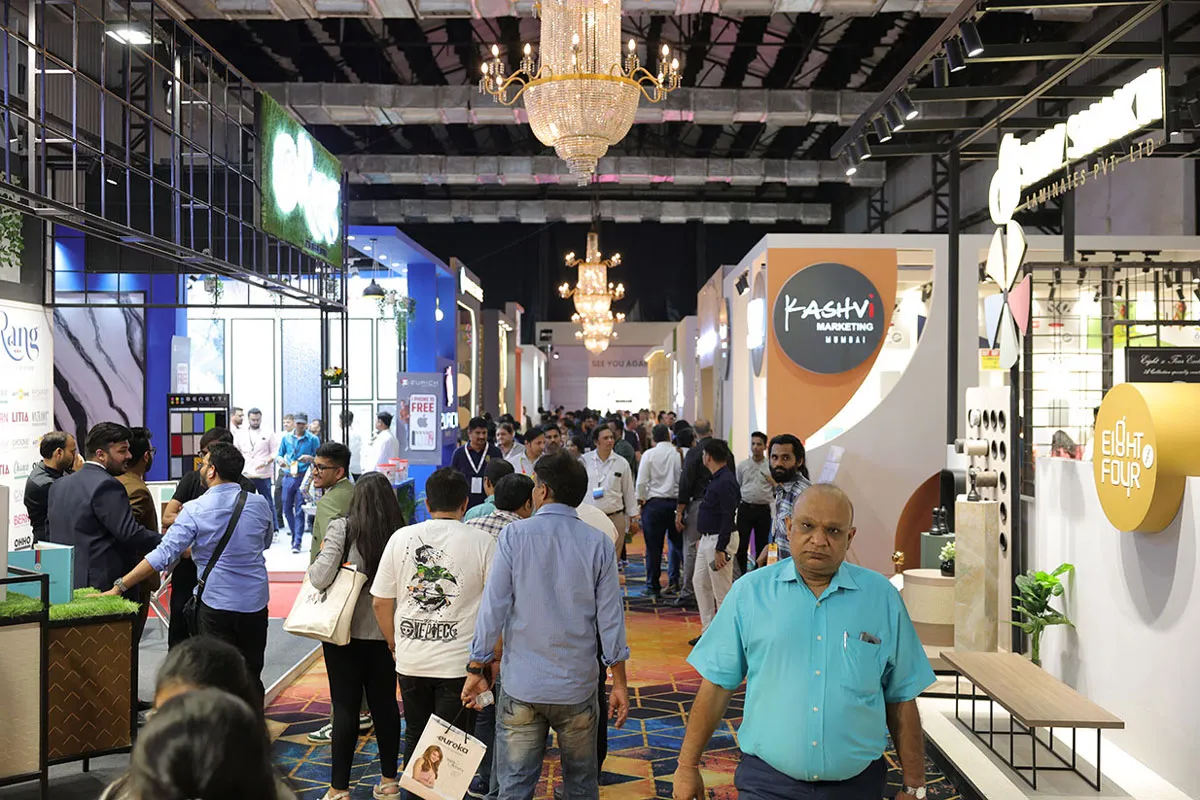
The 2025 edition of ACETECH Mumbai closed with a clear message: India’s construction and design fraternity is using trade fairs not just to transact, but to recalibrate innovation pipelines through direct market and stakeholder feedback.
Hosted at NESCO, Bombay Exhibition Centre, by ABEC Exhibitions & Conferences, ACETECH Mumbai 2025 reaffirmed its role as a convergence point for architects, developers, interior designers, engineers and solution providers. While the platform continues to offer scale in terms of footfalls and product categories, its real value is now measured in how effectively it helps the industry address present-day challenges around performance, sustainability and usability in the built environment.
The push towards denser cities, higher specification buildings and stricter performance expectations has elevated the importance of integrated, system-based solutions. Stakeholders are looking beyond standalone products to combinations that can optimise energy use, extend lifecycle performance and support better user experience. ACETECH’s mix of exhibition zones, discussion forums and networking programmes reflected this shift: the show functioned as a working laboratory where new ideas, prototypes and finished products were continuously tested against real project realities.
Across the halls, participating brands used the platform to position launches in a more solution-oriented context. Hettich’s presence, built around its SpinLines family, highlighted RoomSpin as a key interior innovation for optimising storage and movement within compact and premium spaces, complemented by Table Extension and Linear Drawer System solutions. Together, these underlined how hardware innovation directly influences planning flexibility for kitchens and living areas.
In appliances, Liebherr focused on its Fully Integrated range now manufactured in India and BIS-certified, aiming to align global technology standards with local application needs. As Kapil Agarwal observed: “Acetech is an important platform for us to engage with architects and interior designers — the key influencers who shape consumer preferences in premium home design.” He further noted the positioning of the range as “a perfect expression of what we call ‘invisible luxury’ — where technology, aesthetics, and performance blend seamlessly into modern living spaces.” This approach, strengthened through The Design Circle by Liebherr, positions the brand’s engagement with the design community as a long-term ecosystem-building exercise rather than a single-event presence.
Façade and external envelope solutions also gained prominence. VIVA’s launch of 0.7 mm Aluminium Louvers and Baffles at the show targeted both interior and exterior applications, signalling how metal systems are evolving to balance aesthetics with durability and maintainability. By aligning design flexibility with technical precision, such offerings respond to growing expectations around façade performance across commercial, institutional and high-end residential projects.
For several exhibitors, the most critical outcome lay in the quality of dialogue with specifiers. From the locks and architectural solutions vertical of Godrej, Shyam Motwani underlined the strategic value of the platform: “Events such as ACETECH Mumbai 2025 play a far more strategic role for us than simply being a showcase. They act as an intensive, real-time innovation lab where we receive direct, unfiltered inputs from architects, interior designers, developers and end users.” He added that “this annual exhibition participation has strengthened our co-creation approach with the design and architecture community, ensuring that each new introduction is rooted in practical user needs rather than assumptions.”
Pidilite approached the event with a strong focus on technical outreach and awareness-building across categories. Describing the engagement model, Mehul Parekh explained: “It is a 360-degree approach. Events like ACETECH help us reach a large section of the fraternity, and our 4,000 sq ft stall here showcases a wide range of Pidilite’s CC solutions.” Linking this visibility to performance outcomes, he emphasised the importance of “energy-efficient façades… especially in air-conditioned environments like hospitals, hotels, commercial buildings and even residential spaces,” referencing solutions such as WalAce and Deco InsuPanel that aim to reduce cooling loads while enhancing façade durability and finish.
Taken together, these perspectives indicate that ACETECH Mumbai 2025 delivered more than a conventional exhibition cycle. For brands across categories, the event acted as a feedback-rich checkpoint in the product development journey, providing direction on design preferences, application challenges and stakeholder expectations. As the construction and interiors industry continues to evolve towards higher technical and experiential benchmarks, such platforms are likely to remain integral to how companies validate ideas, refine offerings and strengthen partnerships with the design and engineering community.