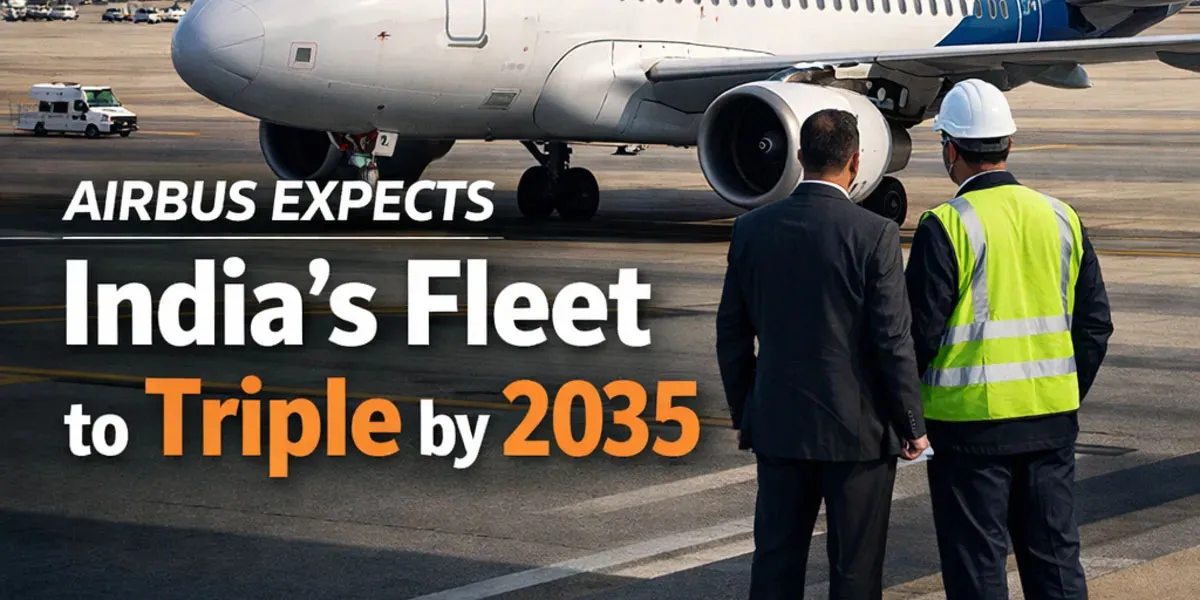
Airbus Expects India Commercial Fleet To Triple By 2035
AVIATION & AIRPORTS

Airbus Expects India Commercial Fleet To Triple By 2035

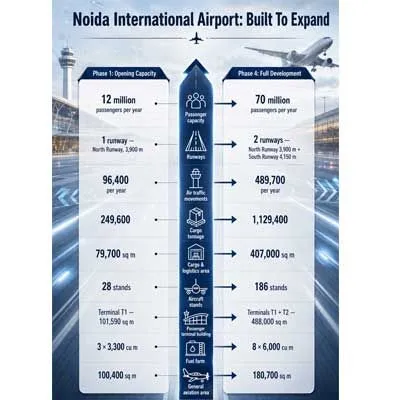
Airbus expects India’s commercial fleet to triple to 2,250 aircraft by 2035 as the domestic aviation market expands and carriers pursue international growth. The company projects passenger traffic to grow at eight point nine per cent compound annually over the next 10 years, prompting assessment of infrastructure and the aviation system required to support such expansion. The plan contemplates an increase to around 200 airports in 10 years, equating to 50 additional airports, and foresees a tripling of the operational fleet.

An associated outcome will be a substantial rise in cargo capacity, with annual capacity set to exceed five million (mn) tonne (t), representing roughly a threefold increase on current levels. Despite the growth trajectory, India remains a nascent market with 850 aircraft today and trips per capita at zero point one three, figures that underline continuing scope for market penetration and increased use of aviation as a means of transport.

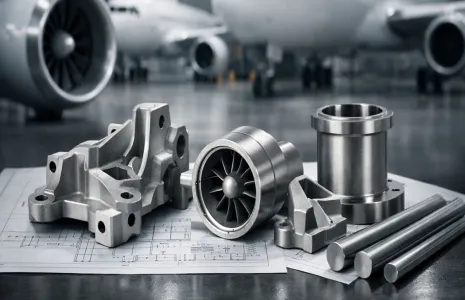
Indian carriers have placed orders for more than 1,700 aircraft, and 72 per cent of the backlog is with Airbus. The maintenance market is expected to expand from three billion (bn) dollars today to nine point five bn dollars within 10 years, encompassing airframe, component and engine maintenance, repair and overhaul activities. This expansion is likely to stimulate demand for technical services, spare parts production and related supply chain activities across the country.

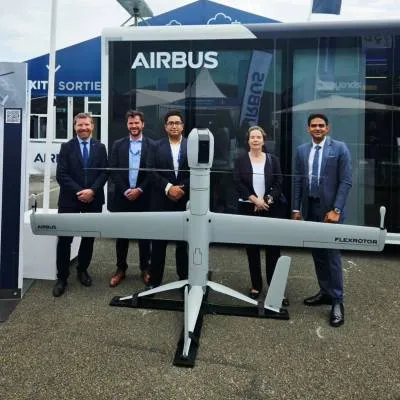
To keep the scaled up fleet airworthy, the requirement for pilots is projected to rise to 35,000 by 2035 from about 12,000 today, while the technical workforce must expand to 34,000 from 11,000. Airbus is establishing final assembly lines for the Airbus H125 helicopter, which is scheduled for delivery next year, and sourcing in India stands at one point five bn dollars with more than half comprised of complex parts including doors. The company is also exploring raw material composites to further strengthen domestic sourcing and support a broader manufacturing ecosystem.

Airbus expects India’s commercial fleet to triple to 2,250 aircraft by 2035 as the domestic aviation market expands and carriers pursue international growth. The company projects passenger traffic to grow at eight point nine per cent compound annually over the next 10 years, prompting assessment of infrastructure and the aviation system required to support such expansion. The plan contemplates an increase to around 200 airports in 10 years, equating to 50 additional airports, and foresees a tripling of the operational fleet. An associated outcome will be a substantial rise in cargo capacity, with annual capacity set to exceed five million (mn) tonne (t), representing roughly a threefold increase on current levels. Despite the growth trajectory, India remains a nascent market with 850 aircraft today and trips per capita at zero point one three, figures that underline continuing scope for market penetration and increased use of aviation as a means of transport. Indian carriers have placed orders for more than 1,700 aircraft, and 72 per cent of the backlog is with Airbus. The maintenance market is expected to expand from three billion (bn) dollars today to nine point five bn dollars within 10 years, encompassing airframe, component and engine maintenance, repair and overhaul activities. This expansion is likely to stimulate demand for technical services, spare parts production and related supply chain activities across the country. To keep the scaled up fleet airworthy, the requirement for pilots is projected to rise to 35,000 by 2035 from about 12,000 today, while the technical workforce must expand to 34,000 from 11,000. Airbus is establishing final assembly lines for the Airbus H125 helicopter, which is scheduled for delivery next year, and sourcing in India stands at one point five bn dollars with more than half comprised of complex parts including doors. The company is also exploring raw material composites to further strengthen domestic sourcing and support a broader manufacturing ecosystem.

Next Story
Infrastructure Urban

Public Capex Push In Budget To Boost Tyre Industry: ATMA

The Indian tyre industry is expected to benefit from the government’s renewed emphasis on infrastructure development outlined in the Union Budget 2026–27, according to the Automotive Tyre Manufacturers Association (ATMA).ATMA said the tyre sector is closely linked to the performance of the transport and infrastructure ecosystem, and the sharp rise in public capital expenditure to Rs 1.2 trillion is a significant positive for sustained long-term demand growth.The association noted that the enhanced capex allocation reflects the government’s continued focus on building future-ready infrast..

Next Story
Infrastructure Transport

Underground Rail Line Planned In Siliguri ‘Chicken’s Neck’

Indian Railways is planning to construct underground railway tracks along a critical 40 km stretch of the Siliguri Corridor, popularly known as the Chicken’s Neck, to strengthen connectivity between the North East and the rest of India while enhancing security preparedness. According to the Indian Railways, the underground section is strategically significant due to the corridor’s narrow geography and proximity to international borders. Chetan Kumar Srivastava, General Manager of the Northeast Frontier Railway, said the proposed underground alignment is extremely important from a security..

Next Story
Infrastructure Urban

Agriculture Infrastructure Fund Boosts Post-Harvest Assets

The Agriculture Infrastructure Fund (AIF), a Central Sector Scheme of the Government of India, continues to strengthen post-harvest management infrastructure by enabling access to medium- and long-term debt financing through interest-subvented loans. The scheme focuses on improving agri-logistics, reducing post-harvest losses, promoting modern storage, processing and value-addition facilities, and enhancing farm-gate infrastructure to support efficient agricultural supply chains. Under AIF, banks and financial institutions provide loans with an interest subvention of three per cent per annum,..

Advertisement

Subscribe to Our Newsletter

Get daily newsletters around different themes from Construction world.

STAY CONNECTED

Advertisement

Advertisement

Advertisement

Advertisement

Open In App