



Navi Mumbai Airport Ushers In Dual-Airport Era
AVIATION & AIRPORTS

Navi Mumbai Airport Ushers In Dual-Airport Era

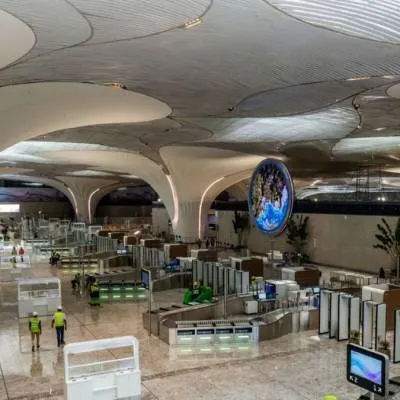
Mumbai has become India’s first true dual-airport metropolis with the commissioning of Navi Mumbai International Airport (NMIA), a landmark development expected to reshape the region’s aviation landscape. Located in the Navi Mumbai district of Maharashtra, the new airport represents a major milestone in India’s airport infrastructure journey and sets a benchmark for future air travel development.

Union Minister of Civil Aviation Kinjarapu Rammohan Naidu described the opening of NMIA as a significant step towards easing rising air traffic pressure in the Mumbai Metropolitan Region. Developed by Adani Airports Holdings Limited, a subsidiary of Adani Enterprises Limited, NMIA has been designed to handle 20 million passengers annually and manage 0.5 million tonnes of cargo. As one of India’s largest greenfield airport projects, it is expected to emerge as a key hub for both domestic and international traffic, strengthening Maharashtra’s position in the national aviation network.

The airport reflects the strong growth momentum of India’s aviation sector, featuring a technology-driven design focused on improving capacity, operational efficiency and passenger experience. On its opening day, NMIA handled 48 flights connecting nine domestic destinations, marking the first phase of enhanced regional connectivity.

Designed to complement Chhatrapati Shivaji Maharaj International Airport, NMIA is expected to significantly ease congestion at Mumbai’s primary airport, which has faced mounting pressure from rising passenger and cargo demand. The dual-airport model is set to enable smoother and faster connections across the city and western India, supporting broader economic activity.

According to the Adani Group, NMIA has commenced operations with flights operated by carriers such as IndiGo and Akasa Air, with further route expansion planned. More than 4,000 passengers were handled on the first day, signalling strong demand and the airport’s growth potential. On the cargo front, the airport’s annual capacity of 0.5 million tonnes is expected to enhance trade flows, logistics efficiency and supply chains, reinforcing Mumbai’s status as a leading commercial hub.

Adani Group Chairman Gautam Adani highlighted the collective effort behind the project, acknowledging the contribution of workers, farmers and community stakeholders. He noted the symbolic significance of the airport for many involved, for whom it represented their first-ever flight, underscoring aviation’s transformative impact.

NMIA is also expected to deliver a major boost to tourism in Maharashtra. Improved domestic and international connectivity is likely to attract higher tourist inflows into Mumbai and surrounding regions, supporting recovery and growth in hospitality, retail and entertainment sectors following the pandemic.

The project aligns with the government’s broader vision of modernising infrastructure to meet growing air travel demand and strengthening India’s global connectivity. Alongside continued investment in road and rail networks, NMIA forms part of a wider strategy to support Maharashtra’s rapidly expanding economy.

Looking ahead, NMIA is set to play a central role in shaping Mumbai’s aviation future by easing congestion, enhancing passenger experience and unlocking new business and tourism opportunities. As Mumbai embraces its dual-airport status, the city is poised to strengthen its position as a global hub for trade, travel and investment.

Mumbai has become India’s first true dual-airport metropolis with the commissioning of Navi Mumbai International Airport (NMIA), a landmark development expected to reshape the region’s aviation landscape. Located in the Navi Mumbai district of Maharashtra, the new airport represents a major milestone in India’s airport infrastructure journey and sets a benchmark for future air travel development. Union Minister of Civil Aviation Kinjarapu Rammohan Naidu described the opening of NMIA as a significant step towards easing rising air traffic pressure in the Mumbai Metropolitan Region. Developed by Adani Airports Holdings Limited, a subsidiary of Adani Enterprises Limited, NMIA has been designed to handle 20 million passengers annually and manage 0.5 million tonnes of cargo. As one of India’s largest greenfield airport projects, it is expected to emerge as a key hub for both domestic and international traffic, strengthening Maharashtra’s position in the national aviation network. The airport reflects the strong growth momentum of India’s aviation sector, featuring a technology-driven design focused on improving capacity, operational efficiency and passenger experience. On its opening day, NMIA handled 48 flights connecting nine domestic destinations, marking the first phase of enhanced regional connectivity. Designed to complement Chhatrapati Shivaji Maharaj International Airport, NMIA is expected to significantly ease congestion at Mumbai’s primary airport, which has faced mounting pressure from rising passenger and cargo demand. The dual-airport model is set to enable smoother and faster connections across the city and western India, supporting broader economic activity. According to the Adani Group, NMIA has commenced operations with flights operated by carriers such as IndiGo and Akasa Air, with further route expansion planned. More than 4,000 passengers were handled on the first day, signalling strong demand and the airport’s growth potential. On the cargo front, the airport’s annual capacity of 0.5 million tonnes is expected to enhance trade flows, logistics efficiency and supply chains, reinforcing Mumbai’s status as a leading commercial hub. Adani Group Chairman Gautam Adani highlighted the collective effort behind the project, acknowledging the contribution of workers, farmers and community stakeholders. He noted the symbolic significance of the airport for many involved, for whom it represented their first-ever flight, underscoring aviation’s transformative impact. NMIA is also expected to deliver a major boost to tourism in Maharashtra. Improved domestic and international connectivity is likely to attract higher tourist inflows into Mumbai and surrounding regions, supporting recovery and growth in hospitality, retail and entertainment sectors following the pandemic. The project aligns with the government’s broader vision of modernising infrastructure to meet growing air travel demand and strengthening India’s global connectivity. Alongside continued investment in road and rail networks, NMIA forms part of a wider strategy to support Maharashtra’s rapidly expanding economy. Looking ahead, NMIA is set to play a central role in shaping Mumbai’s aviation future by easing congestion, enhancing passenger experience and unlocking new business and tourism opportunities. As Mumbai embraces its dual-airport status, the city is poised to strengthen its position as a global hub for trade, travel and investment.

Next Story
Infrastructure Transport

KPIL Secures Rs 7.19 Billion Metro Rail Order in Thane

Kalpataru Projects International (KPIL), along with its joint venture, has recently secured new orders and notifications of award worth approximately Rs 7.19 billion. The key contract includes an elevated metro rail project in Thane, Maharashtra, marking a significant addition to the company’s urban infrastructure portfolio.Commenting on the development, Manish Mohnot, MD & CEO, said the order strengthens KPIL’s presence in the expanding urban transportation EPC segment. He added that the company’s diversified order book, consistent order inflows and strong execution capabilities..

Next Story
Infrastructure Urban

IRFC Sanctions Rs 50 Billion Loan to MAHAGENCO

Indian Railway Finance Corporation (IRFC) has recently executed a Rupee Term Loan Agreement with Maharashtra State Power Generation Company Limited (MAHAGENCO) for a sanctioned amount of Rs 50 billion, of which Rs 30 billion has already been disbursed. A Navratna CPSE under the Ministry of Railways, IRFC has expanded its role beyond rail financing to support infrastructure projects linked to the railway ecosystem, including power generation, transmission, mining, logistics, ports and metro rail. The corporation continues to maintain a strong asset quality profile with a zero-NPA portfolio. M..

Next Story
Infrastructure Transport

AFCOM Inducts Third Aircraft, Boosting Cargo Capacity

AFCOM Holdings has recently inducted its third aircraft, marking a key milestone in the company’s fleet expansion and operational growth. The aircraft was welcomed with a water cannon salute on arrival at Chennai International Airport, underscoring its strategic importance to AFCOM’s expanding network. With Chennai as a key operational hub, the additional aircraft enhances AFCOM’s ability to cater to rising demand for air cargo services across domestic and international routes, including time-sensitive and specialised cargo segments. The induction strengthens operational capacity while ..

Advertisement

Subscribe to Our Newsletter

Get daily newsletters around different themes from Construction world.

STAY CONNECTED

Advertisement

Advertisement

Advertisement

Advertisement

Open In App