




Parandur Airport Plan Raises Flood Risk Concerns
AVIATION & AIRPORTS

Parandur Airport Plan Raises Flood Risk Concerns

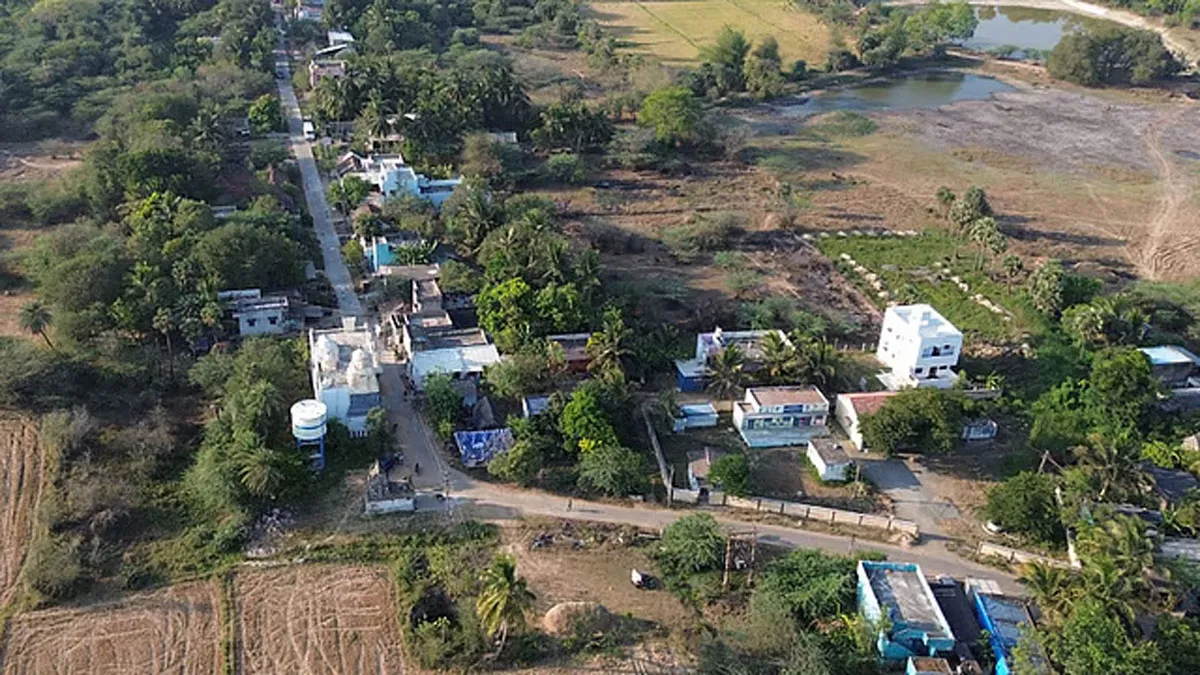
A proposed greenfield airport at Parandur near Chennai could significantly increase flood risks for the city, with a research organisation warning that an additional 10,000–12,000 cusecs of floodwater may enter the Adyar and Cooum rivers during peak rainfall if the project proceeds.

According to a report by Uvakai Research Foundation, Chennai’s rivers lack effective floodplains, making the city highly vulnerable when river flows exceed their carrying capacity. The organisation said the pre-feasibility report does not provide evidence that the Adyar and Cooum rivers, already operating beyond hydraulic capacity during extreme rainfall events, can safely accommodate the additional flood load.

The report also alleged that the pre-feasibility assessment prepared by the Tamil Nadu Industrial Development Corporation incorrectly classified the Parandur site as part of the Lower Palar basin. Hydrological analysis indicates that around 66 per cent of the project area lies within the Cooum river basin, while 34 per cent falls within the Lower Palar basin.

Further, the Kamban Kalvai channel running through the site reportedly conveys water towards Chembarambakkam Lake in the Adyar basin, establishing a functional linkage with the Adyar river system. The report stated that runoff from the airport site would ultimately flow through Chennai, a densely urbanised and flood-prone city.

Uvakai Research Foundation criticised the project for proceeding without adequate hydrological justification and called on state and central governments to halt further approvals and land-use conversions. It also urged authorities to conduct independent, basin-scale hydrological assessments and flood modelling before moving ahead.

The concerns echo findings from the Comptroller and Auditor General’s 2017 report on the 2015 Chennai floods, which highlighted the absence of basin-based planning despite the city’s flood risks being driven by interconnected catchments. The CAG had also pointed to fragmented drainage and flood control measures implemented without accounting for upstream runoff and downstream carrying capacity.

The foundation warned that the Parandur airport proposal reflects similar governance gaps and could repeat past mistakes, potentially exacerbating Chennai’s flood vulnerability if not addressed through comprehensive hydrological planning.

A proposed greenfield airport at Parandur near Chennai could significantly increase flood risks for the city, with a research organisation warning that an additional 10,000–12,000 cusecs of floodwater may enter the Adyar and Cooum rivers during peak rainfall if the project proceeds. According to a report by Uvakai Research Foundation, Chennai’s rivers lack effective floodplains, making the city highly vulnerable when river flows exceed their carrying capacity. The organisation said the pre-feasibility report does not provide evidence that the Adyar and Cooum rivers, already operating beyond hydraulic capacity during extreme rainfall events, can safely accommodate the additional flood load. The report also alleged that the pre-feasibility assessment prepared by the Tamil Nadu Industrial Development Corporation incorrectly classified the Parandur site as part of the Lower Palar basin. Hydrological analysis indicates that around 66 per cent of the project area lies within the Cooum river basin, while 34 per cent falls within the Lower Palar basin. Further, the Kamban Kalvai channel running through the site reportedly conveys water towards Chembarambakkam Lake in the Adyar basin, establishing a functional linkage with the Adyar river system. The report stated that runoff from the airport site would ultimately flow through Chennai, a densely urbanised and flood-prone city. Uvakai Research Foundation criticised the project for proceeding without adequate hydrological justification and called on state and central governments to halt further approvals and land-use conversions. It also urged authorities to conduct independent, basin-scale hydrological assessments and flood modelling before moving ahead. The concerns echo findings from the Comptroller and Auditor General’s 2017 report on the 2015 Chennai floods, which highlighted the absence of basin-based planning despite the city’s flood risks being driven by interconnected catchments. The CAG had also pointed to fragmented drainage and flood control measures implemented without accounting for upstream runoff and downstream carrying capacity. The foundation warned that the Parandur airport proposal reflects similar governance gaps and could repeat past mistakes, potentially exacerbating Chennai’s flood vulnerability if not addressed through comprehensive hydrological planning.

Next Story
Real Estate

Union Budge: Infra-Led Urban Shift

The Union Budget FY27 reinforces infrastructure-led urbanisation as the backbone of India’s real estate and housing growth. Higher public capital expenditure, City Economic Regions, risk-mitigation mechanisms and REIT-led asset monetisation are being widely viewed as long-term enablers, even as the industry continues to seek sharper supply-side reforms and affordability-focused measures. Here are a few industry insights:Dr Niranjan Hiranandani, Chairman, NAREDCO & Hiranandani Group“The Union Budget 2026-27 is growth-oriented and stability-focused, supporting consumption and aiming to s..

Next Story
Infrastructure Urban

Budget 2026 Charts Path for Infrastructure-Led, Tech-Driven Growth

The Union Budget 2026–27 signals strong continuity in India’s macroeconomic strategy, anchored in elevated public capital expenditure, fiscal discipline, and a sharper focus on manufacturing, infrastructure, and regional development. With capital outlay pegged at ₹12.2 lakh crore and a fiscal deficit target of around 4.3 per cent, the Budget balances growth ambition with stability, offering long-term visibility to investors and project developers.A dominant theme is the centrality of infrastructure as a multiplier for economic expansion. Public capex now accounts for over 3.3 per cent of..

Next Story
Infrastructure Energy

Tata Power Arm Crosses 10 GW EPC Milestone

Tata Power Renewable Energy Ltd (TPREL) has achieved a major milestone by executing 10 gigawatts of engineering, procurement and construction (EPC) renewable energy projects to date, reinforcing its position in India’s clean energy infrastructure sector. According to the company, the executed portfolio comprises 4.2 gigawatts of in-house projects and 5.8 gigawatts of third-party projects. Of the total 10 gigawatts commissioned so far, 9.7 gigawatts are solar projects and 290 megawatts are wind projects. In the first nine months of FY26, TPREL commissioned 1.88 gigawatts of EPC renewable en..

Advertisement

Subscribe to Our Newsletter

Get daily newsletters around different themes from Construction world.

STAY CONNECTED

Advertisement

Advertisement

Advertisement

Advertisement

Open In App