Airport Metro Link Finalised and Karve Road Flyover Extended
ROADS & HIGHWAYS

Airport Metro Link Finalised and Karve Road Flyover Extended

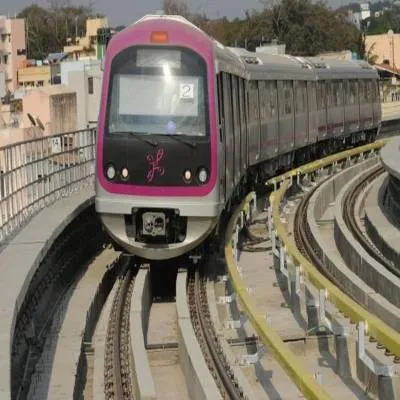
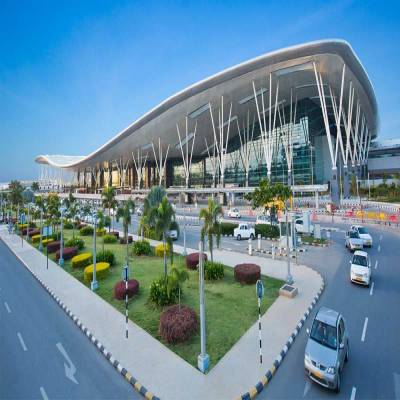
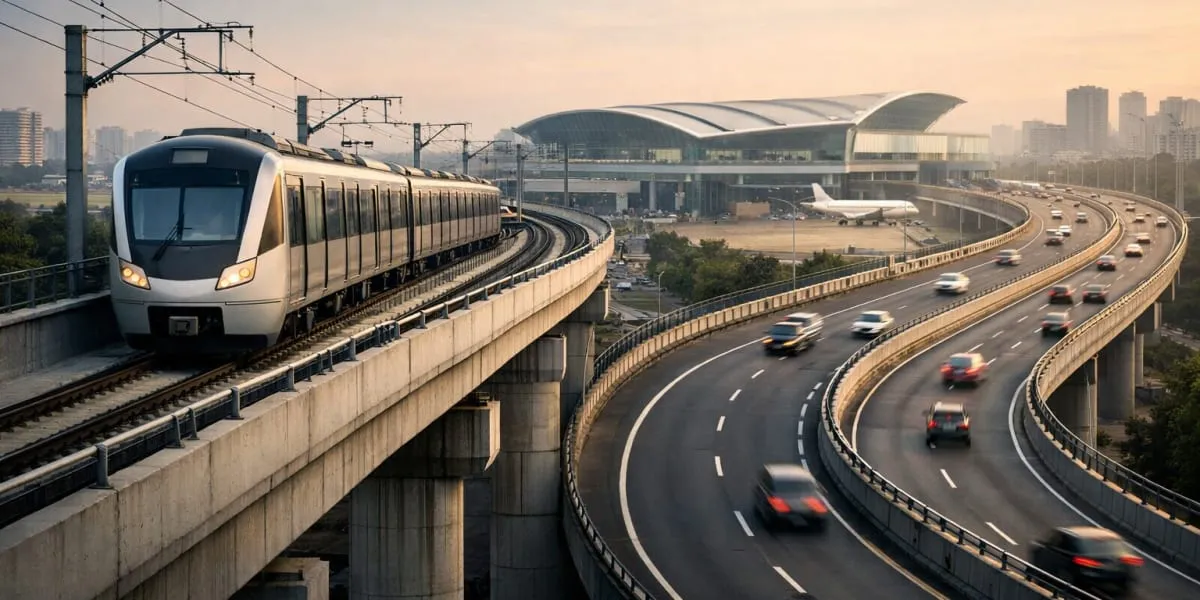
After an initial delay Maha-Metro finalised the alignment for a new corridor between Kalyaninagar and Pune International Airport and directed that the detailed project report (DPR) for the route be prepared to provide a direct Metro link between the airport and the city network. The decision followed a review meeting at Pune Metro Bhavan chaired by the Union Minister of State for Civil Aviation and Cooperation Murlidhar Mohol and attended by Maha-Metro officials. The move is intended to integrate the airport with existing and planned Metro routes across Pune and Pimpri-Chinchwad to improve access for passengers.

The meeting also reconsidered the earlier flyover proposal on Paud Road and instructed officials to examine a longer double-decker structure that would carry both Metro and road traffic and extend from Paud Phata to Vandevi Temple. Maha-Metro management presented the status of ongoing and proposed projects and outlined options that had been studied for airport connectivity before selecting the Kalyaninagar–Airport alignment. Officials indicated that the DPR process will commence shortly and that design work should account for future transport needs.

The revised double-decker plan was prepared to address long-standing resident concerns and to reduce congestion on Paud Road, with the expectation that the structure would improve movement towards Warje and beyond and ease congestion at nearly five major junctions along the corridor. The agency was directed to explore an integrated design on the lines of existing multi-level structures rather than a single-level road flyover. Emphasis was placed on coordination with civic bodies to resolve technical and funding issues so that implementation can proceed without undue delay.

Officials were directed to prepare a DPR to extend the Shewalewadi–Hadapsar–Katraj corridor up to Chandani Chowk and Wakad and to review other extension proposals across eastern southern and western corridors to widen network coverage. They were asked to coordinate with state and central authorities to speed approvals and with the public transport operator to improve last-mile access, and the municipal plan to revive the three-decade-old High Capacity Mass Transit Route was to be advanced through tendering.

After an initial delay Maha-Metro finalised the alignment for a new corridor between Kalyaninagar and Pune International Airport and directed that the detailed project report (DPR) for the route be prepared to provide a direct Metro link between the airport and the city network. The decision followed a review meeting at Pune Metro Bhavan chaired by the Union Minister of State for Civil Aviation and Cooperation Murlidhar Mohol and attended by Maha-Metro officials. The move is intended to integrate the airport with existing and planned Metro routes across Pune and Pimpri-Chinchwad to improve access for passengers. The meeting also reconsidered the earlier flyover proposal on Paud Road and instructed officials to examine a longer double-decker structure that would carry both Metro and road traffic and extend from Paud Phata to Vandevi Temple. Maha-Metro management presented the status of ongoing and proposed projects and outlined options that had been studied for airport connectivity before selecting the Kalyaninagar–Airport alignment. Officials indicated that the DPR process will commence shortly and that design work should account for future transport needs. The revised double-decker plan was prepared to address long-standing resident concerns and to reduce congestion on Paud Road, with the expectation that the structure would improve movement towards Warje and beyond and ease congestion at nearly five major junctions along the corridor. The agency was directed to explore an integrated design on the lines of existing multi-level structures rather than a single-level road flyover. Emphasis was placed on coordination with civic bodies to resolve technical and funding issues so that implementation can proceed without undue delay. Officials were directed to prepare a DPR to extend the Shewalewadi–Hadapsar–Katraj corridor up to Chandani Chowk and Wakad and to review other extension proposals across eastern southern and western corridors to widen network coverage. They were asked to coordinate with state and central authorities to speed approvals and with the public transport operator to improve last-mile access, and the municipal plan to revive the three-decade-old High Capacity Mass Transit Route was to be advanced through tendering.

Related Stories

Gold Stories

Next Story
Infrastructure Urban

KONE Opens India's First Digital Experience Centre in Pune

KONE, a global elevator and escalator manufacturer, has inaugurated its first Digital Experience Centre (DEC) in India, located in Pune. The facility aims to showcase how artificial intelligence (AI), connectivity and data-driven technologies can enhance customer experiences and improve building operations.The centre was inaugurated by Jussi Herlin, Executive Vice Chair, KONE Corporation; Philippe Delorme, President and CEO, KONE; and Nandan Nilekani, Co-founder and Chairman of the Board, Infosys.Designed as an interactive customer environment, the facility demonstrates digital solutions cover..

Next Story
Infrastructure Urban

CII GreenCo Launches Circularity Guidelines for Indian Industry

The Confederation of Indian Industry (CII) GreenCo Council has launched the CII GreenCo Circularity Guidelines – Pilot Version at the 17th CII GreenCo Waste & Resource Management Summit 2026 in Chennai. The initiative aims to strengthen resource efficiency, waste reduction and circular economy practices across Indian manufacturing and process industries.The guidelines introduce a structured framework with circularity indices covering raw materials, consumables, packaging and other resource inputs. These indicators will help industries assess existing practices, identify opportunities to ..

Next Story
Infrastructure Energy

Global Electronics Association Launches IPC-1783-CO2E Standard

The Global Electronics Association has introduced IPC-1783-CO2E, a new international standard aimed at improving consistency, transparency and comparability in product carbon footprint reporting across the electronics manufacturing industry.The standard, titled International Standard for Data Collection and Reporting of CO2 Equivalent (CO2e) Emissions for the Electronics Manufacturing Supply Chain, provides industry-specific guidance for collecting, estimating and reporting carbon emissions data.With increasing regulatory requirements and customer expectations, electronics manufacturers face c..

Advertisement

Subscribe to Our Newsletter

Get daily newsletters around different themes from Construction world.

STAY CONNECTED

Advertisement

SPECIAL OFFER
QR Code