Andhra Pradesh Aims To Complete Rs 1,400 bn Highways By 2027
ROADS & HIGHWAYS

Andhra Pradesh Aims To Complete Rs 1,400 bn Highways By 2027

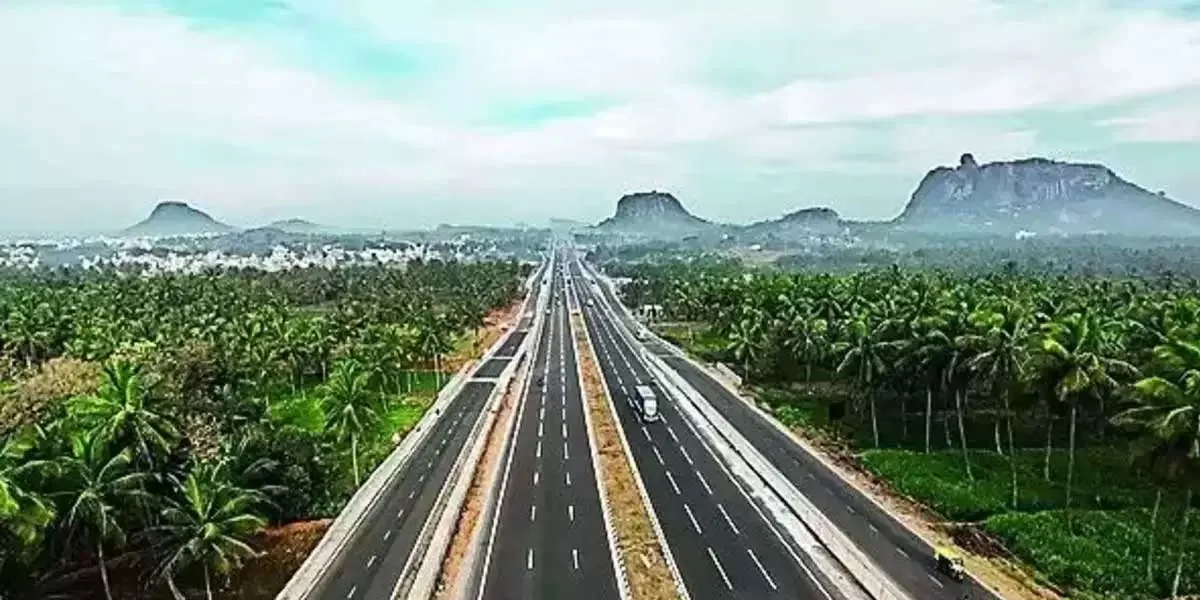
Andhra Pradesh's chief minister has directed officials to complete ongoing national highway projects valued at Rs 1,400 billion (bn) by 2027, in a bid to accelerate the state's transport modernisation. The instruction focuses on the Bengaluru-Kadapa-Vijayawada Economic Corridor to strengthen connectivity to the greenfield capital region near Amaravati and to reduce freight transportation costs. The programme is intended to improve cargo movement efficiency across the state and to support regional trade and manufacturing growth.

Officials were tasked with enhancing links from national highways to major ports including Visakhapatnam, Kakinada, Machilipatnam, Ramayapatnam and Krishnapatnam so that goods from inland areas and neighbouring states can reach coastal trade hubs more efficiently. The emphasis on port connectivity is aimed at streamlining logistics chains and lowering transit times for bulk and container shipments. The measures are expected to bolster both industrial supply chains and agricultural market access.

Detailed project reports are to be prepared for major corridors such as the Kharagpur-Amaravati Greenfield Expressway and a proposed road linking Nagpur to Machilipatnam via Vijayawada, while the Roads and Buildings Department will expand the existing road network to meet growing transport demand. An action plan envisages construction of over 6,050 km of new roads at an estimated cost of Rs 25 bn to widen regional accessibility. Implementation milestones and funding modalities have been prioritised to ensure timely delivery.

Modern construction techniques including Danish fibre reinforcement, waste plastic bitumen and nano concrete developed by the Indian Institute of Technology Tirupati are being adopted to enhance durability and reduce maintenance costs. The adoption of these technologies is part of a sustainable construction agenda designed to extend pavement life and improve freight efficiency. The highway expansion is expected to shorten travel times, attract investment and create a more integrated transport network to support long term economic growth.

Andhra Pradesh's chief minister has directed officials to complete ongoing national highway projects valued at Rs 1,400 billion (bn) by 2027, in a bid to accelerate the state's transport modernisation. The instruction focuses on the Bengaluru-Kadapa-Vijayawada Economic Corridor to strengthen connectivity to the greenfield capital region near Amaravati and to reduce freight transportation costs. The programme is intended to improve cargo movement efficiency across the state and to support regional trade and manufacturing growth. Officials were tasked with enhancing links from national highways to major ports including Visakhapatnam, Kakinada, Machilipatnam, Ramayapatnam and Krishnapatnam so that goods from inland areas and neighbouring states can reach coastal trade hubs more efficiently. The emphasis on port connectivity is aimed at streamlining logistics chains and lowering transit times for bulk and container shipments. The measures are expected to bolster both industrial supply chains and agricultural market access. Detailed project reports are to be prepared for major corridors such as the Kharagpur-Amaravati Greenfield Expressway and a proposed road linking Nagpur to Machilipatnam via Vijayawada, while the Roads and Buildings Department will expand the existing road network to meet growing transport demand. An action plan envisages construction of over 6,050 km of new roads at an estimated cost of Rs 25 bn to widen regional accessibility. Implementation milestones and funding modalities have been prioritised to ensure timely delivery. Modern construction techniques including Danish fibre reinforcement, waste plastic bitumen and nano concrete developed by the Indian Institute of Technology Tirupati are being adopted to enhance durability and reduce maintenance costs. The adoption of these technologies is part of a sustainable construction agenda designed to extend pavement life and improve freight efficiency. The highway expansion is expected to shorten travel times, attract investment and create a more integrated transport network to support long term economic growth.

Next Story
Building Material

MAPEI India Celebrates 15 Years of Building Excellence

MAPEI India marks its 15th anniversary, celebrating a journey defined by innovation, trust, and continuous growth. Beginning in 2011 with just four employees and a single manufacturing facility in Bengaluru, the company has evolved into a key player in India’s construction chemicals industry, now employing over 380 professionals across the country. Over the past 15 years, MAPEI India has delivered strong performance with a sales CAGR of 31 per cent. From zero production in its early years, the company shipped 1,71,000 metric tonnes of materials in 2025, demonstrating robust operational capab..

Next Story
Real Estate

FractoProp Secures SEBI Nod for Ridhama Real Estate Fund

FractoProp, a real estate-focused fund management company, has received registration from the Securities and Exchange Board of India (SEBI) for the Ridhama Real Estate Fund, a Category II Alternative Investment Fund (AIF). The approval marks a milestone as the firm expands its platform to offer structured real estate investment opportunities to institutional and sophisticated investors. The fund is targeting a corpus of Rs 50 crore, with a greenshoe option of up to Rs 75 crore, taking the total potential fund size to Rs 125 crore. The Ridhama Real Estate Fund will focus on structured credit ..

Next Story
Real Estate

Flex Spaces Reshaping Tier-2 Office Markets

India's leading cosmopolitan centres such as Bengaluru, Hyderabad, NCR and MMR continue to anchor the office market, but absorption surged by almost 30 per cent to 78.2 million (mn) sq ft in 2025 compared with 2023. Over 40 per cent of this demand was driven by Global Capability Centres (GCCs), whose footprint expanded by almost 50 per cent to approximately 35 million (mn) sq ft. As global uncertainty persists, large international companies regard India as a stable safe haven and are shifting focus from saturated Tier-1 markets to Tier-2 cities. The structural shift is underpinned by governmen..

Advertisement

Subscribe to Our Newsletter

Get daily newsletters around different themes from Construction world.

STAY CONNECTED

Advertisement

Advertisement

Advertisement