Cabinet Approves Coastal Highway From Rameshwar To Paradeep
ROADS & HIGHWAYS

Cabinet Approves Coastal Highway From Rameshwar To Paradeep

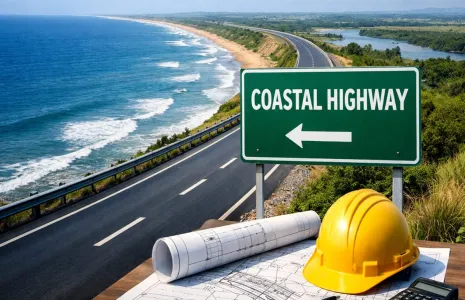
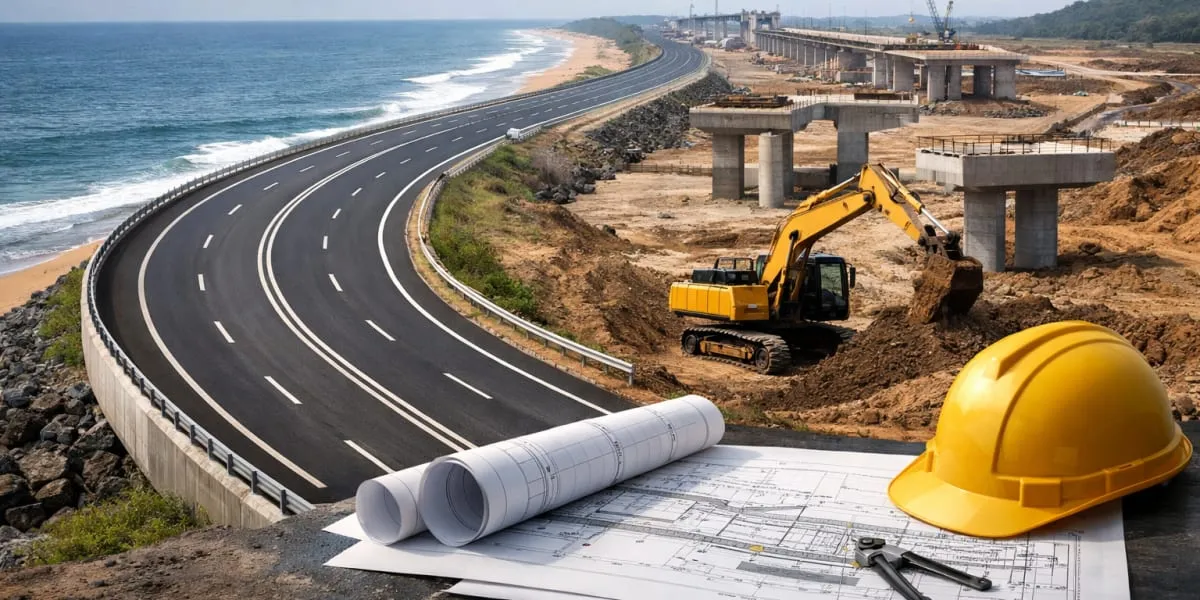
The Cabinet Committee on Economic Affairs, chaired by the Prime Minister, has approved construction of a new coastal highway from Rameshwar to Paradeep on the Hybrid Annuity Model in Odisha. The project was approved in two packages with a combined length of 160.18 km and a combined total capital cost of Rs83,007.9 million (mn). The Ministry of Road Transport and Highways indicated the scheme will follow a concession period that includes construction and operation phases.

The corridor passes through the districts of Khurda, Puri, Kendrapada and Jagatsinghpur and links existing national highways that serve Bhubaneswar, Puri and Cuttack. Officials noted that the existing geometry along the Puri–Satapada and Puri–Konark stretches is poor, with nearly 40 per cent ribbon development and high levels of roadside local commuter traffic, which constrains smooth long?distance movement.

The projects envisage a four?lane configuration from Rameshwar to Konark and a two?lane road with paved shoulder from Konark to Paradeep, designed for a speed of 100 km/hour. The scheme aligns with PM GatiShakti principles and will connect nine Economic Nodes and five Logistic Nodes, improving regional mobility and supporting socio?economic development in the State.

Upon completion, travel time between Rameshwar and Paradeep is expected to reduce by about two hours and 30 minutes, while providing safer, faster and uninterrupted connectivity for passenger and freight traffic. The authority projects substantial reductions in fuel consumption, carbon emissions and vehicle operating costs (VOC) as a result of improved alignment and higher operational speeds.

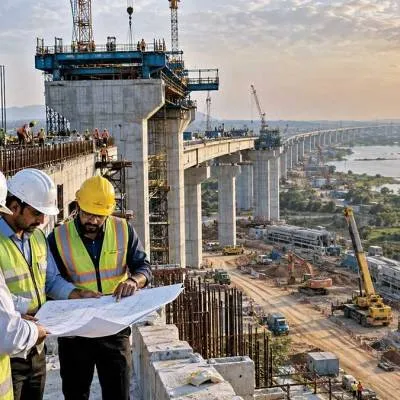
Package one comprises 79.40 km with greenfield length of 76.84 km and a total capital cost of Rs53,048.0 million (mn), while package two comprises 80.78 km with a total capital cost of Rs29,959.9 million (mn). The concessions are to run for 17.5 years including construction and operations, and estimated annual average daily traffic for FY 2027?28 is 10,437 PCU for package one and 7,249 PCU for package two. Employment potential is estimated at 5.361 mn man?days direct and 6.701 mn man?days indirect.

The Cabinet Committee on Economic Affairs, chaired by the Prime Minister, has approved construction of a new coastal highway from Rameshwar to Paradeep on the Hybrid Annuity Model in Odisha. The project was approved in two packages with a combined length of 160.18 km and a combined total capital cost of Rs83,007.9 million (mn). The Ministry of Road Transport and Highways indicated the scheme will follow a concession period that includes construction and operation phases. The corridor passes through the districts of Khurda, Puri, Kendrapada and Jagatsinghpur and links existing national highways that serve Bhubaneswar, Puri and Cuttack. Officials noted that the existing geometry along the Puri–Satapada and Puri–Konark stretches is poor, with nearly 40 per cent ribbon development and high levels of roadside local commuter traffic, which constrains smooth long?distance movement. The projects envisage a four?lane configuration from Rameshwar to Konark and a two?lane road with paved shoulder from Konark to Paradeep, designed for a speed of 100 km/hour. The scheme aligns with PM GatiShakti principles and will connect nine Economic Nodes and five Logistic Nodes, improving regional mobility and supporting socio?economic development in the State. Upon completion, travel time between Rameshwar and Paradeep is expected to reduce by about two hours and 30 minutes, while providing safer, faster and uninterrupted connectivity for passenger and freight traffic. The authority projects substantial reductions in fuel consumption, carbon emissions and vehicle operating costs (VOC) as a result of improved alignment and higher operational speeds. Package one comprises 79.40 km with greenfield length of 76.84 km and a total capital cost of Rs53,048.0 million (mn), while package two comprises 80.78 km with a total capital cost of Rs29,959.9 million (mn). The concessions are to run for 17.5 years including construction and operations, and estimated annual average daily traffic for FY 2027?28 is 10,437 PCU for package one and 7,249 PCU for package two. Employment potential is estimated at 5.361 mn man?days direct and 6.701 mn man?days indirect.

Next Story
Infrastructure Urban

Cabinet Approves Two Year Scheme To Replace Old Trucks And Buses

The Union Cabinet, chaired by the Prime Minister, approved a two-year scheme to reduce air pollution in the Delhi–NCR region and promote cleaner mobility. The programme will be funded through the National Capital Region Planning Board under the Ministry of Housing and Urban Affairs and implemented by the Ministry of Road Transport and Highways and the Ministry of Petroleum and Natural Gas, with participating States and Union Territories of Delhi, Haryana, Rajasthan and Uttar Pradesh. The total financial outlay has been set at Rs 95.85 billion (bn), with the Central Government contributing Rs..

Next Story
Infrastructure Transport

Bengaluru Suburban Rail And Metro To Share 500-Metre Corridor

Bengaluru suburban rail and the Metro will share a 500-metre corridor at Benniganahalli, a decision that planners say will reduce capital expenditure and urban disruption. The consolidation of alignments across the short stretch is intended to avoid duplication of elevated structures and station facilities while cutting land acquisition needs. Authorities put the maximum savings at Rs 1.69 bn (1,690 mn). The arrangement also aims to streamline construction interfaces between the two systems. The shared corridor will require coordinated design of track beds, piers and passenger access so that s..

Next Story
Infrastructure Urban

DRDO And IAF Complete Successful RudraM-II Flight Tests

The Defence Research and Development Organisation (DRDO) and the Indian Air Force (IAF) have conducted successful flight tests of the RudraM-II air-to-surface missile from an airborne platform. The trials were carried out under extreme release conditions with a critical trajectory that established the capability of all subsystems. The series of releases tested the missile's guidance, seeker and propulsion elements in an operationally representative environment. The missiles, released from the aircraft, were guided to a predefined target with pinpoint accuracy and all test objectives were fully..

Advertisement

Subscribe to Our Newsletter

Get daily newsletters around different themes from Construction world.

STAY CONNECTED

Advertisement

Advertisement

Advertisement