Cabinet Approves Tunnel Linking Dwarka Expressway With Vasant Kunj
ROADS & HIGHWAYS

Cabinet Approves Tunnel Linking Dwarka Expressway With Vasant Kunj

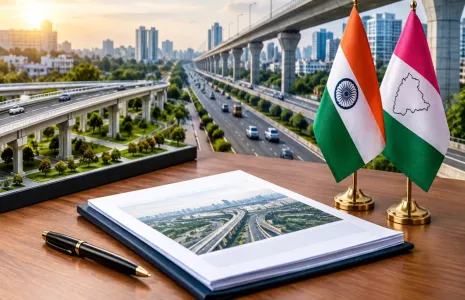
The Union Cabinet approved two road projects totalling Rs 141.1481 billion (Rs 141.1481 bn) to ease congestion and strengthen regional connectivity. The Cabinet Committee on Economic Affairs, chaired by the prime minister, cleared a six?lane tunnel linking the Dwarka Expressway with south Delhi and a greenfield highway between Kanpur and Kabrai. I&B Minister Ashwini Vaishnaw said the projects were expected to improve logistics and accelerate economic growth.

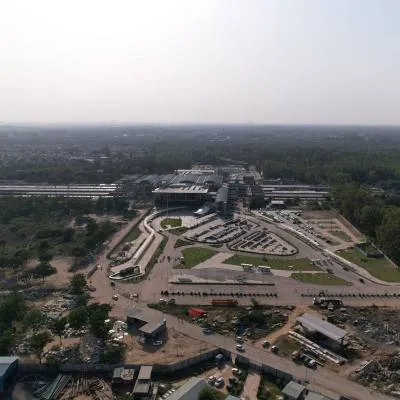
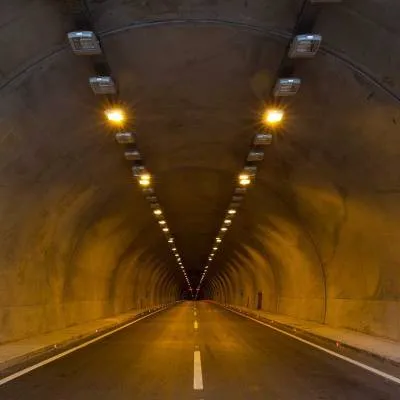
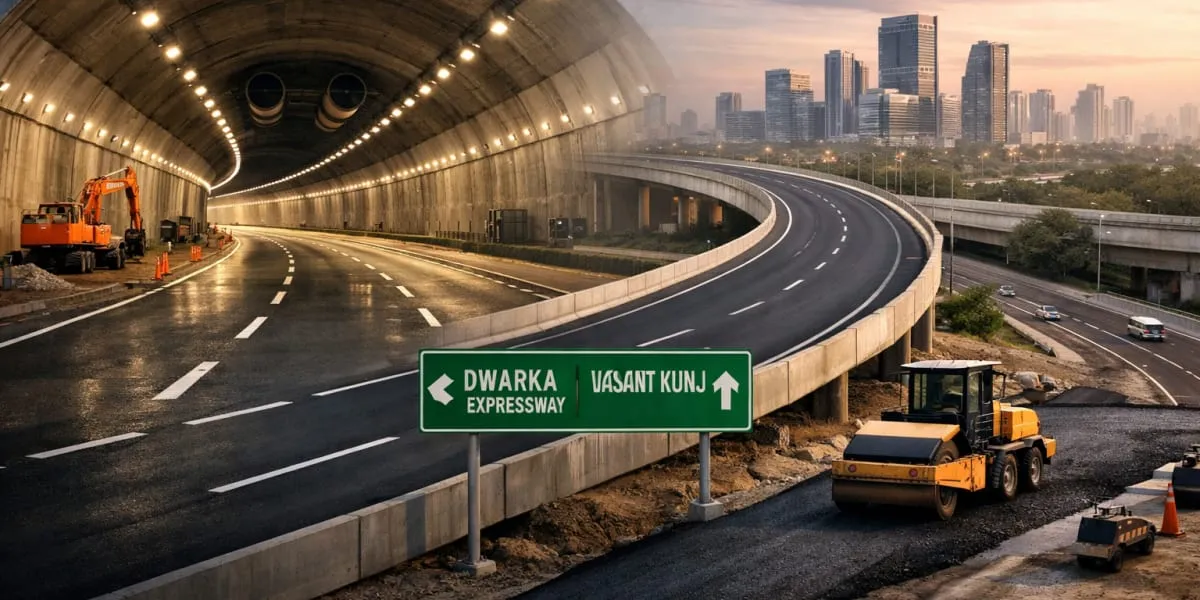
Delhi’s project is a Rs 69.6967 billion (Rs 69.6967 bn) scheme to build an 8.1 km six?lane tunnel on NH?148AE, connecting the Shivmurti Interchange with Nelson Mandela Marg in Vasant Kunj under the Hybrid Annuity Model. The works include a 3.14 km underground tunnel, approach ramps, elevated stretches and a 1.8 km elevated road, and will use tunnel boring machines beneath the Southern Ridge Forest to minimise surface disruption. The scheme is estimated to generate about 0.754 mn direct man?days and 0.98 mn indirect man?days of employment.

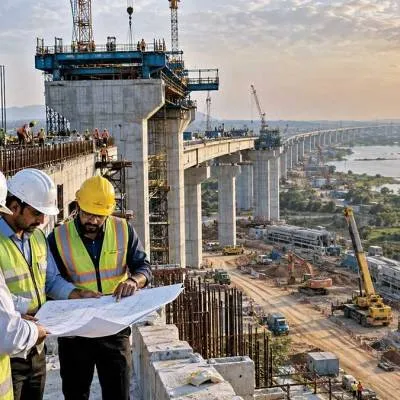
The Kanpur?Kabrai corridor is a Rs 71.4514 billion (Rs 71.4514 bn) greenfield road of 117.7 km, designed initially as four lanes with provision to expand to six and engineered for speeds of 80–100 kmph. Implemented by the National Highways Authority of India under a Build?Operate?Transfer toll model, it includes operation and maintenance of the existing Kanpur?Kabrai stretch of NH?34. The route is expected to cut travel time from about three and a half hours to around 90 minutes and to improve road safety and vehicle operating costs.

The Kanpur?Kabrai project is projected to create about 12 mn person?days of employment during construction and to carry an annual average daily traffic of roughly 18,069 passenger car units by FY29. The corridor will link industrial and commercial centres, state highways and logistics hubs and will improve access to the Kabrai mining belt, agricultural areas and markets. Officials indicated the two projects would integrate with routes such as the Bundelkhand Expressway and the Kanpur Ring Road and would enhance urban mobility, reduce congestion and support industrial development across Uttar Pradesh, Madhya Pradesh and the National Capital Region.

The Union Cabinet approved two road projects totalling Rs 141.1481 billion (Rs 141.1481 bn) to ease congestion and strengthen regional connectivity. The Cabinet Committee on Economic Affairs, chaired by the prime minister, cleared a six?lane tunnel linking the Dwarka Expressway with south Delhi and a greenfield highway between Kanpur and Kabrai. I&B Minister Ashwini Vaishnaw said the projects were expected to improve logistics and accelerate economic growth. Delhi’s project is a Rs 69.6967 billion (Rs 69.6967 bn) scheme to build an 8.1 km six?lane tunnel on NH?148AE, connecting the Shivmurti Interchange with Nelson Mandela Marg in Vasant Kunj under the Hybrid Annuity Model. The works include a 3.14 km underground tunnel, approach ramps, elevated stretches and a 1.8 km elevated road, and will use tunnel boring machines beneath the Southern Ridge Forest to minimise surface disruption. The scheme is estimated to generate about 0.754 mn direct man?days and 0.98 mn indirect man?days of employment. The Kanpur?Kabrai corridor is a Rs 71.4514 billion (Rs 71.4514 bn) greenfield road of 117.7 km, designed initially as four lanes with provision to expand to six and engineered for speeds of 80–100 kmph. Implemented by the National Highways Authority of India under a Build?Operate?Transfer toll model, it includes operation and maintenance of the existing Kanpur?Kabrai stretch of NH?34. The route is expected to cut travel time from about three and a half hours to around 90 minutes and to improve road safety and vehicle operating costs. The Kanpur?Kabrai project is projected to create about 12 mn person?days of employment during construction and to carry an annual average daily traffic of roughly 18,069 passenger car units by FY29. The corridor will link industrial and commercial centres, state highways and logistics hubs and will improve access to the Kabrai mining belt, agricultural areas and markets. Officials indicated the two projects would integrate with routes such as the Bundelkhand Expressway and the Kanpur Ring Road and would enhance urban mobility, reduce congestion and support industrial development across Uttar Pradesh, Madhya Pradesh and the National Capital Region.

Next Story
Infrastructure Urban

Enerpac Launches Safer Industrial Lifting Solutions in India

Enerpac has introduced its CR-Series Cribbing Ring Sets and TJP-Series 30-Ton Hydraulic Toe Jack in India, expanding its range of precision lifting solutions for manufacturing, infrastructure and energy applications. The products are designed to improve safety, control and efficiency during heavy lifting, load holding and machine-moving operations. The CR-Series Cribbing Ring Sets provide an engineered alternative to improvised cribbing methods such as wooden blocks and steel plates. Their interlocking design offers predictable and mechanically secured load support for applications including t..

Next Story
Infrastructure Urban

Tembo Global Opens Vasai Plant, Raises Capacity to 100,000 MTPA

Tembo Global Industries has commissioned a new manufacturing facility in Vasai, Maharashtra, increasing its annual production capacity from 18,000 metric tonnes per annum to 100,000 MTPA. Developed with an investment of Rs 75 crore, the 120,000 sq ft integrated facility is expected to improve manufacturing efficiency, support product development and strengthen the company’s supply-chain capabilities. Its location in Vasai provides connectivity for sourcing raw materials and distributing finished products, which is expected to support faster deliveries, lower logistics costs and improved op..

Next Story
Infrastructure Transport

BorgWarner Wins China Transfer Case Order for New SUV

BorgWarner has secured an order to supply its torque-on-demand transfer case with mechanical lock for a newly developed full-size SUV from a Chinese original equipment manufacturer. Production of the vehicle is scheduled to begin in the fourth quarter of 2026. The Mlock torque-on-demand system combines automatic four-wheel drive torque distribution with mechanical locking modes. BorgWarner said the technology is designed to balance on-road efficiency with off-road capability across different driving conditions. Unlike traditional part-time four-wheel drive systems that require drivers to manua..

Advertisement

Subscribe to Our Newsletter

Get daily newsletters around different themes from Construction world.

STAY CONNECTED

Advertisement

Advertisement

Advertisement