Centre Approves Rs 6.3 Billion NH 216E Link In Konaseema
ROADS & HIGHWAYS

Centre Approves Rs 6.3 Billion NH 216E Link In Konaseema

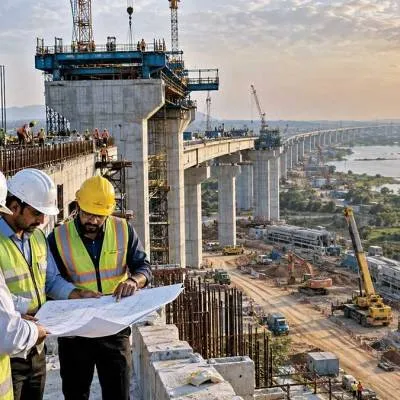
The Union Ministry of Road Transport and Highways has approved a new National Highway project in Andhra Pradesh’s Konaseema region, addressing a long-standing connectivity gap between National Highway 216 and National Highway 216A. The project, designated as NH 216E, has been sanctioned with an investment of around Rs 6.3 billion and is expected to significantly improve transport infrastructure in the district.

For decades, Konaseema lacked direct National Highway connectivity despite being flanked by NH 216 and NH 216A. Although the stretch from Pottilanka village to Ravulapalem was later included in the National Highway network, the absence of a direct link between the two highways continued to constrain mobility and economic activity.

The new highway will upgrade the 31.6-kilometre stretch between Amalapuram and Ravulapalem, which currently suffers from narrow roads, sharp curves and multiple canal bridges that slow traffic. Despite the short distance, travel time often exceeds an hour, even for express buses. Under the project, the road will be developed either as a two-lane highway with paved shoulders or a four-lane road, depending on future traffic projections.

The road plays a critical role in the regional economy, facilitating the movement of agricultural produce, seafood, coconuts, spices, rice and prawns from Amalapuram to Vijayawada and Rajamahendravaram, while manufactured goods, garments and flowers move in the opposite direction. Transporters and traders have long cited delays and operational challenges due to the existing infrastructure constraints.

Land acquisition notifications were issued in January, marking a key step towards project implementation. Around 55.98 hectares of land will be acquired from 727 farmers and property owners across 22 villages along the corridor. Officials said the project will involve widening existing roads and constructing greenfield stretches through agricultural land to ease congestion on busy routes such as Kothapeta and Ravulapalem.

The proposed alignment will connect the Palivela bridge to the National Highway via Vedireswaram, bypassing Kothapeta town. From Amalapuram, the road will pass through Mesalapalli, Mukkamala, Avidi, Khandriga, Palivela and Vedireswaram, improving direct access to the National Highway network.

Authorities expect the project to substantially reduce travel time from Rajahmundry and Vijayawada to Amalapuram, while supporting long-term economic development in Konaseema. After the completion of land acquisition, tenders will be invited for construction.

However, the project has also triggered concerns among local residents and farmers regarding alignment changes, inclusion of residential properties and the transparency of the land acquisition process. Officials have indicated that efforts will be made to address objections and ensure smoother implementation with public participation.

The approval of NH 216E marks a major infrastructure milestone for Konaseema, promising enhanced connectivity, stronger economic linkages and improved regional development prospects.

The Union Ministry of Road Transport and Highways has approved a new National Highway project in Andhra Pradesh’s Konaseema region, addressing a long-standing connectivity gap between National Highway 216 and National Highway 216A. The project, designated as NH 216E, has been sanctioned with an investment of around Rs 6.3 billion and is expected to significantly improve transport infrastructure in the district. For decades, Konaseema lacked direct National Highway connectivity despite being flanked by NH 216 and NH 216A. Although the stretch from Pottilanka village to Ravulapalem was later included in the National Highway network, the absence of a direct link between the two highways continued to constrain mobility and economic activity. The new highway will upgrade the 31.6-kilometre stretch between Amalapuram and Ravulapalem, which currently suffers from narrow roads, sharp curves and multiple canal bridges that slow traffic. Despite the short distance, travel time often exceeds an hour, even for express buses. Under the project, the road will be developed either as a two-lane highway with paved shoulders or a four-lane road, depending on future traffic projections. The road plays a critical role in the regional economy, facilitating the movement of agricultural produce, seafood, coconuts, spices, rice and prawns from Amalapuram to Vijayawada and Rajamahendravaram, while manufactured goods, garments and flowers move in the opposite direction. Transporters and traders have long cited delays and operational challenges due to the existing infrastructure constraints. Land acquisition notifications were issued in January, marking a key step towards project implementation. Around 55.98 hectares of land will be acquired from 727 farmers and property owners across 22 villages along the corridor. Officials said the project will involve widening existing roads and constructing greenfield stretches through agricultural land to ease congestion on busy routes such as Kothapeta and Ravulapalem. The proposed alignment will connect the Palivela bridge to the National Highway via Vedireswaram, bypassing Kothapeta town. From Amalapuram, the road will pass through Mesalapalli, Mukkamala, Avidi, Khandriga, Palivela and Vedireswaram, improving direct access to the National Highway network. Authorities expect the project to substantially reduce travel time from Rajahmundry and Vijayawada to Amalapuram, while supporting long-term economic development in Konaseema. After the completion of land acquisition, tenders will be invited for construction. However, the project has also triggered concerns among local residents and farmers regarding alignment changes, inclusion of residential properties and the transparency of the land acquisition process. Officials have indicated that efforts will be made to address objections and ensure smoother implementation with public participation. The approval of NH 216E marks a major infrastructure milestone for Konaseema, promising enhanced connectivity, stronger economic linkages and improved regional development prospects.

Next Story
Real Estate

A Paradigm Shift

The Indian real-estate and construction sector, which employs a significant number of organised and unorganised workers in the country, has embarked on a paradigm shift in its regulatory framework from an employment law perspective. With the four Labour Codes – the Code on Wages, 2019 (Wage Code); the Industrial Relations Code, 2020 (IR Code); the Code on Social Security, 2020 (SS Code) and the Occupational Safety, Health and Working Conditions Code, 2020 (OSH Code) – coming into effect in India from November 21, 2025, the industry is shifting away from a fragmented, contractor- driven com..

Next Story
Technology

We offer end-to-end traceability at scale

mjunction has evolved from an e-auction pioneer into a multi-vertical digital commerce platform with deep expertise in complex steel and coal supply chains. Its end-to-end, AI-led architecture focuses on price discovery, traceability, compliance and scalability, enabling transparent procurement, efficient logistics and data-driven decision-making across geographies. Vinaya Varma, MD, shares more about the company in conversation with CW.From a technology standpoint, what are the core USPs of mjunction today that differentiate it in steel and coal supply chains?mjunction has evolved b..

Next Story
Infrastructure Urban

Henkel, Rotary Recycle PoP Ganesha Idols Under Project HARMONY

Henkel India, in partnership with the Rotary Club of Navi Mumbai – Joy of Giving and with support from the Navi Mumbai Municipal Corporation (NMMC), has advanced circular sustainability through Project HARMONY by recycling Plaster of Paris (PoP) Ganesha idols into community learning assets. The initiative highlights an integrated approach to environmental restoration and social impact.As part of the project, materials collected after Ganesh Visarjan 2025 at Nerul were responsibly diverted from land and water bodies and processed at an authorised recycling facility, with on-ground execution s..

Advertisement

Subscribe to Our Newsletter

Get daily newsletters around different themes from Construction world.

STAY CONNECTED

Advertisement

Advertisement

Advertisement

Advertisement

Open In App