Centre Reviews Delhi Decongestion, Key Road Projects
ROADS & HIGHWAYS

Centre Reviews Delhi Decongestion, Key Road Projects

Minister of State for Road Transport and Highways and Corporate Affairs Harsh Malhotra recently chaired a high-level review meeting to assess progress on major road infrastructure works, decongestion strategies and inter-agency coordination affecting Delhi. The meeting was attended by West Delhi MP Kamaljeet Sehrawat, the Chief Secretary of Delhi and senior officials from the Ministry of Road Transport & Highways, Ministry of Housing and Urban Affairs, National Highways Authority of India, DDA, Delhi Police, DJB, the Transport Department and other agencies.
Emphasising that the national capital must reflect the spirit of ‘Viksit Bharat’, the Minister highlighted the need for modern, safe, seamless and environment-friendly mobility systems. He outlined four pillars for building a decongested and citizen-centric ‘Viksit Delhi’: future-ready infrastructure, integrated planning across transport modes, sustainable mobility and people-first design.
The Minister reviewed proposals for secondary service roads along Urban Extension Road-II (UER-II), currently at the DPR stage, and directed the Delhi Development Authority to address citizen concerns on access, safety and integration with adjoining areas. NHAI was asked to complete its assigned works within stipulated timelines, with strong coordination between agencies stressed as essential.
Traffic congestion in Dwarka Sub-City following the opening of UER-II was also reviewed. Authorities were directed to explore measures such as diverting through-traffic, strengthening airport and Gurugram linkages, integrating metro and public transport nodes, and deploying intelligent traffic management systems.
The Minister further reviewed three major corridors transferred to NHAI for maintenance and widening—Mathura Road (Ashram to Badarpur), Old Delhi–Rohtak Road (Punjabi Bagh to Tikri Border) and Mehrauli–Gurugram Road—totalling 33 km, and instructed officials to expedite completion.
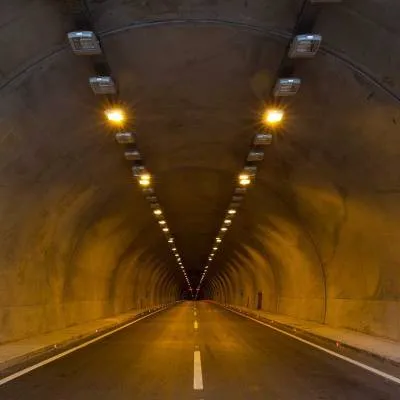
A detailed review of the Delhi Decongestion Plan was undertaken, covering the extension of the Delhi–Amritsar–Katra Expressway, UER-II linkages to the Delhi–Dehradun Expressway, and a proposed road tunnel from Dwarka Expressway to Nelson Mandela Marg. The Minister underlined that decongestion would reduce emissions, lower travel time and logistics costs, improve road safety and enhance economic productivity.
Pending inter-agency issues including land handover and right-of-way clearances were discussed, with directions for time-bound approvals and continuous coordination. In his concluding remarks, Shri Malhotra reiterated the Centre’s commitment to partnering with all stakeholders to realise the goal of ‘Viksit Delhi – Decongest Delhi’ and support the capital’s infrastructure transformation.   

Minister of State for Road Transport and Highways and Corporate Affairs Harsh Malhotra recently chaired a high-level review meeting to assess progress on major road infrastructure works, decongestion strategies and inter-agency coordination affecting Delhi. The meeting was attended by West Delhi MP Kamaljeet Sehrawat, the Chief Secretary of Delhi and senior officials from the Ministry of Road Transport & Highways, Ministry of Housing and Urban Affairs, National Highways Authority of India, DDA, Delhi Police, DJB, the Transport Department and other agencies.Emphasising that the national capital must reflect the spirit of ‘Viksit Bharat’, the Minister highlighted the need for modern, safe, seamless and environment-friendly mobility systems. He outlined four pillars for building a decongested and citizen-centric ‘Viksit Delhi’: future-ready infrastructure, integrated planning across transport modes, sustainable mobility and people-first design.The Minister reviewed proposals for secondary service roads along Urban Extension Road-II (UER-II), currently at the DPR stage, and directed the Delhi Development Authority to address citizen concerns on access, safety and integration with adjoining areas. NHAI was asked to complete its assigned works within stipulated timelines, with strong coordination between agencies stressed as essential.Traffic congestion in Dwarka Sub-City following the opening of UER-II was also reviewed. Authorities were directed to explore measures such as diverting through-traffic, strengthening airport and Gurugram linkages, integrating metro and public transport nodes, and deploying intelligent traffic management systems.The Minister further reviewed three major corridors transferred to NHAI for maintenance and widening—Mathura Road (Ashram to Badarpur), Old Delhi–Rohtak Road (Punjabi Bagh to Tikri Border) and Mehrauli–Gurugram Road—totalling 33 km, and instructed officials to expedite completion.A detailed review of the Delhi Decongestion Plan was undertaken, covering the extension of the Delhi–Amritsar–Katra Expressway, UER-II linkages to the Delhi–Dehradun Expressway, and a proposed road tunnel from Dwarka Expressway to Nelson Mandela Marg. The Minister underlined that decongestion would reduce emissions, lower travel time and logistics costs, improve road safety and enhance economic productivity.Pending inter-agency issues including land handover and right-of-way clearances were discussed, with directions for time-bound approvals and continuous coordination. In his concluding remarks, Shri Malhotra reiterated the Centre’s commitment to partnering with all stakeholders to realise the goal of ‘Viksit Delhi – Decongest Delhi’ and support the capital’s infrastructure transformation.   

Next Story
Infrastructure Transport

Kavach 4.0 Commissioned on Delhi–Mumbai and Delhi–Howrah

"Kavach version four has been commissioned on 1,452 route km, covering the high density Delhi–Mumbai and Delhi–Howrah corridors. The rollout included laying 8,570 km of optical fibre, installation of 1,100 telecom towers, deployment of trackside equipment over 6,776 RKm and establishment of 767 station data centres. Trackside implementation has been taken up on 24,427 RKm covering Golden Quadrilateral, Golden Diagonal and High Density Network sections. The programme aims to strengthen signalling and train protection on key routes.Kavach is an indigenously developed automatic train protecti..

Next Story
Infrastructure Transport

Railways Advance Kalyan–Murbad Line And Mumbai Capacity Expansion

"Indian Railways is advancing multiple rail infrastructure projects in Maharashtra, including the sanctioned Kalyan–Murbad new line and sizable investments under the Mumbai Urban Transport Project and the Mumbai–Ahmedabad High Speed Rail project. The Kalyan–Murbad 28 km new line has been sanctioned at Rs 8.36 billion (bn) on a 50:50 cost-sharing basis with the Government of Maharashtra and has been declared a Special Railway Project for land acquisition; proposals covering 214 hectares are at various stages of acquisition. Budgetary outlay for projects falling fully or partly in Maharash..

Next Story
Infrastructure Urban

Parliamentary Panel Flags Funding Gaps in Heavy Industries

"The Department-Related Parliamentary Standing Committee on Industry (Rajya Sabha) presented its 332nd report on the Demands for Grants 2026-27 of the Ministry of Heavy Industries (MHI). Figures converted from crore and lakh are expressed in million (mn). The Budget Estimates 2026-27 for the Ministry stand at Rs 79,399 mn against a projected requirement of Rs 94,843.2 mn, a shortfall of about 16 per cent, with revenue at Rs 79,370.8 mn and capital compressed to Rs 28.2 mn from Rs 5,020 mn.The committee flagged recurring BE-to-RE compression and declining revised estimate utilisation, and calle..

Advertisement

Subscribe to Our Newsletter

Get daily newsletters around different themes from Construction world.

STAY CONNECTED

Advertisement

Advertisement

Advertisement