

Centre Unveils New Highways, High-Speed Corridors
ROADS & HIGHWAYS

Centre Unveils New Highways, High-Speed Corridors

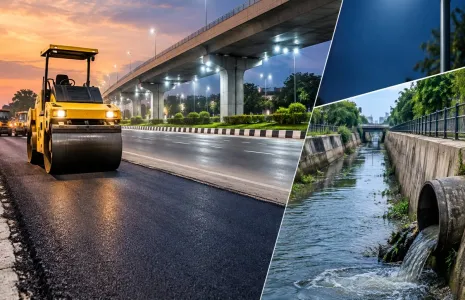
The Centre has announced ambitious plans to develop new highways and high-speed corridors across India, aiming to enhance the country's transportation infrastructure significantly. This initiative is a part of the government's broader strategy to boost economic growth and connectivity.

The plan includes the construction of several new highways and high-speed corridors that will connect major cities and economic hubs, reducing travel time and improving logistics efficiency. These projects are expected to facilitate smoother and faster movement of goods and people, thereby contributing to economic development.

The new highways and high-speed corridors will be equipped with state-of-the-art facilities and advanced technology to ensure safety and efficiency. The government aims to adopt modern construction techniques and sustainable practices in these projects, minimizing environmental impact and ensuring durability.

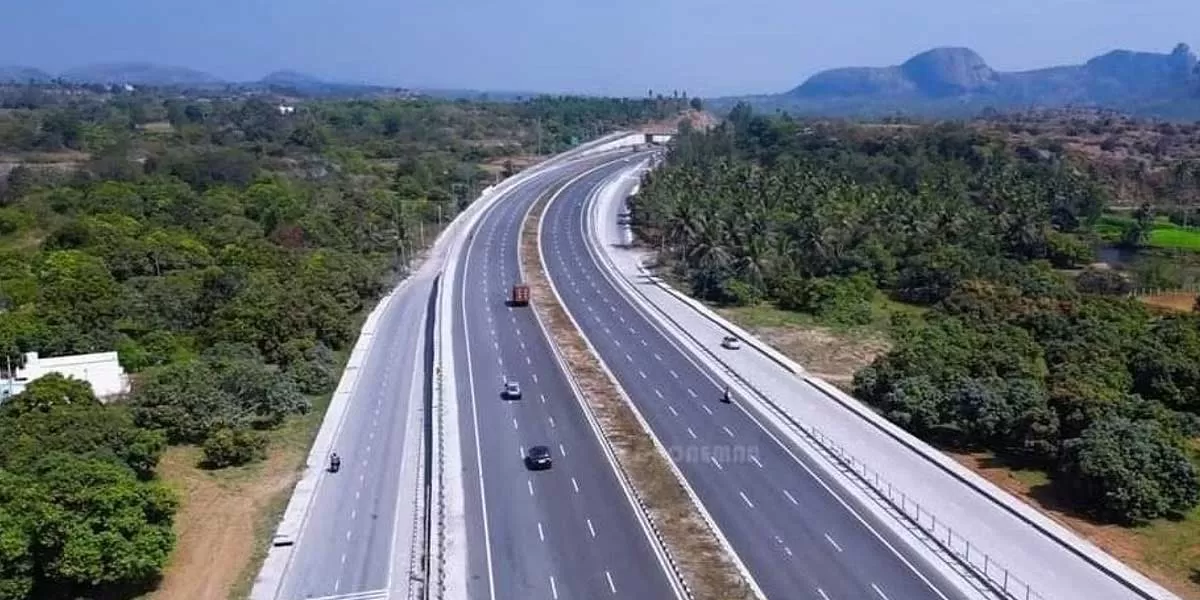
One of the key highlights of this initiative is the focus on creating high-speed corridors that can handle traffic at much higher speeds than existing roads. These corridors will feature multiple lanes, advanced traffic management systems, and robust infrastructure to support high-speed travel.

The Centre's decision to invest heavily in transportation infrastructure is driven by the need to support the growing economy and meet the increasing demand for efficient transportation networks. By improving connectivity between cities and regions, the government hopes to attract more investments, create job opportunities, and stimulate economic activities.

Overall, the development of new highways and high-speed corridors is set to transform India's transportation landscape, making travel faster, safer, and more efficient. This initiative underscores the Centre's commitment to modernising the country's infrastructure and driving economic growth through improved connectivity.

The Centre has announced ambitious plans to develop new highways and high-speed corridors across India, aiming to enhance the country's transportation infrastructure significantly. This initiative is a part of the government's broader strategy to boost economic growth and connectivity. The plan includes the construction of several new highways and high-speed corridors that will connect major cities and economic hubs, reducing travel time and improving logistics efficiency. These projects are expected to facilitate smoother and faster movement of goods and people, thereby contributing to economic development. The new highways and high-speed corridors will be equipped with state-of-the-art facilities and advanced technology to ensure safety and efficiency. The government aims to adopt modern construction techniques and sustainable practices in these projects, minimizing environmental impact and ensuring durability. One of the key highlights of this initiative is the focus on creating high-speed corridors that can handle traffic at much higher speeds than existing roads. These corridors will feature multiple lanes, advanced traffic management systems, and robust infrastructure to support high-speed travel. The Centre's decision to invest heavily in transportation infrastructure is driven by the need to support the growing economy and meet the increasing demand for efficient transportation networks. By improving connectivity between cities and regions, the government hopes to attract more investments, create job opportunities, and stimulate economic activities. Overall, the development of new highways and high-speed corridors is set to transform India's transportation landscape, making travel faster, safer, and more efficient. This initiative underscores the Centre's commitment to modernising the country's infrastructure and driving economic growth through improved connectivity.

Next Story
Infrastructure Urban

Jyoti Structures FY26 profit rises 56.5%

Jyoti Structures (JSL) recently reported strong financial results for the quarter and year ended 31 March 2026, driven by disciplined execution, cost management and steady progress across its order book.For Q4 FY2025-26, total income rose 44.2 per cent to Rs 2.41 billion from Rs 1.67 billion in Q4 FY2024-25. EBITDA increased 58.6 per cent to Rs 237 million, while EBITDA margin improved by 89 basis points to 9.84 per cent. Profit before tax grew 53.3 per cent to Rs 188.5 million, and net profit rose 51.9 per cent to Rs 181.4 million.For FY2025-26, total income grew 53.1 per cent to Rs 7.72 bill..

Next Story
Infrastructure Energy

Cat BEPU to Power Doppstadt Separator at IFAT 2026

Caterpillar’s Cat Battery Electric Power Unit (BEPU) has been selected by Doppstadt to power its SWS 6 Spiral Shaft Separator, which will be showcased for the first time at IFAT 2026 in Munich, Germany, from 4–7 May.The compact plug-and-play BEPU is designed to replace a diesel engine within the same space, using the same mounting locations and relative machine position. It integrates the battery, motor, inverter, onboard charging, cooling and controls, enabling OEMs to electrify existing chassis platforms without extensive redesign.Caterpillar and Cat dealer Zeppelin Power Systems have be..

Next Story
Infrastructure Urban

VECV sales rise 6.9% in April 2026

VE Commercial Vehicles, a joint venture between Volvo Group and Eicher Motors, recorded sales of 7,318 units in April 2026, compared to 6,846 units in April 2025, registering 6.9 per cent growth. The total included 7,159 units under the Eicher brand and 159 units under the Volvo brand.Eicher branded trucks and buses reported sales of 7,159 units during the month, up 6.6 per cent from 6,717 units in April 2025. In the domestic commercial vehicle market, Eicher sales rose 8.6 per cent to 6,797 units from 6,257 units a year earlier.Exports declined 21.3 per cent, with VECV recording 362 units in ..

Advertisement

Subscribe to Our Newsletter

Get daily newsletters around different themes from Construction world.

STAY CONNECTED

Advertisement

Advertisement

Advertisement