Connectivity Projects Gain Momentum Across North East Region
ROADS & HIGHWAYS

Connectivity Projects Gain Momentum Across North East Region

Connectivity projects across road, rail and digital infrastructure in the North Eastern Region (NER) have recorded steady progress, strengthening integration and economic development in the region.
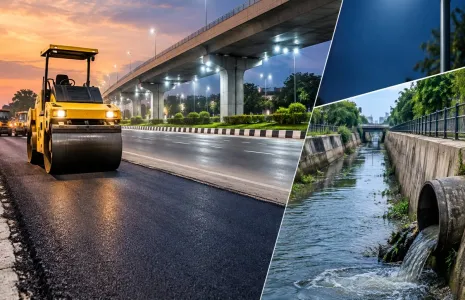
The Ministry of Road Transport and Highways has informed that the length of National Highways in the NER has increased from 10,905 km in 2014 to 16,207 km as of 1 April 2025. In addition, 177 highway projects covering 3,635 km, with an investment of Rs 87,119 crore, are currently at various stages of implementation.
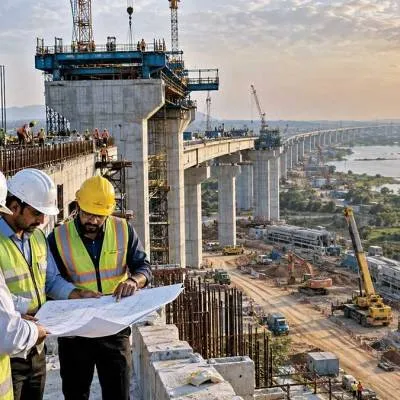
Under the Pradhan Mantri Gram Sadak Yojana, the Ministry of Rural Development has sanctioned 17,666 road works spanning 89,503 km and 2,396 bridge works in the North Eastern states. Of these, 16,547 road works covering 81,448 km and 2,126 bridges have been completed, with an expenditure of Rs 53,353.49 crore, including the state share.
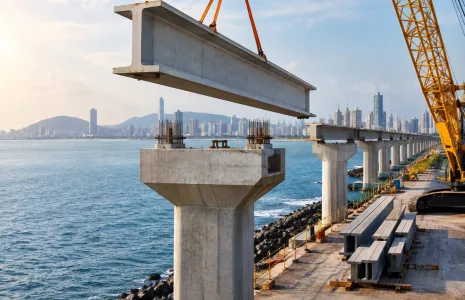
The Ministry of Development of North Eastern Region has sanctioned 647 road and bridge projects worth Rs 8,260.88 crore under its various schemes. Out of these, 500 projects with a total cost of Rs 4,915 crore have already been completed.
The Ministry of Railways has reported that, as of 1 April 2025, 12 railway projects, comprising eight new lines and four doubling projects, with a total length of 777 km and an estimated cost of Rs 69,342 crore, have been sanctioned in the NER. Of this, 278 km has been commissioned.
On the digital front, the Department of Telecommunications stated that, as of December 2025, 6,355 gram panchayats in the region have been made service-ready under the BharatNet project. Additionally, 3,718 mobile towers have been commissioned under government-funded 4G saturation and other mobile projects, covering 5,366 villages and locations.
The implementation timelines of these projects depend on factors such as terrain, land availability, statutory clearances and financial closures. The projects are expected to improve mobility, support agriculture and industry, boost tourism, generate employment and accelerate socio-economic development across the North Eastern states.  

Connectivity projects across road, rail and digital infrastructure in the North Eastern Region (NER) have recorded steady progress, strengthening integration and economic development in the region.The Ministry of Road Transport and Highways has informed that the length of National Highways in the NER has increased from 10,905 km in 2014 to 16,207 km as of 1 April 2025. In addition, 177 highway projects covering 3,635 km, with an investment of Rs 87,119 crore, are currently at various stages of implementation.Under the Pradhan Mantri Gram Sadak Yojana, the Ministry of Rural Development has sanctioned 17,666 road works spanning 89,503 km and 2,396 bridge works in the North Eastern states. Of these, 16,547 road works covering 81,448 km and 2,126 bridges have been completed, with an expenditure of Rs 53,353.49 crore, including the state share.The Ministry of Development of North Eastern Region has sanctioned 647 road and bridge projects worth Rs 8,260.88 crore under its various schemes. Out of these, 500 projects with a total cost of Rs 4,915 crore have already been completed.The Ministry of Railways has reported that, as of 1 April 2025, 12 railway projects, comprising eight new lines and four doubling projects, with a total length of 777 km and an estimated cost of Rs 69,342 crore, have been sanctioned in the NER. Of this, 278 km has been commissioned.On the digital front, the Department of Telecommunications stated that, as of December 2025, 6,355 gram panchayats in the region have been made service-ready under the BharatNet project. Additionally, 3,718 mobile towers have been commissioned under government-funded 4G saturation and other mobile projects, covering 5,366 villages and locations.The implementation timelines of these projects depend on factors such as terrain, land availability, statutory clearances and financial closures. The projects are expected to improve mobility, support agriculture and industry, boost tourism, generate employment and accelerate socio-economic development across the North Eastern states.  

Next Story
Infrastructure Urban

Public Capex Push In Budget To Boost Tyre Industry: ATMA

The Indian tyre industry is expected to benefit from the government’s renewed emphasis on infrastructure development outlined in the Union Budget 2026–27, according to the Automotive Tyre Manufacturers Association (ATMA).ATMA said the tyre sector is closely linked to the performance of the transport and infrastructure ecosystem, and the sharp rise in public capital expenditure to Rs 1.2 trillion is a significant positive for sustained long-term demand growth.The association noted that the enhanced capex allocation reflects the government’s continued focus on building future-ready infrast..

Next Story
Infrastructure Transport

Underground Rail Line Planned In Siliguri ‘Chicken’s Neck’

Indian Railways is planning to construct underground railway tracks along a critical 40 km stretch of the Siliguri Corridor, popularly known as the Chicken’s Neck, to strengthen connectivity between the North East and the rest of India while enhancing security preparedness. According to the Indian Railways, the underground section is strategically significant due to the corridor’s narrow geography and proximity to international borders. Chetan Kumar Srivastava, General Manager of the Northeast Frontier Railway, said the proposed underground alignment is extremely important from a security..

Next Story
Infrastructure Urban

Agriculture Infrastructure Fund Boosts Post-Harvest Assets

The Agriculture Infrastructure Fund (AIF), a Central Sector Scheme of the Government of India, continues to strengthen post-harvest management infrastructure by enabling access to medium- and long-term debt financing through interest-subvented loans. The scheme focuses on improving agri-logistics, reducing post-harvest losses, promoting modern storage, processing and value-addition facilities, and enhancing farm-gate infrastructure to support efficient agricultural supply chains. Under AIF, banks and financial institutions provide loans with an interest subvention of three per cent per annum,..

Advertisement

Subscribe to Our Newsletter

Get daily newsletters around different themes from Construction world.

STAY CONNECTED

Advertisement

Advertisement

Advertisement

Advertisement

Open In App