G20 summit: Lush Greening Effort, Floral Enhancements complete in Delhi
ROADS & HIGHWAYS

G20 summit: Lush Greening Effort, Floral Enhancements complete in Delhi

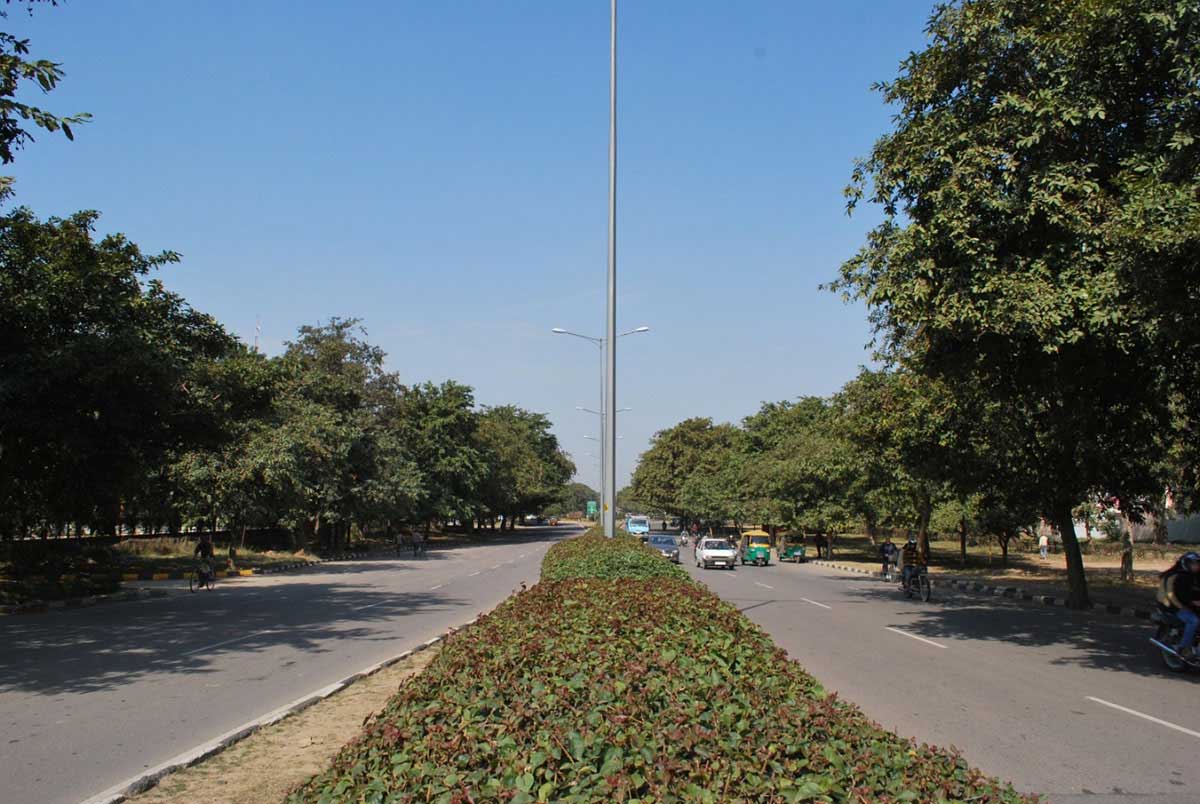
In preparation for the upcoming G20 summit scheduled for the second week of September in the city, a significant greening initiative has been successfully completed in the Lutyens’ Delhi area. New Delhi Municipal Council officials have announced the completion of this effort, which involved planting nearly three million plants.

Furthermore, additional plans have been set in motion to enhance the summit venues. These plans include the installation of movable structures, floral fountains, and the placement of approximately 100,000 flowerpots. Officials from the NDMC's horticulture department have provided these details. They also revealed that damaged plants along 33 avenue roads in the New Delhi region will be replaced with potted plants.

The initiative was initiated approximately a year ago and involved three NDMC nurseries: Lodhi Gardens, Madhu Limay Marg, and Satya Sadan. These nurseries served as the sources for the plants.

Satish Upadhyay, Vice Chairperson of NDMC, supervised the preparations at Lodhi Gardens and shared that the endeavour included the planting of over 900,000 saplings and 2,000,000 shrubs along avenue roads and roundabouts. To accomplish this, the council employed 1,200 workers. Additionally, 200 private workers were outsourced for the work. A dedicated team of 80 skilled gardeners was assigned to the three advanced nurseries.

The three nurseries now house 100,000 potted plants of 83 different varieties, including dracaena, Song of India (Dracaena reflexa), hibiscus (Rosa sinensis), champa (Magnolia champaca), areca palm (Dypsis lutescens), rhapis palm (Rhapis excelsa), livistona (Livistona chinensis), acalypha (Acalypha wilkesiana), and aspidistra (Asparagaceae), among others.

To ensure flexibility, 60 mobile racks with wheels are being developed. These racks will allow for easy placement of plant installations near hotels and other locations without soil. Additionally, 40 floral boards featuring G20 logos and 24 floral fountains, doubling as selfie spots, will be incorporated, according to an anonymous horticulture department official.

The horticultural enhancements are nearing completion, with the focus now shifting to maintenance and oversight, the official added.

Upadhyay emphasised that NDMC has initiated tender processes for the ongoing maintenance of these plants along the 41 major avenue roads.

In preparation for the upcoming G20 summit scheduled for the second week of September in the city, a significant greening initiative has been successfully completed in the Lutyens’ Delhi area. New Delhi Municipal Council officials have announced the completion of this effort, which involved planting nearly three million plants.Furthermore, additional plans have been set in motion to enhance the summit venues. These plans include the installation of movable structures, floral fountains, and the placement of approximately 100,000 flowerpots. Officials from the NDMC's horticulture department have provided these details. They also revealed that damaged plants along 33 avenue roads in the New Delhi region will be replaced with potted plants.The initiative was initiated approximately a year ago and involved three NDMC nurseries: Lodhi Gardens, Madhu Limay Marg, and Satya Sadan. These nurseries served as the sources for the plants.Satish Upadhyay, Vice Chairperson of NDMC, supervised the preparations at Lodhi Gardens and shared that the endeavour included the planting of over 900,000 saplings and 2,000,000 shrubs along avenue roads and roundabouts. To accomplish this, the council employed 1,200 workers. Additionally, 200 private workers were outsourced for the work. A dedicated team of 80 skilled gardeners was assigned to the three advanced nurseries.The three nurseries now house 100,000 potted plants of 83 different varieties, including dracaena, Song of India (Dracaena reflexa), hibiscus (Rosa sinensis), champa (Magnolia champaca), areca palm (Dypsis lutescens), rhapis palm (Rhapis excelsa), livistona (Livistona chinensis), acalypha (Acalypha wilkesiana), and aspidistra (Asparagaceae), among others.To ensure flexibility, 60 mobile racks with wheels are being developed. These racks will allow for easy placement of plant installations near hotels and other locations without soil. Additionally, 40 floral boards featuring G20 logos and 24 floral fountains, doubling as selfie spots, will be incorporated, according to an anonymous horticulture department official.The horticultural enhancements are nearing completion, with the focus now shifting to maintenance and oversight, the official added.Upadhyay emphasised that NDMC has initiated tender processes for the ongoing maintenance of these plants along the 41 major avenue roads.

Next Story
Infrastructure Urban

Waterproofing Blueprint

Waterproofing buildings used to be an annual pre-monsoon affair but the evolution of real-estate development has changed that approach. In new developments, developers are weaving waterproofing solutions into both the design and construction phases, an approach that Nikhil Madan, Managing Director, Mahima Group, says, “is all about ensuring lasting durability [of the building] and keeping lifecycle risks including water seepage and extensive maintenance to a minimum.”Watertight by designAluminium formwork systems aren’t commonly thought of as a waterproofing tool but at the Mahima Group,..

Next Story
Real Estate

Danube Launches Greenz Villa Community in Dubai

Danube Properties has launched Greenz by Danube, a fully furnished master villa community in Dubai, unveiled by H.E. Sheikh Nahyan bin Mubarak Al Nahyan, UAE Minister of Tolerance and Coexistence, at an event attended by over 7,000 investors and business leaders.Located near Dubai International Academic City and Dubai Silicon Oasis, the development marks Danube’s first large-scale integrated villa community and is positioned within one of Dubai’s emerging residential corridors.The project will comprise three and four-bedroom townhouses along with five-bedroom semi-detached and twin villas...

Next Story
Equipment

ABB Launches IE6 Motor for Hazardous Industrial Areas

ABB has introduced what it claims is the world’s first IE6 Hyper-Efficiency motor certified for hazardous industrial environments under ATEX and IECEx standards.The new Increased Safety motor is based on ABB’s synchronous reluctance (SynRM) technology and is designed without magnets or rare earth materials. According to the company, the motor reduces energy losses by up to 60 per cent compared to standard IE3 induction motors commonly used in hazardous areas.The motor is intended for use in industries such as chemicals, marine, oil and gas, pharmaceuticals and food and beverage, where expl..

Advertisement

Subscribe to Our Newsletter

Get daily newsletters around different themes from Construction world.

STAY CONNECTED

Advertisement

Advertisement

Advertisement

-->