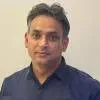
I have earned the reputation of being a people´s man
His biggest victory, he tells you, ´is being a people´s man´. This was evident as Vinayak Deshpande walked up the stage to receive his award with his team in the hall giving him a standing ovation, applauding and cheering with full energy. Deshpande has been instrumental in diversifying Tata Projects´ business in urban infrastructure into domains such as urban metro systems and high-rise buildings (read profile on page 174). On receiving the award, he said, ´The country is growing, with good people leading it, and infrastructure growth is happening. I see a great future. And although I am getting on the other side of my youth, I am very excited to be here as a part of this whole journey that India is going through.´
The CW Man of the Year 2016 shared more, along with his plans for the company, in conversation with SHRIYAL SETHUMADHAVAN.
It´s double celebration for you; the company has emerged as one of the top three large construction companies this year and you have been named CW Man of the Year. How does it feel?
Indeed, this is a double celebration because if the company does well, as the chosen captain of the team, I also get some recognition. Tata Projects grew last year by about 30 per cent; this year too, we are growing at more than that rate. It feels good, and people are feeling more enthused and happy. We really feel proud.
When you joined in 2011, opportunities in the engineering and infrastructure spaces were growing rapidly. And then came a slump and the market got stagnant. How did you survive the sluggish market?
Everyone has their own opportunities and threats. After I joined, the curve began to fall. We had been strong players in the EPC area, including power generation, steel plants, and oil and gas refinery, but we were not doing much in the urban infrastructure area. As a team, we saw a lot of opportunity there and we looked at the dedicated freight corridor and some urban metro systems, and started some initiatives in these businesses. We took the required partners, hired some people and not only continued with our leadership in industrial projects, but got into urban infrastructure and some civil projects. That gave us growth and helped us tide over the situation.
Growth has been at a rate of 45 per cent in the first quarter for the company. How do you plan to sustain the momentum through the year?
Today, we have a comfortable order book, which is close to around Rs 30,000 crore. With this, and the kind of orders we have booked this year, we believe we will be able to maintain this growth rate for the next two or three years to come. The several segments the company is engaged in will add to the order book, with which growth will be consistent. However, the challenge will be in execution, and that is what we are focusing on. So we are building systems, processes, people, skills - it´s more internal now than external.
Any particular project that will contribute to this growth?
One of our big businesses, PGCIL and some of the state electricity boards and their transmission networks, continues to grow. Business outside the country adds a lot to our growth. Also, we have a good order backlog in the dedicated freight corridor. And now, with the way NHAI is investing in the roads sector, this will become the next frontier for us. This apart, buildings and metros are growing. We are executing one of the packages for the Mumbai metro underground, and are also doing the Lucknow underground along with DMRC projects.

Which of the segments that you operate in contributes maximum to Tata Projects´ overall business?
At present, about 60-65 per cent comes from urban infrastructure projects and about 20-25 per cent from industrial projects. The remaining odd 10 per cent comes from quality services, which is like a manpower service business with a small topline and a good bottomline.
How are the eastern and western dedicated freight corridor projects progressing?
Fairly satisfactorily. The dedicated freight corridor organisation has done a good effort in acquiring and making land available, and work has started in most sections. We have also invested substantially in the equipment required for earthworks; mechanised track laying; and tamping of tracks, making them smooth and in alignment. So, close to about Rs 400 crore would have been invested in the equipment. This is the first time India is using a mechanised track laying system on such a large scale.
How easy or difficult was it to get into the urban infrastructure space?
Not so much, because the planning and coordination challenges in industrial projects are fairly high. In urban projects, you have similar challenges but a little different, because here you deal with linear projects; require land, ROW, deal with social aspects, etc. At the same time, India has some great engineering talent and people who have worked under international projects in the urban infrastructure area. They are the ones who are really driving efficiency.
How do you see smart cities contributing to the portfolio of Tata Projects?
This is another good initiative by the government. In the past, we have talked about modernising our cities and urban development, which have taken the form of smart cities. And, there are eight or nine initiatives that got defined under smart city, such as smart utility, smart transportation, security, homeland security and surveillance. With this, for the first time, we know what needs to be done to make a city smart. For example, we have a project in Jaipur where a river flows centrally. This is Ravyavati River, now called nalah. We have taken up the project of rejuvenating this river. We will create a channel in the 40-km stretch, install treatment plants and ensure the water that flows in the river is blue and marine life can exist there. We will create green spaces around it and social infrastructure. Further, in Pune, too, we will convert 75,000 street lights to LEDs.
You are present in the Middle East and Eastern Africa Market, and hope to increase your share to about 20-25 per cent in the next three years. Please tell us more.
First, we want to go into international markets with projects in those areas where we are strong in India.
For instance, transmission. We also have our strengths in water-related projects. This is helping us in Africa, where we have won transmission projects, and in the Middle East, where we have won some refinery and related projects. Second, we are also making local partnerships in these countries so that we can grow with local support and local culture.
Holding such an important and high-profile position in Tata Projects, how do you cope with work pressure?
I really love this job and even if I work 12 or 14 hours a day, it does not really bother me - I enjoy it more. I also have my hobbies. For instance, almost every year, I go into the Himalayas to trek. This rejuvenates me. So there is a bit of work-life balance and I always tell myself and my colleagues that this balance is important.
One big achievement in your career...
One source of pleasure and pride is that wherever I have worked, I have earned the reputation of being a people´s man. My people like me and I love my people. We have always lived and worked like a team and this continues. This is a true achievement and my secret to success.
Is there a dream project you envisage for the company?
Several such projects are on the horizon. The Mumbai Metro underground project will bring us pride. Also, the Mumbai Trans-Harbour Link is in the bidding stage; bagging this will be great for us. The Ravyavati River rejuvenation project in Rajasthan is a project very close to my heart. As a company, we will leave a lot of great things behind for people when we do such projects. Hence, I love working on infrastructure because we experience the pleasure of giving to society.
CW EXCLUSIVE at the CW Annual Awards 2016 in Mumbai.
To hear him speak, log on to www.ConstructionWorld.in/Awards/videos)
Related Stories


Gold Stories


Hexalog Appoints Vishal Shukla as Chief Transformation Officer
Hexalog, a cross-border supply chain and logistics company, has appointed Vishal Shukla as Chief Transformation Officer (CTO) to lead its operational transformation, technology adoption and expansion into new international markets.In his new role, Shukla will oversee the company's transformation strategy across operations, technology, product development and business expansion. His responsibilities include standardising processes, developing scalable operating models, strengthening existing trade corridors and introducing new fulfilment solutions for cross-border businesses.Shukla brings nearl..

Dhuleva Group Awards 80-Storey Tower Contract to Eversendai
Dhuleva Group has awarded the core and shell structural construction contract for Dhuleva One50, an upcoming 80-storey ultra-luxury residential tower in South Mumbai, to Malaysia-based engineering and construction company Eversendai.Located near the Babulnath district, the development is planned as a high-rise residential landmark offering panoramic views of the Arabian Sea and Mumbai's skyline. The project will combine contemporary architecture with advanced engineering and premium residential facilities.Eversendai will undertake the structural construction works, drawing on its experience in..
Nuvoco Marks 10 Years, Targets 35 MMTPA Capacity by FY28
Nuvoco Vistas Corporation Limited is celebrating a decade of operations under the theme ‘Dus Saal Bemisaal’, highlighting its expansion in India's building materials sector. The company has grown from a single cement manufacturing facility into a diversified organisation operating across cement, ready-mix concrete (RMC) and modern building materials.The company's journey began in 2014 when its parent, Nirma Group, commissioned a 2 million metric tonnes per annum (MMTPA) greenfield cement plant at Nimbol, Rajasthan. A major milestone followed in October 2016 with the acquisition of Lafarge ..
Related Articles
Latest Updates