+
India and Nepal ink MoU for building a bridge in Uttarakhand
ROADS & HIGHWAYS

India and Nepal ink MoU for building a bridge in Uttarakhand

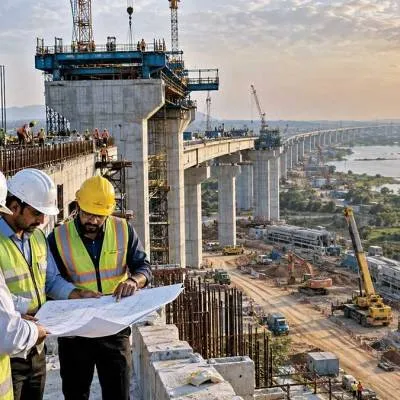
On Thursday, the Union Cabinet approved the signing of a Memorandum of Understanding (MoU) between India and Nepal for the development of a bridge over the Mahakali river at Dharchula in Uttarakhand.

I&B Minister Anurag Thakur told the media that the MoU between India and Nepal would be inked in the "near future", and the bridge will be achieved within three years.

The development of the bridge will benefit people living in Dharchula in Uttarakhand and the territory of Nepal.

Thakur told the media that as close neighbours, India and Nepal share special ties of friendship and cooperation depicted by an open border and deep-rooted people-to-people contacts of kinship and culture.

The diplomatic relations between the two nations will further enhance with the inking of the MoU, an official statement said.

He said that India and Nepal have been together working on diverse regional forums like the South Asian Association for Regional Cooperation (SAARC) and Bay of Bengal Initiative for Multi-Sectoral Technical and Economic Cooperation (BIMSTEC), and the global fora.

Image Source

On Thursday, the Union Cabinet approved the signing of a Memorandum of Understanding (MoU) between India and Nepal for the development of a bridge over the Mahakali river at Dharchula in Uttarakhand. I&B Minister Anurag Thakur told the media that the MoU between India and Nepal would be inked in the near future, and the bridge will be achieved within three years. The development of the bridge will benefit people living in Dharchula in Uttarakhand and the territory of Nepal. Thakur told the media that as close neighbours, India and Nepal share special ties of friendship and cooperation depicted by an open border and deep-rooted people-to-people contacts of kinship and culture. The diplomatic relations between the two nations will further enhance with the inking of the MoU, an official statement said. He said that India and Nepal have been together working on diverse regional forums like the South Asian Association for Regional Cooperation (SAARC) and Bay of Bengal Initiative for Multi-Sectoral Technical and Economic Cooperation (BIMSTEC), and the global fora. Image Source

Next Story
Infrastructure Urban

Implementation Status of Jal Jeevan Mission

Since August 2019 the Government has implemented Jal Jeevan Mission to provide assured potable water through household tap connections in rural India. At the start of the mission only 32.3 million (mn) rural households, representing 16.7 per cent, were reported to have tap water connections. States and union territories have reported that 125.8 mn additional rural households have since been provided with tap connections. As a result, of about 193.6 mn rural households roughly 158.2 mn, or 81.71 per cent, are reported to have tap water supply at home.\n\nThe State, district and village level st..

Next Story
Infrastructure Urban

Jal Jeevan Mission Reaches Eighty One Per Cent Rural Coverage

The Government reported substantial progress under the Jal Jeevan Mission, launched in August 2019 to provide tap water to every rural household. At launch only 32.3 million (mn) rural households had tap connections and states and Union territories reported provision of 125.8 mn additional households by March 2026. Consequently, out of about 193.6 mn rural households around 158.2 mn, or 81.71 per cent, are reported to have tap water at home. The Finance Minister announced extension of the mission until 2028 in the 2025-26 budget speech. The Swachh Bharat Mission Grameen, launched in October 20..

Next Story
Infrastructure Urban

Empowering Local Governance for Sustainable Rural Water Supply

The Ministry of Jal Shakti has aligned the Jal Jeevan Mission (JJM) with the 73rd Amendment to strengthen village level planning and community ownership of water supply. Gram Panchayats, village water and sanitation committees and Pani Samitis are to plan, implement, manage and maintain piped water systems, with gram sabha processes formalising handover and oversight. Implementation support agencies including non government organisations, community based organisations and self help groups have been empanelled to train local committees and promote women participation. Under JJM, the department ..

Advertisement

Subscribe to Our Newsletter

Get daily newsletters around different themes from Construction world.

STAY CONNECTED

Advertisement

Advertisement

Advertisement