India Targets Rs 350 Billion Highway Monetisation In FY27
ROADS & HIGHWAYS

India Targets Rs 350 Billion Highway Monetisation In FY27

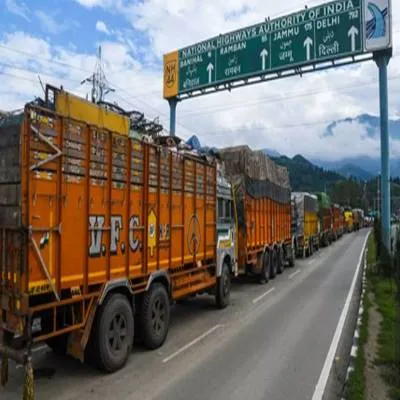
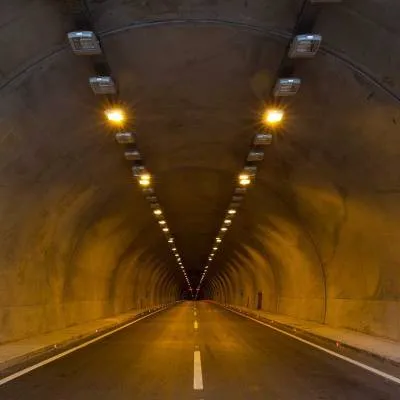
The government plans to accelerate its infrastructure funding strategy by monetising highway assets worth around Rs 350 billion (Rs 350 bn) in FY27 as part of a broader drive to recycle capital and support new road projects. The programme envisages the monetisation of 28 national highway stretches spanning over 1,800 kilometres, with assets identified by the National Highways Authority of India and states such as Haryana and Uttar Pradesh accounting for a significant share of the pipeline. The move reflects a sustained effort to unlock value from operational assets and free up capital for fresh investment.

Asset recycling is intended to allow proceeds from existing infrastructure to be reinvested into new projects, thereby reducing reliance on traditional budgetary support and accelerating project delivery. The government has been utilising models such as Toll-Operate-Transfer and Infrastructure Investment Trusts (InvITs) to attract private capital and improve operational efficiencies, with InvITs increasingly positioned as a vehicle for long term asset ownership. These approaches are presented as tools to deepen investor participation in the road sector.

The FY27 plan builds on prior transactions that have delivered steady returns and attracted both domestic and global investors, and it is designed to sustain investor interest in road assets that offer predictable cash flows. The initiative also forms part of the National Monetisation Pipeline two point zero, under which highway assets worth over Rs 4 trillion (Rs 4 tn) are expected to be monetised between FY26 and FY30. Officials view the pipeline as a multi year framework to mobilise private resources for public infrastructure.

Policymakers expect asset monetisation to play a central role in bridging funding gaps, accelerating execution of projects and strengthening the country’s road network, while supporting a larger infrastructure expansion agenda. Continued emphasis on clear regulatory frameworks and transparent bid processes is intended to maintain investor confidence and deliver value from operational assets across the lifecycle.

The government plans to accelerate its infrastructure funding strategy by monetising highway assets worth around Rs 350 billion (Rs 350 bn) in FY27 as part of a broader drive to recycle capital and support new road projects. The programme envisages the monetisation of 28 national highway stretches spanning over 1,800 kilometres, with assets identified by the National Highways Authority of India and states such as Haryana and Uttar Pradesh accounting for a significant share of the pipeline. The move reflects a sustained effort to unlock value from operational assets and free up capital for fresh investment. Asset recycling is intended to allow proceeds from existing infrastructure to be reinvested into new projects, thereby reducing reliance on traditional budgetary support and accelerating project delivery. The government has been utilising models such as Toll-Operate-Transfer and Infrastructure Investment Trusts (InvITs) to attract private capital and improve operational efficiencies, with InvITs increasingly positioned as a vehicle for long term asset ownership. These approaches are presented as tools to deepen investor participation in the road sector. The FY27 plan builds on prior transactions that have delivered steady returns and attracted both domestic and global investors, and it is designed to sustain investor interest in road assets that offer predictable cash flows. The initiative also forms part of the National Monetisation Pipeline two point zero, under which highway assets worth over Rs 4 trillion (Rs 4 tn) are expected to be monetised between FY26 and FY30. Officials view the pipeline as a multi year framework to mobilise private resources for public infrastructure. Policymakers expect asset monetisation to play a central role in bridging funding gaps, accelerating execution of projects and strengthening the country’s road network, while supporting a larger infrastructure expansion agenda. Continued emphasis on clear regulatory frameworks and transparent bid processes is intended to maintain investor confidence and deliver value from operational assets across the lifecycle.

Next Story
Technology

LTTS Partners with Databricks to Advance Industrial AI

L&T Technology Services (LTTS) has entered a strategic partnership with Databricks to co-develop Industrial AI solutions for asset-intensive industries, including energy, petrochemicals, and manufacturing. The collaboration leverages LTTS’ engineering expertise across 600+ major plants with Databricks’ AI and analytics platform to convert operational data into actionable Engineering Intelligence.The partnership will deliver solutions spanning Predictive Asset Reliability, Energy & Emissions Optimisation, Overall Equipment Effectiveness, Production and Quality Intelligence, and Sust..

Next Story
Infrastructure Urban

Opptra Partners with Unicommerce to Scale AI-Driven E-Commerce

Opptra, the AI-native e-commerce distributor founded by Flipkart co-founder Binny Bansal, has partnered with Unicommerce to enhance operations across India, the GCC, and Southeast Asia. The collaboration integrates Opptra’s brand expansion expertise with Unicommerce’s AI-led Uniware platform, enabling centralised management of orders, inventory, and fulfilment across warehouses, stores, and sales channels.Opptra retains full commercial ownership of online brand operations, from marketplace strategy and pricing to fulfilment and customer service. Leveraging Unicommerce’s 350+ integrations..

Next Story
Real Estate

AHS Properties Acquires Shangri-La Hotel for AED 1.1 Billion

AHS Properties has acquired the Shangri-La Hotel on Sheikh Zayed Road for AED 1.1 billion from Mismak Asset Management, marking one of the largest single-asset real estate deals in recent history. The 43-floor, 200-metre tower, completed in 2003, was among the first five-star hotels on the corridor.This acquisition complements AHS Tower and AHS City, forming a vertical corridor strategy that represents a substantial portion of the developer’s AED 50 billion year-end 2026 pipeline. Founder and CEO Abbas Sajwani described the purchase as a long-term investment in structurally constrained asset..

Advertisement

Subscribe to Our Newsletter

Get daily newsletters around different themes from Construction world.

STAY CONNECTED

Advertisement

Advertisement

Advertisement