
Mega Bridges Transform Assam’s Logistics Landscape
ROADS & HIGHWAYS

Mega Bridges Transform Assam’s Logistics Landscape

Mega infrastructure projects such as the Dhubri–Phulbari river bridge and the Bogibeel bridge over the Brahmaputra are rapidly reshaping Assam’s logistics landscape, significantly improving connectivity, cutting travel time and unlocking new economic opportunities across the Northeast.

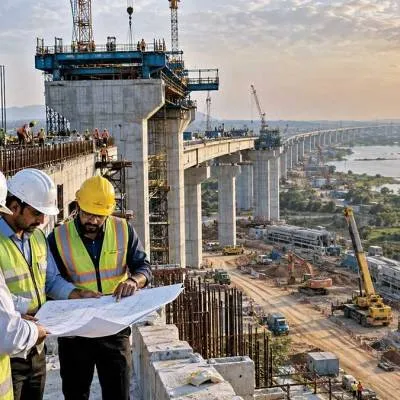
The 19.3 km Dhubri–Phulbari bridge, once completed, will become India’s longest river bridge, linking Dhubri in western Assam with Phulbari in Meghalaya. The project is expected to be a game-changer for regional trade and mobility, providing a direct, all-weather road link across the Brahmaputra and sharply reducing travel time between the two states.

At present, the movement of people and goods depends largely on ferry services, which are time-consuming and frequently disrupted during the monsoon. Himanta Biswa Sarma has said the bridge will play a critical role in boosting trade between Assam, Meghalaya and neighbouring states, while also strengthening connectivity with Bangladesh.

By shortening routes to ports and markets, the bridge is expected to lower transportation costs for agricultural produce, coal, limestone and other commodities, providing a strong impetus to local economies in the region.

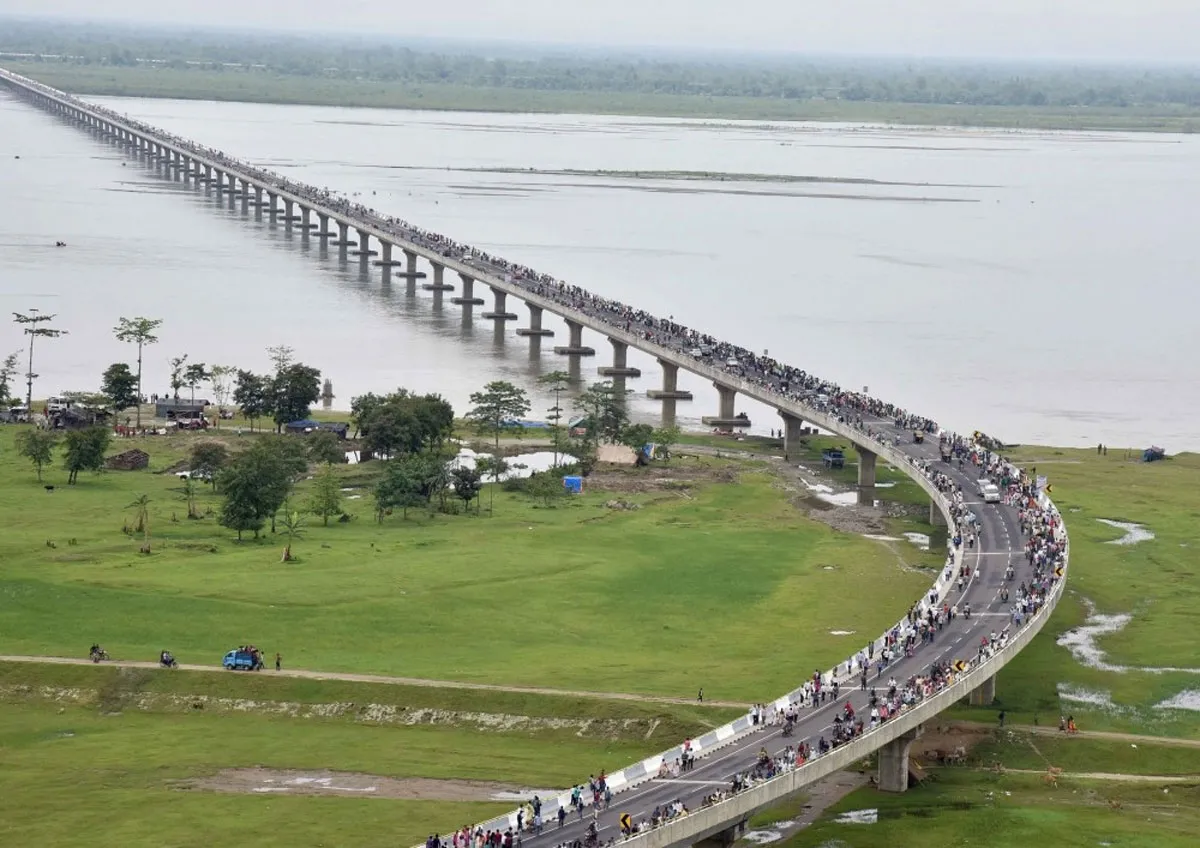
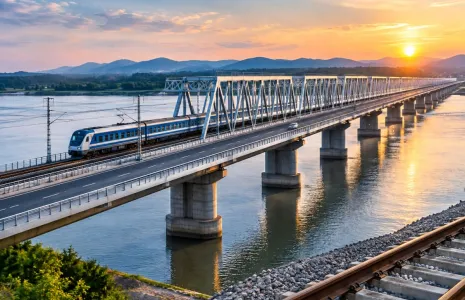
Another landmark project reshaping Assam’s infrastructure is the Bogibeel bridge, which connects Dibrugarh and Dhemaji districts in Upper Assam. Inaugurated in 2018, the 4.94 km structure is India’s longest road-cum-rail bridge and serves as a strategic and economic lifeline. It has significantly improved access to Arunachal Pradesh and remote parts of Assam, enabling faster movement of goods, security forces and essential supplies.

Before the Bogibeel bridge became operational, travel between the north and south banks of the Brahmaputra in Upper Assam involved long detours or reliance on ferries. The bridge has cut travel time by several hours and has emerged as a vital corridor for key industries such as tea, oil and natural gas, which form the backbone of Assam’s economy.

Infrastructure experts say these mega bridges are not just engineering achievements but powerful catalysts for regional development. Improved connectivity has enhanced access to healthcare, education and markets for communities in riverine and border areas, while also strengthening disaster response by enabling quicker deployment of relief and rescue teams during floods.

The Assam government has said such projects align with the Centre’s Act East Policy, which aims to integrate the Northeast with Southeast Asia through improved road, rail and river connectivity. As work progresses on the Dhubri–Phulbari bridge and other connectivity initiatives, Assam is steadily moving from geographical isolation towards deeper economic integration, with the Brahmaputra increasingly becoming a bridge to opportunity rather than a barrier.

Mega infrastructure projects such as the Dhubri–Phulbari river bridge and the Bogibeel bridge over the Brahmaputra are rapidly reshaping Assam’s logistics landscape, significantly improving connectivity, cutting travel time and unlocking new economic opportunities across the Northeast. The 19.3 km Dhubri–Phulbari bridge, once completed, will become India’s longest river bridge, linking Dhubri in western Assam with Phulbari in Meghalaya. The project is expected to be a game-changer for regional trade and mobility, providing a direct, all-weather road link across the Brahmaputra and sharply reducing travel time between the two states. At present, the movement of people and goods depends largely on ferry services, which are time-consuming and frequently disrupted during the monsoon. Himanta Biswa Sarma has said the bridge will play a critical role in boosting trade between Assam, Meghalaya and neighbouring states, while also strengthening connectivity with Bangladesh. By shortening routes to ports and markets, the bridge is expected to lower transportation costs for agricultural produce, coal, limestone and other commodities, providing a strong impetus to local economies in the region. Another landmark project reshaping Assam’s infrastructure is the Bogibeel bridge, which connects Dibrugarh and Dhemaji districts in Upper Assam. Inaugurated in 2018, the 4.94 km structure is India’s longest road-cum-rail bridge and serves as a strategic and economic lifeline. It has significantly improved access to Arunachal Pradesh and remote parts of Assam, enabling faster movement of goods, security forces and essential supplies. Before the Bogibeel bridge became operational, travel between the north and south banks of the Brahmaputra in Upper Assam involved long detours or reliance on ferries. The bridge has cut travel time by several hours and has emerged as a vital corridor for key industries such as tea, oil and natural gas, which form the backbone of Assam’s economy. Infrastructure experts say these mega bridges are not just engineering achievements but powerful catalysts for regional development. Improved connectivity has enhanced access to healthcare, education and markets for communities in riverine and border areas, while also strengthening disaster response by enabling quicker deployment of relief and rescue teams during floods. The Assam government has said such projects align with the Centre’s Act East Policy, which aims to integrate the Northeast with Southeast Asia through improved road, rail and river connectivity. As work progresses on the Dhubri–Phulbari bridge and other connectivity initiatives, Assam is steadily moving from geographical isolation towards deeper economic integration, with the Brahmaputra increasingly becoming a bridge to opportunity rather than a barrier.

Next Story
Infrastructure Transport

CMRL to Open 15.8 km Chennai Metro Phase II in February

Chennai Metro Rail (CMRL) has revised its rollout strategy for Phase II of the Chennai Metro, deciding to commission the entire 15.8-km stretch between Poonamallee Bypass and Vadapalani directly in February. The move marks a shift from the earlier plan of launching services on a shorter section first and extending them in stages.Initially, CMRL had proposed to start operations on the Poonamallee Bypass–Porur Junction stretch by the end of January, with services extended to Vadapalani in February. However, officials said the revised approach would allow commuters to benefit from better connec..

Next Story
Infrastructure Transport

Power Mech Emerges L1 for Mumbai Monorail O&M Contract

Power Mech Projects has emerged as the lowest bidder (L1) for the operations and maintenance (O&M) contract of the Mumbai Monorail project, officials said. The contract was floated by the Mumbai Metropolitan Region Development Authority (MMRDA) with a tenure of 1,825 days, or five years.MMRDA had invited bids for the O&M work of the Mumbai Monorail corridor from Sant Gadge Maharaj Chowk to Chembur. Technical bids were opened on November 12, 2025, with four firms submitting bids for the contract. Following the technical evaluation conducted on January 1, 2026, two bidders were disqualif..

Next Story
Infrastructure Transport

E to E Transportation Clarifies SECR Contract Value at Rs 270.35 Mn

NSE Emerge-listed E to E Transportation Infrastructure has issued a clarification on the value of a railway signalling and telecommunication contract awarded by the South East Central Railway (SECR), Raipur Division, after identifying a typographical error in its earlier regulatory disclosure.In a filing dated January 4, 2026, the company said the correct value of the Letter of Acceptance (LoA) is Rs 270.34 million, and not Rs 2.73 billion as previously stated in an announcement uploaded on the NSE Emerge portal earlier the same day. The company noted that the incorrect figure was the result o..

Advertisement

Subscribe to Our Newsletter

Get daily newsletters around different themes from Construction world.

STAY CONNECTED

Advertisement

Advertisement

Advertisement

Advertisement

Open In App