Ministry Keeps Linking Factor For Karnataka Highway Toll Revisions
ROADS & HIGHWAYS

Ministry Keeps Linking Factor For Karnataka Highway Toll Revisions

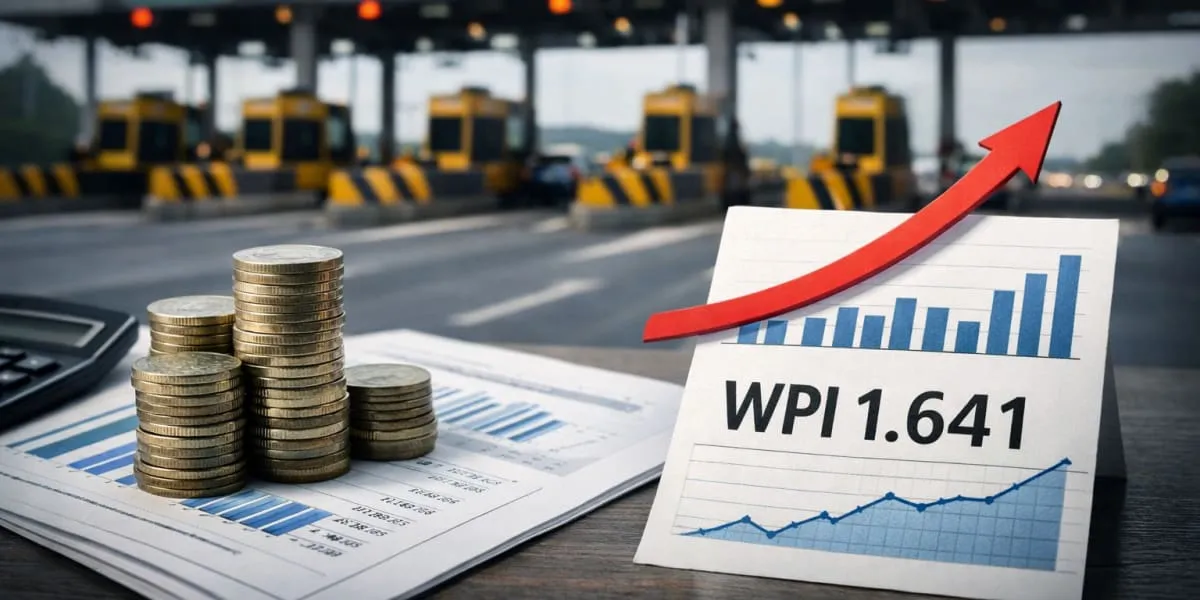
The Ministry of Road Transport and Highways has decided to retain the one point six four one linking factor used to convert Wholesale Price Index (WPI) data, a move set to affect the annual revision of user fees at 35 toll plazas in Karnataka. The ministry issued a memorandum on June 29 instructing that the linking factor continue to be applied when transitioning the WPI series from the 2004-05 base year to the 2011-12 series for toll calculations. The measure forms part of the ministry's guidance on methodology for national highway user fee determinations.\n\nThe decision follows observations by the Comptroller and Auditor General and directions from the Delhi High Court concerning the method used to revise user fees. Under the National Highways Fee (Determination of Rates and Collection) Rules, 2008, toll rates on national highways are revised annually from April one based on increases in the Wholesale Price Index. The rules further restrict any increase in user fee to forty per cent of the rise in the WPI.\n\nThe National Highways Authority of India (NHAI) first adopted the one point six four one linking factor in 2018 and the ministry has directed that it will apply that factor under all existing contracts and concession agreements as well as for future national highway projects. Agencies responsible for toll management will therefore continue to calculate adjustments using the same conversion methodology. Officials indicated the directive is intended to ensure consistency and legal compliance in fee revisions.\n\nThe retained linking factor means toll rates at plazas across Karnataka, including on the Bengaluru–Mysuru Access Controlled Highway and other national routes, will continue to be computed under the established approach. The move comes as several plazas have recently seen revised toll rates and is intended to provide administrative clarity. The ministry said the directive will remain in force until further orders or an amendment to the National Highways Fee Rules.

The Ministry of Road Transport and Highways has decided to retain the one point six four one linking factor used to convert Wholesale Price Index (WPI) data, a move set to affect the annual revision of user fees at 35 toll plazas in Karnataka. The ministry issued a memorandum on June 29 instructing that the linking factor continue to be applied when transitioning the WPI series from the 2004-05 base year to the 2011-12 series for toll calculations. The measure forms part of the ministry's guidance on methodology for national highway user fee determinations.\n\nThe decision follows observations by the Comptroller and Auditor General and directions from the Delhi High Court concerning the method used to revise user fees. Under the National Highways Fee (Determination of Rates and Collection) Rules, 2008, toll rates on national highways are revised annually from April one based on increases in the Wholesale Price Index. The rules further restrict any increase in user fee to forty per cent of the rise in the WPI.\n\nThe National Highways Authority of India (NHAI) first adopted the one point six four one linking factor in 2018 and the ministry has directed that it will apply that factor under all existing contracts and concession agreements as well as for future national highway projects. Agencies responsible for toll management will therefore continue to calculate adjustments using the same conversion methodology. Officials indicated the directive is intended to ensure consistency and legal compliance in fee revisions.\n\nThe retained linking factor means toll rates at plazas across Karnataka, including on the Bengaluru–Mysuru Access Controlled Highway and other national routes, will continue to be computed under the established approach. The move comes as several plazas have recently seen revised toll rates and is intended to provide administrative clarity. The ministry said the directive will remain in force until further orders or an amendment to the National Highways Fee Rules.

Related Stories

Gold Stories

Next Story
Infrastructure Urban

KONE Opens India's First Digital Experience Centre in Pune

KONE, a global elevator and escalator manufacturer, has inaugurated its first Digital Experience Centre (DEC) in India, located in Pune. The facility aims to showcase how artificial intelligence (AI), connectivity and data-driven technologies can enhance customer experiences and improve building operations.The centre was inaugurated by Jussi Herlin, Executive Vice Chair, KONE Corporation; Philippe Delorme, President and CEO, KONE; and Nandan Nilekani, Co-founder and Chairman of the Board, Infosys.Designed as an interactive customer environment, the facility demonstrates digital solutions cover..

Next Story
Infrastructure Urban

CII GreenCo Launches Circularity Guidelines for Indian Industry

The Confederation of Indian Industry (CII) GreenCo Council has launched the CII GreenCo Circularity Guidelines – Pilot Version at the 17th CII GreenCo Waste & Resource Management Summit 2026 in Chennai. The initiative aims to strengthen resource efficiency, waste reduction and circular economy practices across Indian manufacturing and process industries.The guidelines introduce a structured framework with circularity indices covering raw materials, consumables, packaging and other resource inputs. These indicators will help industries assess existing practices, identify opportunities to ..

Next Story
Infrastructure Energy

Global Electronics Association Launches IPC-1783-CO2E Standard

The Global Electronics Association has introduced IPC-1783-CO2E, a new international standard aimed at improving consistency, transparency and comparability in product carbon footprint reporting across the electronics manufacturing industry.The standard, titled International Standard for Data Collection and Reporting of CO2 Equivalent (CO2e) Emissions for the Electronics Manufacturing Supply Chain, provides industry-specific guidance for collecting, estimating and reporting carbon emissions data.With increasing regulatory requirements and customer expectations, electronics manufacturers face c..

Advertisement

Subscribe to Our Newsletter

Get daily newsletters around different themes from Construction world.

STAY CONNECTED

Advertisement

SPECIAL OFFER
QR Code