+
MoUs Signed To Implement Road Dust Control Framework In Delhi-NCR
ROADS & HIGHWAYS

MoUs Signed To Implement Road Dust Control Framework In Delhi-NCR

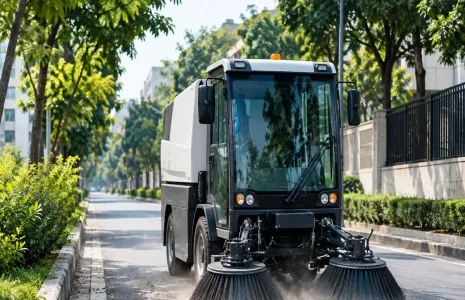
The Union Environment Minister presided over the signing of four Memoranda of Understanding to implement a standard framework and a Road Asset Management System for dust-free urban roads in the National Capital Region. The agreements were between the Public Works Departments and urban development departments of Delhi, Haryana, Uttar Pradesh and Rajasthan, the Central Road Research Institute (CSIR-CRRI) and the School of Planning and Architecture (SPA). The ceremony at Indira Paryavaran Bhawan framed the initiative as coordinated action to abate road dust.

The framework issued by the Commission for Air Quality Management in National Capital Region and Adjoining Areas (CAQM) aims to improve road cross-sections, right-of-way (RoW) utilisation, greening measures and maintenance protocols across the NCR. The minister noted dust as a major contributor to PM 10 levels and said state action plans had been reviewed, with Delhi alone having 448 action points. He urged a special task force to map congested and dust-prone roads and recommended planting water-efficient bushes, with 30 suitable species identified.

CSIR-CRRI and SPA will provide technical advice and support development of a Web-GIS-based Road Asset Management System (RAMS) for preventive and predictive maintenance. CAQM had earlier set up a Project Monitoring Cell to provide oversight, and the new agreements formally include state road-owning agencies. Each state will identify a nodal agency and establish a Paving and Greening Cell to coordinate implementation.

The MoUs are valid initially for a period of three years and implementation will be phased with targeted action plans and digital monitoring. The total road length communicated for coverage comprises 10099 km in Delhi, 10133 km in Haryana, 6891 km in Uttar Pradesh and 1747 km in Rajasthan. The structured deployment of RAMS and standardised practices is expected to significantly reduce road dust emissions, improve road durability and service life, promote sustainable greening and strengthen inter-agency coordination under the guidance of the Ministry of Environment, Forest and Climate Change (MoEF&CC) and CAQM.

The Union Environment Minister presided over the signing of four Memoranda of Understanding to implement a standard framework and a Road Asset Management System for dust-free urban roads in the National Capital Region. The agreements were between the Public Works Departments and urban development departments of Delhi, Haryana, Uttar Pradesh and Rajasthan, the Central Road Research Institute (CSIR-CRRI) and the School of Planning and Architecture (SPA). The ceremony at Indira Paryavaran Bhawan framed the initiative as coordinated action to abate road dust. The framework issued by the Commission for Air Quality Management in National Capital Region and Adjoining Areas (CAQM) aims to improve road cross-sections, right-of-way (RoW) utilisation, greening measures and maintenance protocols across the NCR. The minister noted dust as a major contributor to PM 10 levels and said state action plans had been reviewed, with Delhi alone having 448 action points. He urged a special task force to map congested and dust-prone roads and recommended planting water-efficient bushes, with 30 suitable species identified. CSIR-CRRI and SPA will provide technical advice and support development of a Web-GIS-based Road Asset Management System (RAMS) for preventive and predictive maintenance. CAQM had earlier set up a Project Monitoring Cell to provide oversight, and the new agreements formally include state road-owning agencies. Each state will identify a nodal agency and establish a Paving and Greening Cell to coordinate implementation. The MoUs are valid initially for a period of three years and implementation will be phased with targeted action plans and digital monitoring. The total road length communicated for coverage comprises 10099 km in Delhi, 10133 km in Haryana, 6891 km in Uttar Pradesh and 1747 km in Rajasthan. The structured deployment of RAMS and standardised practices is expected to significantly reduce road dust emissions, improve road durability and service life, promote sustainable greening and strengthen inter-agency coordination under the guidance of the Ministry of Environment, Forest and Climate Change (MoEF&CC) and CAQM.

Next Story
Infrastructure Urban

We’ve cut 50,000 tonnes of carbon emmissions since 2019

MatchLog is challenging a decades-old logistics norm and empty container miles by directly matching import flows with export demand. Indeed, the platform is unlocking measurable cost savings, cutting emissions and driving structural change in landside operations. Dhruv Taneja, Founder and Global CEO, outlines the quantified impact, adoption  journey and the evolving future of container reuse in an exclusive interview with Construction World. MatchLog has partnered with carriers such as Maersk, ONE and HMM in India. Could you share quantified outcomes from one specific corri..

Next Story
Infrastructure Transport

Airports: Capacity is Key

A lotus-inspired terminal design in Navi Mumbai International Airport. A terminal in a garden in Bengaluru’s Kempegowda International Airport. A peacock-inspired canopy in Chhatrapati Shivaji Maharaj International Airport. A nature-inspired terminal in Guwahati’s Lokpriya Gopinath Bordoloi International Airport.Truly, “India’s airports are no longer constrained by architectural ambition,” avers Ravikanth Mididhodi, Chief Technical Officer, J&F, a German-based engineering firm with over 25 years of global legacy in delivering advanced engineering and BIM services for air..

Next Story
Real Estate

In 2025, Amaravati attracted ₹ 28,075 crore in investments

In an exclusive interview with Construction World, Kanna Babu, IAS, Commissioner, Andhra Pradesh Capital Region Development Authority (APCRDA), reveals how Amaravati is entering a decisive new phase of capital city development. With 36 MoUs worth ₹ 45,589 crore, a ₹ 58,000 crore tender pipeline, and rising institutional investments, he explains the strategic execution, infrastructure rollout, and governance framework driving Amaravati’s emergence as a structured, investment-ready, and future-focused capital.APCRDA has recently secured major financial tie-ups, including loans from NA..

Advertisement

Subscribe to Our Newsletter

Get daily newsletters around different themes from Construction world.

STAY CONNECTED

Advertisement

Advertisement

Advertisement

Open In App