Namo Bharat Corridor To Cut Ghaziabad Airport Travel Time To 50 Minutes
ROADS & HIGHWAYS

Namo Bharat Corridor To Cut Ghaziabad Airport Travel Time To 50 Minutes

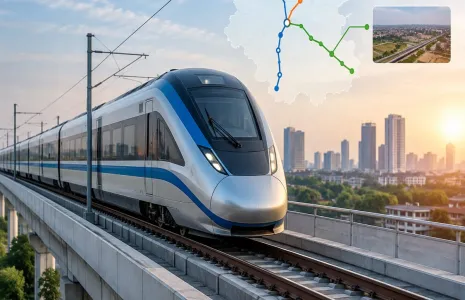
A proposed Namo Bharat rapid rail corridor linking Ghaziabad with Noida International Airport would cut travel time to 50 minutes and markedly improve connectivity across the National Capital Region (NCR).

The 72-kilometre line will have around 12 stations and will link Ghaziabad, Noida, Greater Noida, the Yamuna Expressway Industrial Development Authority (YEIDA) region and the airport at Jewar. Real estate analysts say the project could stimulate housing demand and commercial development in Ghaziabad.

The National Capital Region Transport Corporation is preparing the detailed project report for the corridor, which is estimated to cost around Rs206.4 billion (Rs206.4 bn). The link is planned as the fourth Namo Bharat corridor in the NCR and is designed for a maximum operational speed of 180 kmph to shorten journey times compared with road travel. Integration with the Delhi Metro, Noida Metro and existing rapid rail links is expected to allow commuters to transfer seamlessly between systems.

Industry participants view infrastructure upgrades as a key driver of property values and housing demand in the NCR. Varun Garg, director at Karyan Group, characterised the corridor as more than a transport initiative and suggested it has the potential to become a major growth engine for Ghaziabad's real estate market. He said earlier projects such as the Delhi-Meerut expressway and the operational Delhi-Ghaziabad-Meerut rapid rail link have already supported rising demand.

Faster access to Noida International Airport could broaden Ghaziabad's appeal to businesses that depend on efficient travel, including IT firms, logistics operators and retailers. Improved links may encourage new mixed-use developments, office parks, warehousing and last-mile logistics hubs in areas served by the corridor. Such commercial interest would add to residential demand and push development into peripheral micro-markets.

The project remains at the DPR stage alongside a planned Noida-Faridabad-Gurugram corridor, so timelines and final alignments are subject to change. If implemented, the link is likely to strengthen regional mobility, support economic activity and influence property prices across multiple localities. For homebuyers, investors and businesses, direct airport connectivity could make Ghaziabad a stronger contender in the evolving NCR market.

A proposed Namo Bharat rapid rail corridor linking Ghaziabad with Noida International Airport would cut travel time to 50 minutes and markedly improve connectivity across the National Capital Region (NCR). The 72-kilometre line will have around 12 stations and will link Ghaziabad, Noida, Greater Noida, the Yamuna Expressway Industrial Development Authority (YEIDA) region and the airport at Jewar. Real estate analysts say the project could stimulate housing demand and commercial development in Ghaziabad. The National Capital Region Transport Corporation is preparing the detailed project report for the corridor, which is estimated to cost around Rs206.4 billion (Rs206.4 bn). The link is planned as the fourth Namo Bharat corridor in the NCR and is designed for a maximum operational speed of 180 kmph to shorten journey times compared with road travel. Integration with the Delhi Metro, Noida Metro and existing rapid rail links is expected to allow commuters to transfer seamlessly between systems. Industry participants view infrastructure upgrades as a key driver of property values and housing demand in the NCR. Varun Garg, director at Karyan Group, characterised the corridor as more than a transport initiative and suggested it has the potential to become a major growth engine for Ghaziabad's real estate market. He said earlier projects such as the Delhi-Meerut expressway and the operational Delhi-Ghaziabad-Meerut rapid rail link have already supported rising demand. Faster access to Noida International Airport could broaden Ghaziabad's appeal to businesses that depend on efficient travel, including IT firms, logistics operators and retailers. Improved links may encourage new mixed-use developments, office parks, warehousing and last-mile logistics hubs in areas served by the corridor. Such commercial interest would add to residential demand and push development into peripheral micro-markets. The project remains at the DPR stage alongside a planned Noida-Faridabad-Gurugram corridor, so timelines and final alignments are subject to change. If implemented, the link is likely to strengthen regional mobility, support economic activity and influence property prices across multiple localities. For homebuyers, investors and businesses, direct airport connectivity could make Ghaziabad a stronger contender in the evolving NCR market.

Related Stories

Gold Stories

Next Story
Resources

Schindler named among Forbes’ World’s Best Employers 2026

Schindler has been named among Forbes’ World’s Best Employers 2026, a global ranking recognising companies for their workplace environments.Compiled by Forbes in partnership with Statista, the ranking is based on independent employee feedback, including whether employees would recommend their organisation to friends and family.The company said the recognition reflected its focus on creating a workplace where employees can develop their expertise and build careers. ..

Next Story
Infrastructure Urban

India needs an export-execution mindset: Vishesh Jain

Interview with Vishesh Jain, Founder & CEO, EximpleWhat gaps in India’s global trade ecosystem led you to build Eximple, and what problem did you see businesses struggling with most?Eximple came out of a problem that all three founders had seen from different choke points in the trade ecosystem. India has millions of MSMEs and manufacturers, and many of them can make products that are genuinely competitive on quality. Yet only a small fraction is able to build meaningful international businesses. In our experience, the gap is usually not manufacturing capability; it is the ability to exe..

Next Story
Building Material

Nuvoco reports 13.5% revenue growth in Q2 FY27

Nuvoco Vistas Corp. Ltd. reported consolidated revenue of Rs 27.9 billion for Q2 FY27, up 13.5% year on year. Cement sales volume rose 9% to 4.7 million tonnes (MMT), while EBITDA increased 11% to Rs 4.11 billion.The company said it began its cement operations in 2014 with a 2.3 MMT per annum (MMTPA) operation at Nimbol. It now aims to reach 35 MMTPA of cement capacity by FY28, nearly 15 times its initial capacity. Its portfolio spans cement, ready-mix concrete and modern building materials.On sustainability and cost efficiency, Nuvoco partnered with CleanMax for a 46.4 MW wind-solar hybrid re..

Advertisement

Subscribe to Our Newsletter

Get daily newsletters around different themes from Construction world.

STAY CONNECTED

Advertisement

SPECIAL OFFER
QR Code