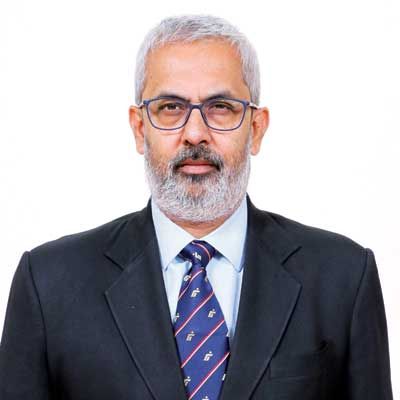
Network Planning Group Reviews Road Projects Under PM GatiShakti
ROADS & HIGHWAYS

Network Planning Group Reviews Road Projects Under PM GatiShakti

The 108th meeting of the Network Planning Group reviewed key road projects aimed at strengthening multimodal connectivity under the Prime Minister's GatiShakti (PM GatiShakti) national masterplan. The meeting evaluated project readiness, intermodal linkages and timelines to ensure alignment with national logistics objectives. Officials from central ministries, state agencies and road authorities discussed route optimisation and last-mile connectivity to ports, railheads and industrial corridors. The session emphasised coordinated planning to reduce transit times and logistics costs across freight corridors.

Delegates assessed technical and environmental clearances, land acquisition progress and construction sequencing to accelerate implementation. The group prioritised projects that enhance connectivity with rail and waterways and that can be integrated with existing infrastructure to maximise utility. Use of geospatial planning tools and data-driven monitoring was encouraged to improve transparency and track milestones. Stakeholders were urged to synchronise funding disbursements with execution schedules to avoid delays.

The meeting reviewed measures to strengthen multimodal hubs and improve freight village connectivity, with a focus on streamlining multimodal transfers and minimising handling. Attention was drawn to improving approaches to ports, logistic parks and industrial estates to support faster cargo movement and reduce congestion on urban approaches. Coordination among agencies was highlighted as essential for harmonising design standards, permits and safety measures. The group also considered capacity enhancement works to accommodate projected freight volumes.

Officials noted that timely implementation of the reviewed projects is expected to generate employment opportunities and support economic competitiveness through lower logistics costs and improved supply chain resilience. Continued inter-agency collaboration and regular monitoring were identified as critical for translating plans into on-ground progress. The Network Planning Group resolved to maintain a rolling pipeline of priority projects and to report periodic updates to the central coordination mechanism. Further technical reviews will guide phased execution and integration with national infrastructure plans.

The 108th meeting of the Network Planning Group reviewed key road projects aimed at strengthening multimodal connectivity under the Prime Minister's GatiShakti (PM GatiShakti) national masterplan. The meeting evaluated project readiness, intermodal linkages and timelines to ensure alignment with national logistics objectives. Officials from central ministries, state agencies and road authorities discussed route optimisation and last-mile connectivity to ports, railheads and industrial corridors. The session emphasised coordinated planning to reduce transit times and logistics costs across freight corridors. Delegates assessed technical and environmental clearances, land acquisition progress and construction sequencing to accelerate implementation. The group prioritised projects that enhance connectivity with rail and waterways and that can be integrated with existing infrastructure to maximise utility. Use of geospatial planning tools and data-driven monitoring was encouraged to improve transparency and track milestones. Stakeholders were urged to synchronise funding disbursements with execution schedules to avoid delays. The meeting reviewed measures to strengthen multimodal hubs and improve freight village connectivity, with a focus on streamlining multimodal transfers and minimising handling. Attention was drawn to improving approaches to ports, logistic parks and industrial estates to support faster cargo movement and reduce congestion on urban approaches. Coordination among agencies was highlighted as essential for harmonising design standards, permits and safety measures. The group also considered capacity enhancement works to accommodate projected freight volumes. Officials noted that timely implementation of the reviewed projects is expected to generate employment opportunities and support economic competitiveness through lower logistics costs and improved supply chain resilience. Continued inter-agency collaboration and regular monitoring were identified as critical for translating plans into on-ground progress. The Network Planning Group resolved to maintain a rolling pipeline of priority projects and to report periodic updates to the central coordination mechanism. Further technical reviews will guide phased execution and integration with national infrastructure plans.

Next Story
Building Material

MAPEI India Celebrates 15 Years of Building Excellence

MAPEI India marks its 15th anniversary, celebrating a journey defined by innovation, trust, and continuous growth. Beginning in 2011 with just four employees and a single manufacturing facility in Bengaluru, the company has evolved into a key player in India’s construction chemicals industry, now employing over 380 professionals across the country. Over the past 15 years, MAPEI India has delivered strong performance with a sales CAGR of 31 per cent. From zero production in its early years, the company shipped 1,71,000 metric tonnes of materials in 2025, demonstrating robust operational capab..

Next Story
Real Estate

FractoProp Secures SEBI Nod for Ridhama Real Estate Fund

FractoProp, a real estate-focused fund management company, has received registration from the Securities and Exchange Board of India (SEBI) for the Ridhama Real Estate Fund, a Category II Alternative Investment Fund (AIF). The approval marks a milestone as the firm expands its platform to offer structured real estate investment opportunities to institutional and sophisticated investors. The fund is targeting a corpus of Rs 50 crore, with a greenshoe option of up to Rs 75 crore, taking the total potential fund size to Rs 125 crore. The Ridhama Real Estate Fund will focus on structured credit ..

Next Story
Real Estate

Flex Spaces Reshaping Tier-2 Office Markets

India's leading cosmopolitan centres such as Bengaluru, Hyderabad, NCR and MMR continue to anchor the office market, but absorption surged by almost 30 per cent to 78.2 million (mn) sq ft in 2025 compared with 2023. Over 40 per cent of this demand was driven by Global Capability Centres (GCCs), whose footprint expanded by almost 50 per cent to approximately 35 million (mn) sq ft. As global uncertainty persists, large international companies regard India as a stable safe haven and are shifting focus from saturated Tier-1 markets to Tier-2 cities. The structural shift is underpinned by governmen..

Advertisement

Subscribe to Our Newsletter

Get daily newsletters around different themes from Construction world.

STAY CONNECTED

Advertisement

Advertisement

Advertisement