NH-16 Upgrade to Expressway Boosts Safety and Logistics
ROADS & HIGHWAYS

NH-16 Upgrade to Expressway Boosts Safety and Logistics

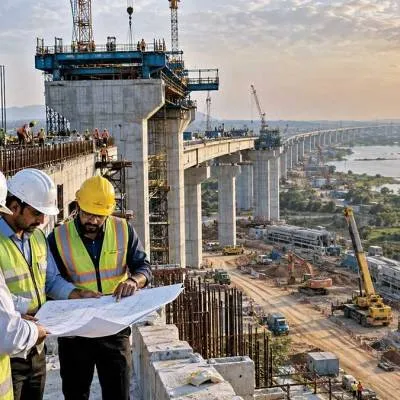
The 100-kilometre Muppavaram–Kaja stretch of NH-16 is being upgraded into a fully access-controlled expressway, marking a major shift in road safety, logistics efficiency and regional development in Andhra Pradesh. The project will replace unpredictable entry points with regulated interchanges, significantly improving travel reliability on the Chilakaluripet–Vijayawada corridor.

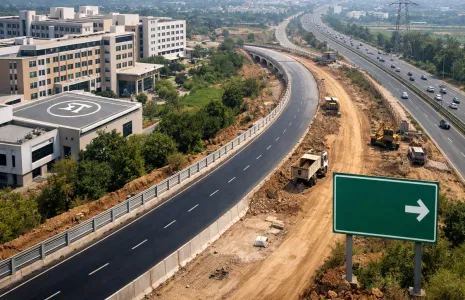
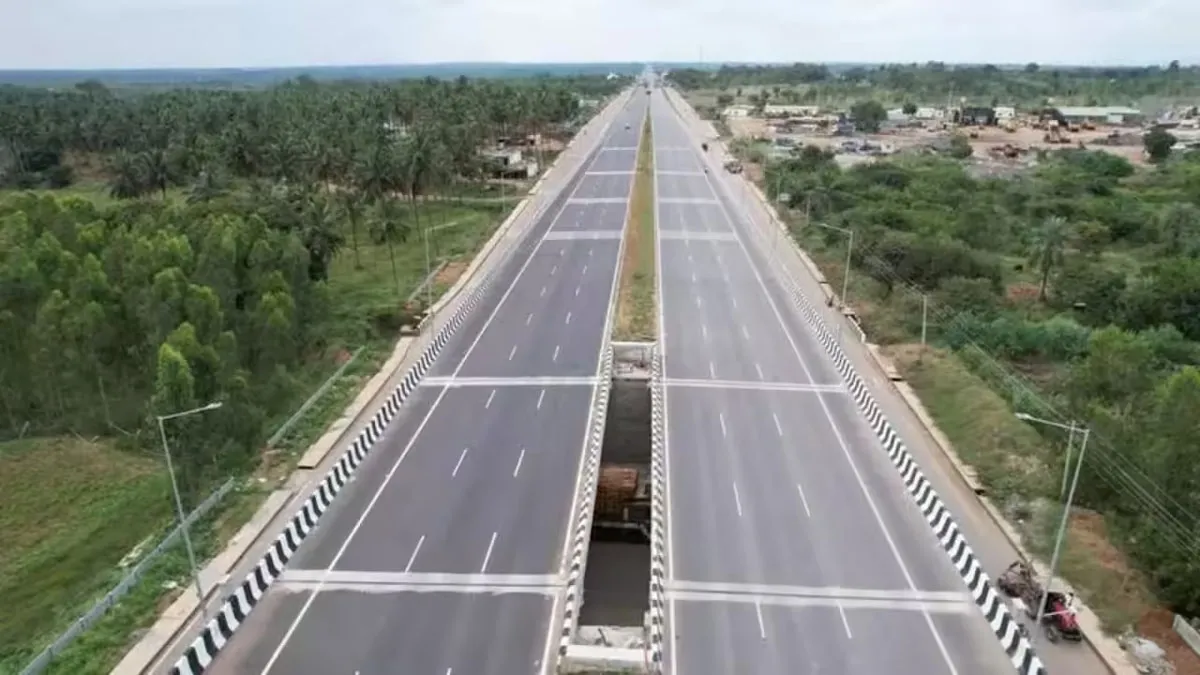
Under the upgrade, the existing six-lane national highway will be converted into an expressway-standard corridor with strictly controlled entry and exit points. Direct access from village roads and roadside establishments will be eliminated, reducing the risk of accidents caused by sudden crossings and unregulated merging traffic.

To support local mobility and economic activity, two-lane service roads will be constructed on both sides of the expressway. Local traffic will be diverted to these service roads, while long-distance vehicles will use the main carriageway. Strategic interchanges at Muppavaram and Kaja will connect the corridor with key routes, including the Amaravati Outer Ring Road and the Vijayawada Western Bypass.

The upgraded stretch is emerging as a critical link in Andhra Pradesh’s logistics network, connecting with the Bengaluru–Amaravati greenfield expressway and strengthening the Bengaluru–Vijayawada Economic Corridor. As the 343-kilometre corridor approaches completion, the Muppavaram interchange is expected to develop into a major inland transit hub, enhancing freight movement and regional connectivity.

The project is also expected to unlock economic potential along the Visakhapatnam–Chennai Industrial Corridor. Improved travel times are likely to strengthen Guntur’s role as a logistics centre, while urban expansion in Vijayawada and surrounding areas such as Kaja and Mangalagiri is accelerating. Enhanced connectivity is reshaping real estate dynamics, with growing interest in residential and industrial development near expressway interchanges.

Safety remains a key driver of the upgrade. By removing at-grade intersections and uncontrolled crossings, the expressway design is expected to reduce the risk of high-speed collisions by nearly 60 per cent. The controlled corridor environment is designed to deliver smoother traffic flow, improved predictability and greater confidence for motorists.

Beyond transportation, the NH-16 upgrade represents a strategic infrastructure intervention with long-term implications for investment, logistics and urban growth. By integrating high-speed mobility with local access systems, the corridor is positioned to become a cornerstone of Andhra Pradesh’s economic and infrastructure transformation.

The 100-kilometre Muppavaram–Kaja stretch of NH-16 is being upgraded into a fully access-controlled expressway, marking a major shift in road safety, logistics efficiency and regional development in Andhra Pradesh. The project will replace unpredictable entry points with regulated interchanges, significantly improving travel reliability on the Chilakaluripet–Vijayawada corridor. Under the upgrade, the existing six-lane national highway will be converted into an expressway-standard corridor with strictly controlled entry and exit points. Direct access from village roads and roadside establishments will be eliminated, reducing the risk of accidents caused by sudden crossings and unregulated merging traffic. To support local mobility and economic activity, two-lane service roads will be constructed on both sides of the expressway. Local traffic will be diverted to these service roads, while long-distance vehicles will use the main carriageway. Strategic interchanges at Muppavaram and Kaja will connect the corridor with key routes, including the Amaravati Outer Ring Road and the Vijayawada Western Bypass. The upgraded stretch is emerging as a critical link in Andhra Pradesh’s logistics network, connecting with the Bengaluru–Amaravati greenfield expressway and strengthening the Bengaluru–Vijayawada Economic Corridor. As the 343-kilometre corridor approaches completion, the Muppavaram interchange is expected to develop into a major inland transit hub, enhancing freight movement and regional connectivity. The project is also expected to unlock economic potential along the Visakhapatnam–Chennai Industrial Corridor. Improved travel times are likely to strengthen Guntur’s role as a logistics centre, while urban expansion in Vijayawada and surrounding areas such as Kaja and Mangalagiri is accelerating. Enhanced connectivity is reshaping real estate dynamics, with growing interest in residential and industrial development near expressway interchanges. Safety remains a key driver of the upgrade. By removing at-grade intersections and uncontrolled crossings, the expressway design is expected to reduce the risk of high-speed collisions by nearly 60 per cent. The controlled corridor environment is designed to deliver smoother traffic flow, improved predictability and greater confidence for motorists. Beyond transportation, the NH-16 upgrade represents a strategic infrastructure intervention with long-term implications for investment, logistics and urban growth. By integrating high-speed mobility with local access systems, the corridor is positioned to become a cornerstone of Andhra Pradesh’s economic and infrastructure transformation.

Next Story
Real Estate

Union Budge: Infra-Led Urban Shift

The Union Budget FY27 reinforces infrastructure-led urbanisation as the backbone of India’s real estate and housing growth. Higher public capital expenditure, City Economic Regions, risk-mitigation mechanisms and REIT-led asset monetisation are being widely viewed as long-term enablers, even as the industry continues to seek sharper supply-side reforms and affordability-focused measures. Here are a few industry insights:Dr Niranjan Hiranandani, Chairman, NAREDCO & Hiranandani Group“The Union Budget 2026-27 is growth-oriented and stability-focused, supporting consumption and aiming to s..

Next Story
Infrastructure Urban

Budget 2026 Charts Path for Infrastructure-Led, Tech-Driven Growth

The Union Budget 2026–27 signals strong continuity in India’s macroeconomic strategy, anchored in elevated public capital expenditure, fiscal discipline, and a sharper focus on manufacturing, infrastructure, and regional development. With capital outlay pegged at ₹12.2 lakh crore and a fiscal deficit target of around 4.3 per cent, the Budget balances growth ambition with stability, offering long-term visibility to investors and project developers.A dominant theme is the centrality of infrastructure as a multiplier for economic expansion. Public capex now accounts for over 3.3 per cent of..

Next Story
Infrastructure Energy

Tata Power Arm Crosses 10 GW EPC Milestone

Tata Power Renewable Energy Ltd (TPREL) has achieved a major milestone by executing 10 gigawatts of engineering, procurement and construction (EPC) renewable energy projects to date, reinforcing its position in India’s clean energy infrastructure sector. According to the company, the executed portfolio comprises 4.2 gigawatts of in-house projects and 5.8 gigawatts of third-party projects. Of the total 10 gigawatts commissioned so far, 9.7 gigawatts are solar projects and 290 megawatts are wind projects. In the first nine months of FY26, TPREL commissioned 1.88 gigawatts of EPC renewable en..

Advertisement

Subscribe to Our Newsletter

Get daily newsletters around different themes from Construction world.

STAY CONNECTED

Advertisement

Advertisement

Advertisement

Advertisement

Open In App