+
NHAI To Develop Bee Corridors Along National Highways
ROADS & HIGHWAYS

NHAI To Develop Bee Corridors Along National Highways

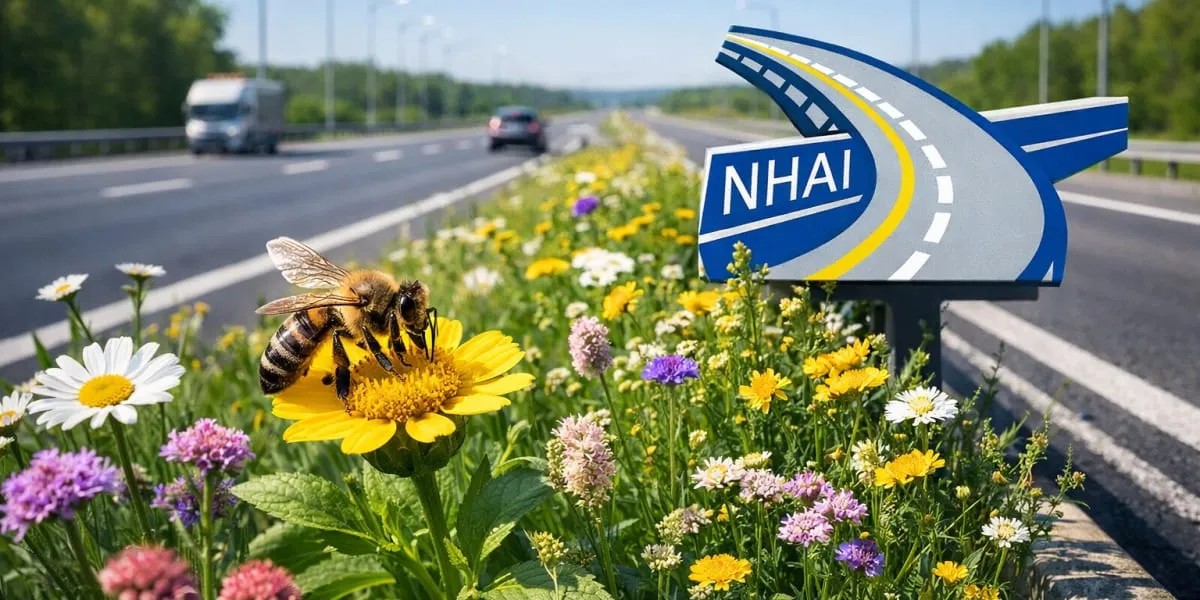
The National Highways Authority of India (NHAI) will develop bee corridors along national highways to boost pollinator conservation and restore roadside biodiversity. The initiative will focus on establishing continuous strips of native flowering plants along verges and medians to provide foraging and nesting resources for bees and other pollinators. The authority will aim to combine ecological design with routine maintenance to reduce habitat fragmentation and support insect movement.

NHAI described the programme as a response to observed declines in pollinator populations and the growing recognition of their role in food security and ecosystem stability. The corridors are intended to create linear habitats that link isolated green patches and agricultural lands, thereby enhancing ecological connectivity. The initiative will also seek to minimise the use of harmful agrochemicals in designated stretches to improve pollinator health.

Implementation will involve coordination with state road agencies, local bodies and biodiversity experts to select suitable plant species and maintenance regimes. Community engagement and capacity building will be prioritised so that roadside stewardship becomes sustainable over time. The authority will develop guidelines for planting, mowing and pesticide management tailored to regional climatic and ecological conditions.

Stakeholders anticipate that the bee corridors will contribute to enhanced roadside aesthetic values, increased habitat for native flora and fauna and indirect benefits for nearby agriculture through improved pollination services. Monitoring and adaptive management will be used to assess ecological outcomes and refine interventions. Data from pilot stretches will guide scaling up of the programme across the national highway network.

The programme forms part of broader efforts to mainstream biodiversity considerations into infrastructure planning and maintenance. NHAI will report progress through periodic updates and collaborate with environmental agencies to align actions with national conservation priorities. Continued evaluation and stakeholder dialogue are expected to shape long term success.

The National Highways Authority of India (NHAI) will develop bee corridors along national highways to boost pollinator conservation and restore roadside biodiversity. The initiative will focus on establishing continuous strips of native flowering plants along verges and medians to provide foraging and nesting resources for bees and other pollinators. The authority will aim to combine ecological design with routine maintenance to reduce habitat fragmentation and support insect movement. NHAI described the programme as a response to observed declines in pollinator populations and the growing recognition of their role in food security and ecosystem stability. The corridors are intended to create linear habitats that link isolated green patches and agricultural lands, thereby enhancing ecological connectivity. The initiative will also seek to minimise the use of harmful agrochemicals in designated stretches to improve pollinator health. Implementation will involve coordination with state road agencies, local bodies and biodiversity experts to select suitable plant species and maintenance regimes. Community engagement and capacity building will be prioritised so that roadside stewardship becomes sustainable over time. The authority will develop guidelines for planting, mowing and pesticide management tailored to regional climatic and ecological conditions. Stakeholders anticipate that the bee corridors will contribute to enhanced roadside aesthetic values, increased habitat for native flora and fauna and indirect benefits for nearby agriculture through improved pollination services. Monitoring and adaptive management will be used to assess ecological outcomes and refine interventions. Data from pilot stretches will guide scaling up of the programme across the national highway network. The programme forms part of broader efforts to mainstream biodiversity considerations into infrastructure planning and maintenance. NHAI will report progress through periodic updates and collaborate with environmental agencies to align actions with national conservation priorities. Continued evaluation and stakeholder dialogue are expected to shape long term success.

Next Story
Infrastructure Urban

CCI Approves Internal Reorganisation Of BCCL Businesses Into THPL

The Competition Commission of India (CCI) has approved an internal reorganisation under which Bennett Coleman & Company Limited (BCCL) will transfer certain entities, businesses, undertakings, assets and liabilities to Times Horizon Private Limited (THPL) on a going concern basis. The approval covers a proposed combination that is intended to effect a demerger of the identified businesses into the newly created entity. The CCI indicated that detailed orders will follow. The proposed transfer pertains to the demerger of the entities, businesses, undertakings, assets and liabilities described as..

Next Story
Infrastructure Urban

CCI Approves Acquisition Of Portfolio Management Services Business

The Competition Commission of India (CCI) has approved an acquisition in which Axis Asset Management Company Limited (Acquirer) will acquire the portfolio management services business of Axis Securities Limited (Transferor) in India. The proposed combination is an acquisition of the target business from the transferor and has been authorised under the merger control framework. The announcement clarifies that the transaction relates specifically to the portfolio management services activities of the transferor within the Indian jurisdiction. The acquirer manages a mutual fund business and is en..

Next Story
Infrastructure Transport

Hyderabad Airport Handles 31 Million (mn), Eyes Transit Hub Push

Hyderabad airport (HIA) handled 31 million (mn) passengers in 2025, marking a notable rise in traffic and reinforcing ambitions to develop into a regional transit hub. The airport management attributed the increase to expanded flight frequencies and higher connectivity across domestic and international routes. The figures were presented alongside plans to enhance transit services and streamline passenger flows. Officials said that network expansion by carriers and improved slot utilisation contributed to the traffic growth, while ancillary services and ground handling improvements supported op..

Advertisement

Subscribe to Our Newsletter

Get daily newsletters around different themes from Construction world.

STAY CONNECTED

Advertisement

Advertisement

Advertisement

Open In App