PWD Plans Elevated Flyovers To Ease Delhi Congestion
ROADS & HIGHWAYS

PWD Plans Elevated Flyovers To Ease Delhi Congestion

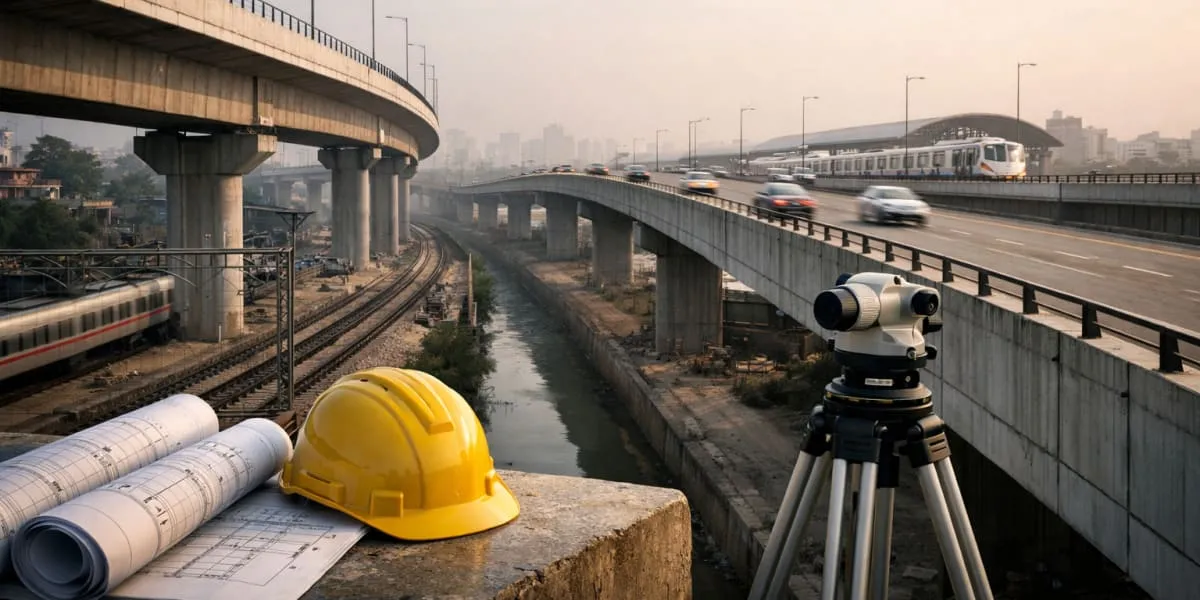
The Public Works Department (PWD) has proposed two elevated flyovers to ease traffic congestion in Delhi. One would link Britannia Chowk with the Outer Ring Road via Shakur Basti railway station; the other would run over the Karawal Nagar drain from Ankur Enclave to Gokulpuri Metro station. Officials said the projects would improve connectivity across West, North West, North-East and Central Delhi.

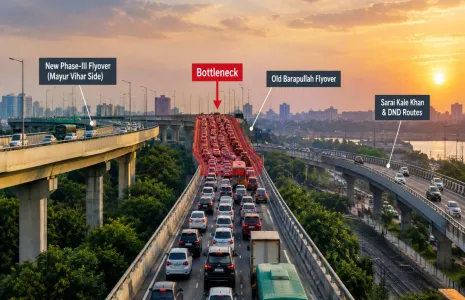
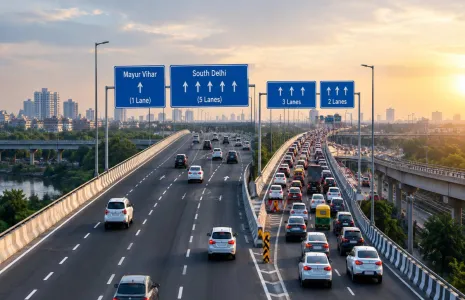
Officials described Britannia Chowk as a busy junction serving mixed residential and commercial areas and noted heavy pedestrian movement from nearby malls and stations. The stretch often experiences delays of at least 30-35 minutes during peak times. The PWD anticipates the elevated road will ease pressure on inner residential streets.

In North East Delhi the PWD has proposed a five-km elevated stretch over the Karawal Nagar drain to improve access to Gokulpuri Metro station for residents of Karawal Nagar, Dayalpur and Sonia Vihar. Officials noted that narrow, encroached roads, roadside parking and busy markets force buses and other vehicles to compete for limited space. The elevated link is intended to provide an alternative arterial route and reduce travel time for daily commuters.

The department has floated tenders for a feasibility study to assess traffic conditions, the drainage network, travel time, the number of trees along the route and vehicle volume and to prepare a Detailed Project Report. Officials indicated the tendering process will take about a month, after which steps to award civil construction contracts will begin.

Separately the PWD plans a one point eight-km cable-stayed bridge between Azadpur and the Delhi University North Campus as part of the elevated Ring Road scheme because an underground tunnel is unviable between GTB Nagar and Vishwavidyalaya. The bridge would be the second cable-stayed structure after the Signature Bridge and is forecast for completion by 2030. Officials said about 46 per cent of traffic on the 55-km Ring Road passes through this stretch and the initial approximately 25-km corridor will be developed in phases including a seven-km section and a five km section.

The Public Works Department (PWD) has proposed two elevated flyovers to ease traffic congestion in Delhi. One would link Britannia Chowk with the Outer Ring Road via Shakur Basti railway station; the other would run over the Karawal Nagar drain from Ankur Enclave to Gokulpuri Metro station. Officials said the projects would improve connectivity across West, North West, North-East and Central Delhi. Officials described Britannia Chowk as a busy junction serving mixed residential and commercial areas and noted heavy pedestrian movement from nearby malls and stations. The stretch often experiences delays of at least 30-35 minutes during peak times. The PWD anticipates the elevated road will ease pressure on inner residential streets. In North East Delhi the PWD has proposed a five-km elevated stretch over the Karawal Nagar drain to improve access to Gokulpuri Metro station for residents of Karawal Nagar, Dayalpur and Sonia Vihar. Officials noted that narrow, encroached roads, roadside parking and busy markets force buses and other vehicles to compete for limited space. The elevated link is intended to provide an alternative arterial route and reduce travel time for daily commuters. The department has floated tenders for a feasibility study to assess traffic conditions, the drainage network, travel time, the number of trees along the route and vehicle volume and to prepare a Detailed Project Report. Officials indicated the tendering process will take about a month, after which steps to award civil construction contracts will begin. Separately the PWD plans a one point eight-km cable-stayed bridge between Azadpur and the Delhi University North Campus as part of the elevated Ring Road scheme because an underground tunnel is unviable between GTB Nagar and Vishwavidyalaya. The bridge would be the second cable-stayed structure after the Signature Bridge and is forecast for completion by 2030. Officials said about 46 per cent of traffic on the 55-km Ring Road passes through this stretch and the initial approximately 25-km corridor will be developed in phases including a seven-km section and a five km section.

Related Stories

Gold Stories

Next Story
Infrastructure Urban

KONE Opens India's First Digital Experience Centre in Pune

KONE, a global elevator and escalator manufacturer, has inaugurated its first Digital Experience Centre (DEC) in India, located in Pune. The facility aims to showcase how artificial intelligence (AI), connectivity and data-driven technologies can enhance customer experiences and improve building operations.The centre was inaugurated by Jussi Herlin, Executive Vice Chair, KONE Corporation; Philippe Delorme, President and CEO, KONE; and Nandan Nilekani, Co-founder and Chairman of the Board, Infosys.Designed as an interactive customer environment, the facility demonstrates digital solutions cover..

Next Story
Infrastructure Urban

CII GreenCo Launches Circularity Guidelines for Indian Industry

The Confederation of Indian Industry (CII) GreenCo Council has launched the CII GreenCo Circularity Guidelines – Pilot Version at the 17th CII GreenCo Waste & Resource Management Summit 2026 in Chennai. The initiative aims to strengthen resource efficiency, waste reduction and circular economy practices across Indian manufacturing and process industries.The guidelines introduce a structured framework with circularity indices covering raw materials, consumables, packaging and other resource inputs. These indicators will help industries assess existing practices, identify opportunities to ..

Next Story
Infrastructure Energy

Global Electronics Association Launches IPC-1783-CO2E Standard

The Global Electronics Association has introduced IPC-1783-CO2E, a new international standard aimed at improving consistency, transparency and comparability in product carbon footprint reporting across the electronics manufacturing industry.The standard, titled International Standard for Data Collection and Reporting of CO2 Equivalent (CO2e) Emissions for the Electronics Manufacturing Supply Chain, provides industry-specific guidance for collecting, estimating and reporting carbon emissions data.With increasing regulatory requirements and customer expectations, electronics manufacturers face c..

Advertisement

Subscribe to Our Newsletter

Get daily newsletters around different themes from Construction world.

STAY CONNECTED

Advertisement

SPECIAL OFFER
QR Code