RAHSTA Roundtable Sets Agenda for Smarter, Safer Highways
ROADS & HIGHWAYS

RAHSTA Roundtable Sets Agenda for Smarter, Safer Highways

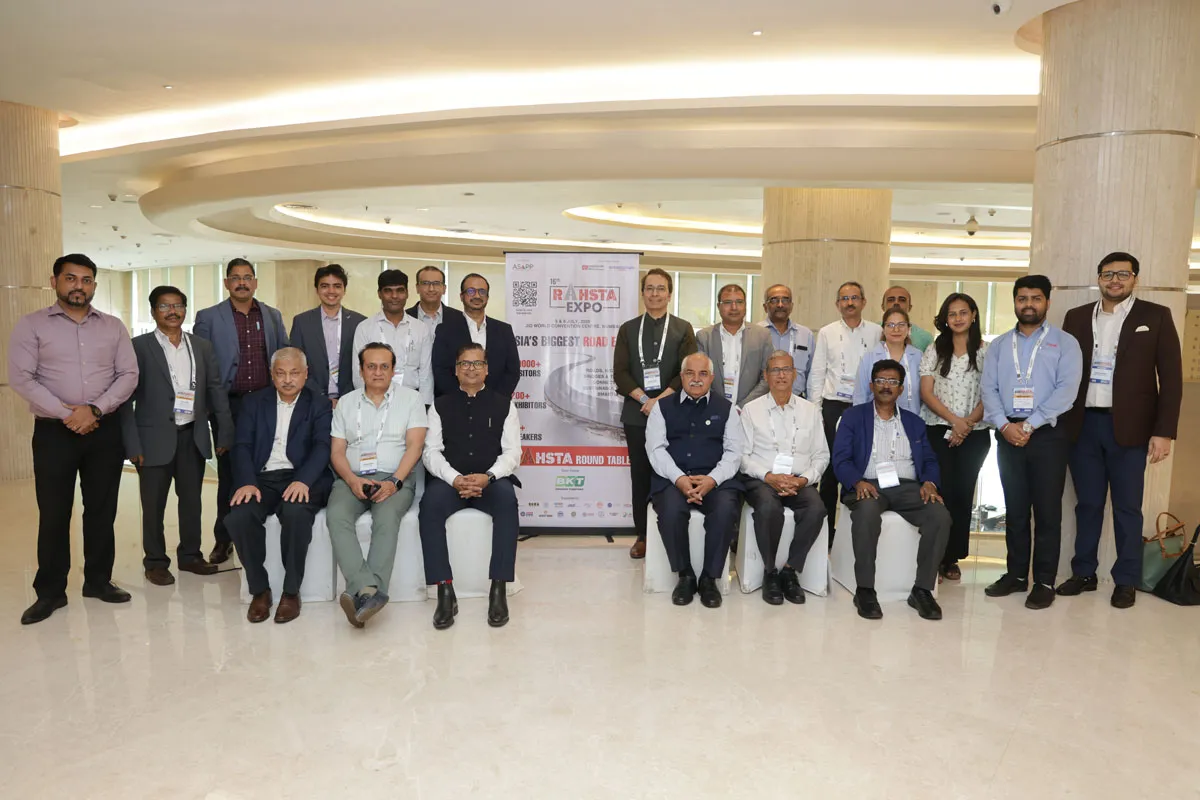
Held on 12 March 2026 at Courtyard by Marriott, Mumbai, alongside the Infrastructure Today Airport Conclave, the RAHSTA Roundtable brought together stakeholders from across the highways and infrastructure ecosystem to shape the agenda for the 16th RAHSTA 2026, scheduled for 8–9 July 2026 at the Jio Convention Centre, Mumbai. The session focused on key industry themes including road construction, technology, safety and long-term sustainability.

Opening the discussion, Pratap Padode, Founder, FIRST Construction Council, said the roundtable marked the beginning of a broader consultative process leading up to the July event. The aim, he noted, is to bring together industry stakeholders to refine the agenda for discussions on the future of roads, bridges, tunnels and allied infrastructure.

Padode noted that while central road project awards have slowed in recent years, states are increasingly driving the next phase of infrastructure growth. Maharashtra, with its long-term road development plans and agencies such as MSRDC and MSIDC, is expected to play a significant role in this expansion.

RAHSTA Expo 2026 as a specialised platform dedicated to road infrastructure, covering highways, tunnels, bridges and flyovers along with construction technologies, safety systems and maintenance solutions. He also highlighted the growing importance of rural connectivity and said the organisers are engaging with government bodies to highlight rural road development initiatives.

Tanveer Padode, CIO, ASAPP Info Group, presented insights from IMPACCT, the group’s infrastructure intelligence platform. He pointed to a strong project pipeline despite slower highway awards earlier in the year, noting that states such as Maharashtra, Odisha and Arunachal Pradesh are emerging as key drivers of new projects. The data also revealed that only a small group of contractors participates in large-value infrastructure bids.

Lt Gen Rajeev Chaudhary, former Director General, Border Roads Organisation and Chairman of the RAHSTA Expo Committee, emphasised the need for stronger collaboration across the ecosystem, including policymakers, contractors, technology providers and financiers. He also called for addressing systemic issues within the sector and encouraged greater participation of women in infrastructure leadership.

The discussion also explored the evolving economics of road development. Phani Prasad Mandalaparthy, Associate Director, CRISIL Intelligence, noted that the slowdown in project awards reflects a shift towards higher-value logistics corridors rather than simple road widening projects. However, private participation through BOT and TOT models remains limited.

From the contractors’ perspective, Sudhir Hoshing, Whole-Time Director, Ceigall, said companies are becoming more selective in bidding, favouring projects with clearer payment mechanisms and efficient processes. While NHAI continues to offer greater operational clarity, states such as Uttar Pradesh and Bihar were cited as relatively supportive environments for project execution.

Durability and sustainability also emerged as key themes. Himanshu Agarwal, COO – Road & Infrastructure, Zydex Group India, highlighted the need to prioritise lifecycle performance and resilient pavements, while participants discussed the potential of alternative materials such as plastic waste, steel slag and industrial by-products in road construction.

Dr LR Manjunatha, Vice President, JSW Cement, emphasised that India has abundant fly ash, slag and other industrial materials that can improve durability and sustainability if integrated into specifications and policy frameworks.

Technology and equipment challenges were also discussed. Dr Lakshmana Rao Mantri, Dy General Manager, Afcons Infrastructure, highlighted the shortage of tunnel boring machines (TBMs), which is delaying several underground infrastructure projects. Participants agreed that developing domestic TBM manufacturing capabilities will be critical for future infrastructure expansion.

The future of concrete pavements was another area of discussion. Dr V Ramachandra, President, Indian Concrete Institute, stressed that the debate should focus on lifecycle performance rather than material choice alone, noting that evolving design standards are improving the feasibility of concrete roads.

Prof Dharamveer Singh of IIT Bombay added that while India has made significant progress in infrastructure development, stronger capacity building and better execution practices are essential to ensure consistent road quality.

The discussion also touched upon technology adoption in the sector. Rushabh Mamania, Partner & CBO, Roadvision, highlighted the growing role of AI in road infrastructure, noting that AI-driven monitoring systems are already being deployed across large stretches of national highways.

Overall, the roundtable underscored that the future of highway infrastructure will depend not only on the pace of construction but also on durability, safety, technology integration and sustainable materials. The discussions offered valuable insights that will help shape the agenda for RAHSTA 2026 and guide future collaboration within the industry.


Held on 12 March 2026 at Courtyard by Marriott, Mumbai, alongside the Infrastructure Today Airport Conclave, the RAHSTA Roundtable brought together stakeholders from across the highways and infrastructure ecosystem to shape the agenda for the 16th RAHSTA 2026, scheduled for 8–9 July 2026 at the Jio Convention Centre, Mumbai. The session focused on key industry themes including road construction, technology, safety and long-term sustainability.Opening the discussion, Pratap Padode, Founder, FIRST Construction Council, said the roundtable marked the beginning of a broader consultative process leading up to the July event. The aim, he noted, is to bring together industry stakeholders to refine the agenda for discussions on the future of roads, bridges, tunnels and allied infrastructure.Padode noted that while central road project awards have slowed in recent years, states are increasingly driving the next phase of infrastructure growth. Maharashtra, with its long-term road development plans and agencies such as MSRDC and MSIDC, is expected to play a significant role in this expansion.RAHSTA Expo 2026 as a specialised platform dedicated to road infrastructure, covering highways, tunnels, bridges and flyovers along with construction technologies, safety systems and maintenance solutions. He also highlighted the growing importance of rural connectivity and said the organisers are engaging with government bodies to highlight rural road development initiatives.Tanveer Padode, CIO, ASAPP Info Group, presented insights from IMPACCT, the group’s infrastructure intelligence platform. He pointed to a strong project pipeline despite slower highway awards earlier in the year, noting that states such as Maharashtra, Odisha and Arunachal Pradesh are emerging as key drivers of new projects. The data also revealed that only a small group of contractors participates in large-value infrastructure bids.Lt Gen Rajeev Chaudhary, former Director General, Border Roads Organisation and Chairman of the RAHSTA Expo Committee, emphasised the need for stronger collaboration across the ecosystem, including policymakers, contractors, technology providers and financiers. He also called for addressing systemic issues within the sector and encouraged greater participation of women in infrastructure leadership.The discussion also explored the evolving economics of road development. Phani Prasad Mandalaparthy, Associate Director, CRISIL Intelligence, noted that the slowdown in project awards reflects a shift towards higher-value logistics corridors rather than simple road widening projects. However, private participation through BOT and TOT models remains limited.From the contractors’ perspective, Sudhir Hoshing, Whole-Time Director, Ceigall, said companies are becoming more selective in bidding, favouring projects with clearer payment mechanisms and efficient processes. While NHAI continues to offer greater operational clarity, states such as Uttar Pradesh and Bihar were cited as relatively supportive environments for project execution.Durability and sustainability also emerged as key themes. Himanshu Agarwal, COO – Road & Infrastructure, Zydex Group India, highlighted the need to prioritise lifecycle performance and resilient pavements, while participants discussed the potential of alternative materials such as plastic waste, steel slag and industrial by-products in road construction.Dr LR Manjunatha, Vice President, JSW Cement, emphasised that India has abundant fly ash, slag and other industrial materials that can improve durability and sustainability if integrated into specifications and policy frameworks.Technology and equipment challenges were also discussed. Dr Lakshmana Rao Mantri, Dy General Manager, Afcons Infrastructure, highlighted the shortage of tunnel boring machines (TBMs), which is delaying several underground infrastructure projects. Participants agreed that developing domestic TBM manufacturing capabilities will be critical for future infrastructure expansion.The future of concrete pavements was another area of discussion. Dr V Ramachandra, President, Indian Concrete Institute, stressed that the debate should focus on lifecycle performance rather than material choice alone, noting that evolving design standards are improving the feasibility of concrete roads.Prof Dharamveer Singh of IIT Bombay added that while India has made significant progress in infrastructure development, stronger capacity building and better execution practices are essential to ensure consistent road quality.The discussion also touched upon technology adoption in the sector. Rushabh Mamania, Partner & CBO, Roadvision, highlighted the growing role of AI in road infrastructure, noting that AI-driven monitoring systems are already being deployed across large stretches of national highways.Overall, the roundtable underscored that the future of highway infrastructure will depend not only on the pace of construction but also on durability, safety, technology integration and sustainable materials. The discussions offered valuable insights that will help shape the agenda for RAHSTA 2026 and guide future collaboration within the industry.
Next Story
Infrastructure Transport

MMRDA Removes 1.14 lakh m of Metro Barricades

In a bid to ease congestion and improve urban mobility during monsoon, MMRDA has undertaken one of the largest coordinated barricade removal and monsoon preparedness drives across its ongoing metro and infrastructure projects.With substantial progress achieved in viaduct and structural works across multiple metro corridors, barricades from completed stretches beneath metro viaducts are being systematically removed, restoring maximum possible road space before the monsoon. Wider carriageways across key arterial roads are expected to improve traffic flow, reduce congestion, support better rainwa..

Next Story
Infrastructure Transport

Pune Division to Remove All Diamond Crossings by Year-End

The Pune railway division has announced plans to remove all 16 diamond crossings by the end of 2026 as part of a major yard remodelling project following the derailment of a Vande Bharat Express at Pune Junction on April 27. Railway authorities said the replacements aim to improve safety and streamline train operations across the busy station. The decision followed a Central Railway finding that the accident involved a non-standard diamond crossing and highlighted the need for replacement. Regular maintenance of existing crossings will continue until the replacement work is completed. Official..

Next Story
Infrastructure Urban

Goa Declares 80 Million Square Metres No Development Zone

The Goa state government has declared 80 million square metres (mn) of land a no development zone, designating the area as protected from new construction. The notification reclassifies tracts across the state under a no development category for planning and regulatory purposes. The declaration signals a formal halt to new building permits within the defined zone. Authorities indicated that maps will be issued to show broad boundaries while detailed surveys will refine precise limits. The move transfers responsibility for enforcement to local planning authorities and relevant departments, whic..

Advertisement

Subscribe to Our Newsletter

Get daily newsletters around different themes from Construction world.

STAY CONNECTED

Advertisement

Advertisement

Advertisement