Tunnel Road Will Cost 1.5 Times More Than Metro
ROADS & HIGHWAYS

Tunnel Road Will Cost 1.5 Times More Than Metro

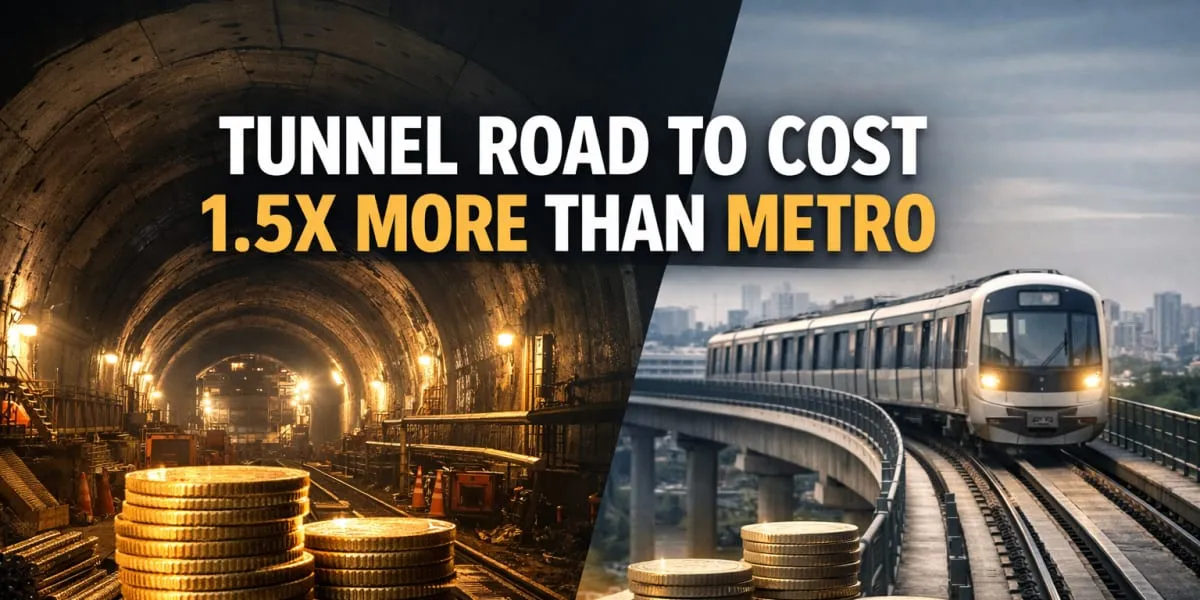
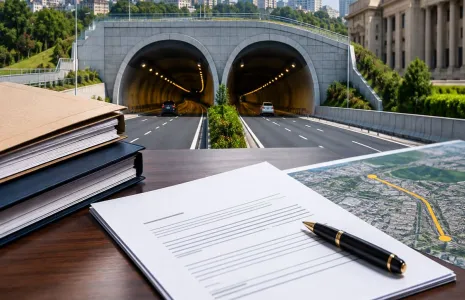
The proposed 16.75 km tunnel road linking KR Puram and Hebbal is estimated at Rs 17,780 crore, or Rs 177.8 billion (bn), according to the project report. The Metro Phase 3A Red Line is costed at Rs 25,999 crore, or Rs 259.99 bn, and shows a lower per kilometre outlay. On a per kilometre basis the tunnel road DPR places construction at Rs 1,061 crore, or Rs 10.61 bn per km, while the Metro DPR cites Rs 687 crore, or Rs 6.87 bn per km. The gap makes the tunnel about one point five times costlier per kilometre than the Metro.

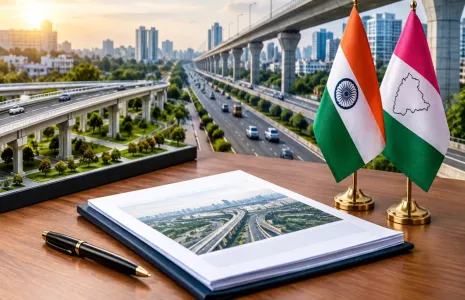
The Metro Phase 3A package spans 37.80 km from Sarjapur to Hebbal with a DPR cost of Rs 25,999 crore, incorporating 23.524 km of elevated viaduct with 17 stations and 14.28 km underground with ten stations, totalling 27 stations. An earlier cabinet approval had placed the phase at Rs 28,405 crore, or Rs 284.05 bn, with a per kilometre figure of Rs 776.3 crore, or Rs 7.763 bn per km, prompting scrutiny from the Centre. The proposed Veterinary College station was later dropped, reducing scope and cost.

The tunnel road DPR sets the project cost at Rs 17,780 crore, or Rs 177.8 bn, and notes a possible cost escalation of up to forty five per cent by completion. If escalation occurs, the DPR projects the per kilometre figure could rise to about Rs 1,538 crore, or Rs 15.38 bn per km. Fare and toll comparisons indicate a maximum Metro fare of Rs 90, whereas the tunnel model anticipates a round trip toll exceeding Rs 600 and restrictions on vehicle categories, signalling a different user profile.

Both schemes serve the same corridor linking south east Bengaluru with northern districts but represent distinct approaches: a high capacity mass transit rail system with 27 stations and a tolled vehicular tunnel aimed at motorised traffic. The DPR comparison highlights trade offs in capital intensity, user costs and projected ridership, and underlines why policymakers will need to weigh long term mobility benefits against construction economics.

"Join industry leaders at RAHSTA Expo, India's premier platform for roads, highways and traffic infrastructure. Register now to explore innovations, network with experts and shape the future of mobility."

The proposed 16.75 km tunnel road linking KR Puram and Hebbal is estimated at Rs 17,780 crore, or Rs 177.8 billion (bn), according to the project report. The Metro Phase 3A Red Line is costed at Rs 25,999 crore, or Rs 259.99 bn, and shows a lower per kilometre outlay. On a per kilometre basis the tunnel road DPR places construction at Rs 1,061 crore, or Rs 10.61 bn per km, while the Metro DPR cites Rs 687 crore, or Rs 6.87 bn per km. The gap makes the tunnel about one point five times costlier per kilometre than the Metro. The Metro Phase 3A package spans 37.80 km from Sarjapur to Hebbal with a DPR cost of Rs 25,999 crore, incorporating 23.524 km of elevated viaduct with 17 stations and 14.28 km underground with ten stations, totalling 27 stations. An earlier cabinet approval had placed the phase at Rs 28,405 crore, or Rs 284.05 bn, with a per kilometre figure of Rs 776.3 crore, or Rs 7.763 bn per km, prompting scrutiny from the Centre. The proposed Veterinary College station was later dropped, reducing scope and cost. The tunnel road DPR sets the project cost at Rs 17,780 crore, or Rs 177.8 bn, and notes a possible cost escalation of up to forty five per cent by completion. If escalation occurs, the DPR projects the per kilometre figure could rise to about Rs 1,538 crore, or Rs 15.38 bn per km. Fare and toll comparisons indicate a maximum Metro fare of Rs 90, whereas the tunnel model anticipates a round trip toll exceeding Rs 600 and restrictions on vehicle categories, signalling a different user profile. Both schemes serve the same corridor linking south east Bengaluru with northern districts but represent distinct approaches: a high capacity mass transit rail system with 27 stations and a tolled vehicular tunnel aimed at motorised traffic. The DPR comparison highlights trade offs in capital intensity, user costs and projected ridership, and underlines why policymakers will need to weigh long term mobility benefits against construction economics.

Next Story
Infrastructure Transport

Uttar Pradesh Accelerates National Highway Projects

Uttar Pradesh Chief Minister Yogi Adityanath met Union Road Transport and Highways Minister Nitin Gadkari to review National Highway and road infrastructure projects. Officials from the National Highways Authority of India presented progress updates and proposals. Ministers directed acceleration of land acquisition, forest clearances, utility shifting and other formalities to expedite delivery. Officials said that since 2014 about 10,204 kilometres of National Highway projects have been awarded and nearly 9,329 kilometres completed, with 606 kilometres approved and 1,010 kilometres completed b..

Next Story
Infrastructure Transport

NHAI Completes Repairs at 33 of 40 Spots Along Gurugram NH-48

The National Highways Authority of India has rectified 33 of 40 deficient locations along an 11km stretch of the Delhi–Gurugram NH-48 corridor, following a joint inspection by the authority, the Municipal Corporation of Gurugram and the Gurugram Metropolitan Development Authority. The audit identified damaged footpaths, crash barriers, inadequate lane markings and poor sanitation at multiple points between Rajiv Chowk and Signature Towers. Repairs and maintenance works have been carried out over May and June as part of the exercise. The report noted broken crash barriers and roadside litteri..

Next Story
Infrastructure Urban

Mankhurd Maharashtra Nagar Flyover To Open By August 2027

The Brihanmumbai Municipal Corporation has said the Mankhurd-Maharashtra Nagar flyover will be operational by August 2027, as part of measures to ease congestion in the eastern suburbs. The structure will provide a direct link from the T Junction on the Sion-Panvel highway to the existing Ghatkopar-Mankhurd Link Road. The T Junction is one of the major traffic choke points in the eastern suburbs and records heavy flows of vehicles travelling to and from Navi Mumbai and Pune. Motorists currently spend more than 15 minutes at the signal during peak periods, according to civic data, prompting the..

Advertisement

Subscribe to Our Newsletter

Get daily newsletters around different themes from Construction world.

STAY CONNECTED

Advertisement

Advertisement

Advertisement