+
UP BJP MLA Proposes 20-Year Traffic Roadmap For Lucknow
ROADS & HIGHWAYS

UP BJP MLA Proposes 20-Year Traffic Roadmap For Lucknow

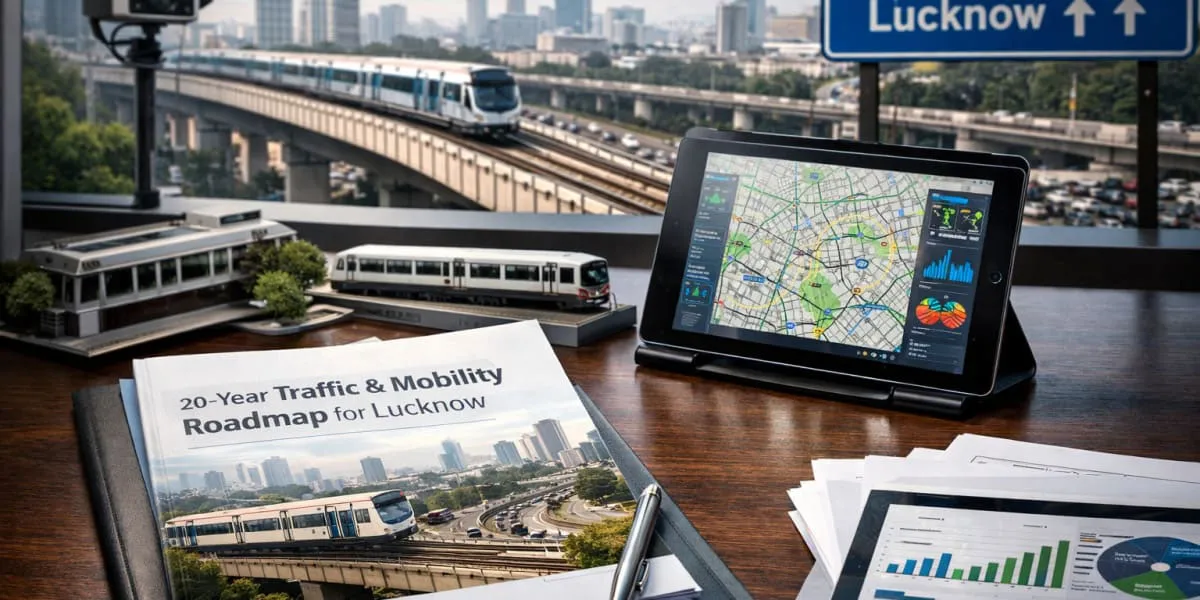
Sarojini Nagar BJP MLA Dr Rajeshwar Singh has submitted a 20-year Integrated Traffic Management and Urban Mobility Roadmap to Chief Minister Yogi Adityanath, proposing a coordinated, technology-driven, multi-departmental strategy to manage Lucknow's future traffic needs. The proposal frames the plan as a blueprint to transform Lucknow into a safe, well organised and accessible metropolis. It recommends shifting from short-term enforcement to a data-based public policy framework suited to rapid expansion.

Citing VAHAN data, the submission notes that by 2025 Lucknow is expected to have around 3.18 million (mn) registered vehicles, with between 120,000 and 150,000 new vehicles being added annually, equivalent to 0.12 mn to 0.15 mn per year. The manuscript argues that this sharp rise has intensified congestion, parking pressure and the risk of road accidents, making long-term systemic planning essential. The roadmap projects that continuing current patterns will strain urban infrastructure and services. It calls for evidence-based forecasting and capacity planning across departments.

A central recommendation is the formation of a multi-department Traffic Management Task Force to broaden governance beyond policing to include the Traffic Police, Urban Development Department, Lucknow Development Authority, Municipal Corporation, Public Works Department, Transport Department, metro authorities and the Smart City Cell. The proposal requests mandatory monthly review meetings to ensure decisions are data-driven, time-bound and accountable. It stresses that institutional coordination and faster execution are required to prevent projects stagnating on paper.

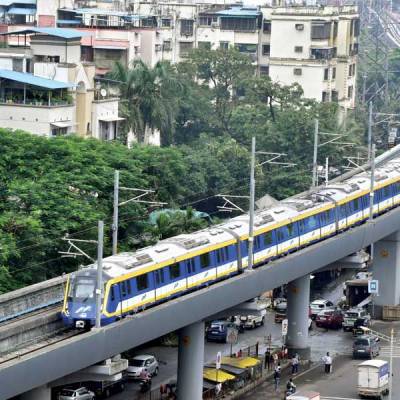
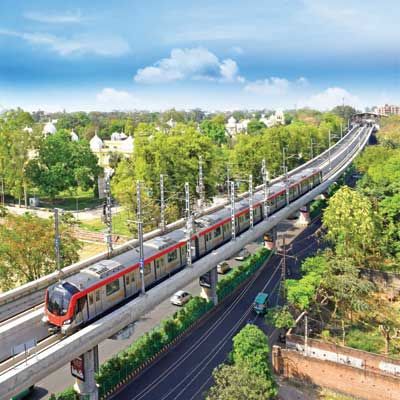
The long-term roadmap prioritises expansion of metro and bus rapid transit networks, deployment of AI-based smart traffic signal systems, scientifically planned vending zones, permanent removal of illegal encroachments, pedestrian-friendly infrastructure and promotion of electric mobility and green transport as pillars of modern urban mobility. The document states that reactive measures are no longer sufficient and that integrated planning and multi-department coordination are essential for sustainable solutions and the city's future readiness.

Sarojini Nagar BJP MLA Dr Rajeshwar Singh has submitted a 20-year Integrated Traffic Management and Urban Mobility Roadmap to Chief Minister Yogi Adityanath, proposing a coordinated, technology-driven, multi-departmental strategy to manage Lucknow's future traffic needs. The proposal frames the plan as a blueprint to transform Lucknow into a safe, well organised and accessible metropolis. It recommends shifting from short-term enforcement to a data-based public policy framework suited to rapid expansion. Citing VAHAN data, the submission notes that by 2025 Lucknow is expected to have around 3.18 million (mn) registered vehicles, with between 120,000 and 150,000 new vehicles being added annually, equivalent to 0.12 mn to 0.15 mn per year. The manuscript argues that this sharp rise has intensified congestion, parking pressure and the risk of road accidents, making long-term systemic planning essential. The roadmap projects that continuing current patterns will strain urban infrastructure and services. It calls for evidence-based forecasting and capacity planning across departments. A central recommendation is the formation of a multi-department Traffic Management Task Force to broaden governance beyond policing to include the Traffic Police, Urban Development Department, Lucknow Development Authority, Municipal Corporation, Public Works Department, Transport Department, metro authorities and the Smart City Cell. The proposal requests mandatory monthly review meetings to ensure decisions are data-driven, time-bound and accountable. It stresses that institutional coordination and faster execution are required to prevent projects stagnating on paper. The long-term roadmap prioritises expansion of metro and bus rapid transit networks, deployment of AI-based smart traffic signal systems, scientifically planned vending zones, permanent removal of illegal encroachments, pedestrian-friendly infrastructure and promotion of electric mobility and green transport as pillars of modern urban mobility. The document states that reactive measures are no longer sufficient and that integrated planning and multi-department coordination are essential for sustainable solutions and the city's future readiness.

Next Story
Building Material

NITI Aayog Unveils Cement Decarbonisation Roadmap

NITI Aayog has released a sector-specific decarbonisation roadmap for cement as part of three green transition reports covering cement, aluminium and MSMEs. The report projects cement production rising to around 2,100 million tonnes by 2070 from 391 million tonnes in 2023, while targeting a reduction in carbon intensity to 0.09–0.13 tCO₂e per tonne. It recommends clinker substitution, refuse-derived fuels, CCUS adoption and carbon trading mechanisms to enable deep decarbonisation. ..

Next Story
Technology

Genesys Launches Advanced GeoRadar System

Genesys International Corporation has launched an advanced Ground Penetrating Radar (GPR) solution from IDS GeoRadar for underground utility mapping in India. The system uses patented Equalised Scrambling Technology (EST) and Wide/Multi-Array Antenna Technology to deliver high-resolution three-dimensional imaging of subsurface infrastructure. The technology enables the detection and mapping of buried assets such as water pipelines, sewer networks, telecom cables and power lines. By providing detailed subsurface insights, the system aims to help urban authorities and infrastructure developers ..

Next Story
Infrastructure Urban

Hindustan Zinc Partners Virginia Tech to Boost Silver Recovery

Hindustan Zinc Limited recently signed a Memorandum of Understanding (MoU) with Virginia Tech to advance research aimed at improving silver recovery across its lead–zinc (Pb–Zn) concentrators. The collaboration will focus on refining flotation techniques and optimising reagent usage to improve concentrate quality and operational efficiency at processing plants.Virginia Tech, based in Blacksburg, Virginia, is globally recognised for its expertise in mining engineering, mineral processing and applied metallurgical research. Through this partnership, Hindustan Zinc will leverage global resear..

Advertisement

Subscribe to Our Newsletter

Get daily newsletters around different themes from Construction world.

STAY CONNECTED

Advertisement

Advertisement

Advertisement

Open In App