

Uttarakhand Pushes Rs 160bn Highway Expansion Plan
ROADS & HIGHWAYS

Uttarakhand Pushes Rs 160bn Highway Expansion Plan

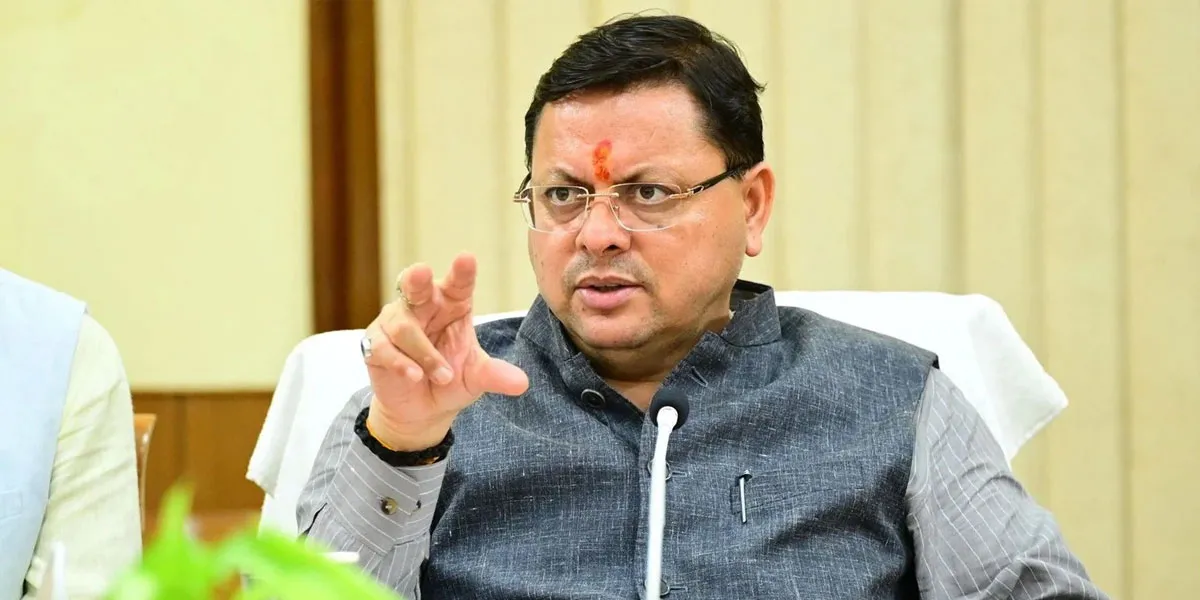
Uttarakhand Chief Minister Pushkar Singh Dhami has highlighted the state’s rapid progress in road infrastructure, attributing it to the guidance of Prime Minister Narendra Modi and sustained support from Union Road Transport and Highways Minister Nitin Gadkari. Speaking at a review meeting on national highway projects at Bharat Mandapam, chaired by Mr Gadkari, the chief minister said Uttarakhand is moving towards a smooth, safe and future-ready road network.

During the meeting, Mr Dhami submitted several major proposals for approval. These include the Rishikesh Bypass (NH-7), a 12.67-km four-lane project estimated at Rs 11.61 billion, featuring elevated stretches over three elephant corridors, a 200-metre bridge over the Chandrabhaga river and two road overbridges. The Almora–Danya–Panar–Ghat Road (NH-309B) involves 76 km of two-lane widening at a cost of Rs 9.88 billion, while the Jyolikot–Khairna–Gairsain–Karnprayag Road (NH-109) covers 235 km to improve hill connectivity. Another proposal is the Almora–Bageshwar–Kanda–Udiyari Bend Road (NH-309A), spanning 84.04 km with an estimated outlay of Rs 10.02 billion, with forest clearance for one package already secured.

The chief minister said the Char Dham Mahamarg Project, valued at Rs 127.69 billion, is transforming pilgrimage routes by making them safer and more accessible. Uttarakhand currently has 3,723 km of national highways, with more than 336 km completed and civil work underway on 193 km of projects costing over Rs 158.9 billion. These roads are improving connectivity to key religious, urban and industrial centres including Haridwar, Rishikesh, Dehradun, Rudrapur, Kashipur, Haldwani and Kathgodam.

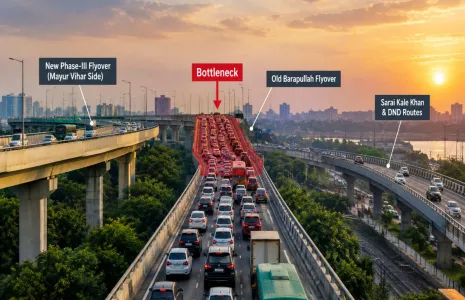
Four-lane corridors such as Kashipur–Sitarganj (77 km), Rudrapur–Kathgodam (50 km) and Haridwar–Nagina (67 km) have strengthened links to industrial zones and tourist destinations. The Delhi–Dehradun corridor includes a nearly 30-km six-lane access-controlled stretch, with tunnels and an 18-km elevated section, built at a cost of Rs 19.95 billion. Urban decongestion projects include the Dehradun Bypass (12 km, Rs 7.16 billion) and Haridwar Bypass (15 km, Rs 16.03 billion).

Mr Dhami emphasised the state’s focus on road safety through black-spot rectification, improved junction access control, modern signage and advanced safety systems. In mountainous regions, continuous operation and maintenance works are being carried out to ensure year-round connectivity. He also outlined future projects, including Mussoorie–Dehradun connectivity (40 km, Rs 40 billion), the Haridwar–Haldwani high-speed corridor (197 km, Rs 100 billion), a new Rishikesh bypass (13 km, Rs 12 billion), the Dehradun ring road and the Lalkuan–Haldwani–Kathgodam bypass.

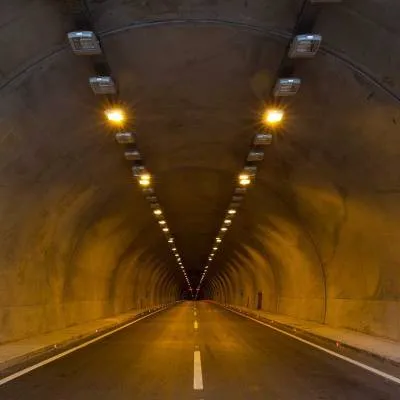
Special measures are being adopted in environmentally sensitive zones such as the Rajaji Tiger Reserve, with elevated roads, wildlife underpasses and minimal land use to balance development and conservation. Civil work on the Silkyara–Polgaon tunnel is nearly 90 per cent complete, with full completion targeted by March 2027.

Mr Gadkari assured that appropriate action would be taken on the proposals and directed officials to complete ongoing projects on time while maintaining quality standards. The meeting was attended by Union Ministers of State Ajay Tamta and Harsh Malhotra, along with senior officials.

Uttarakhand Chief Minister Pushkar Singh Dhami has highlighted the state’s rapid progress in road infrastructure, attributing it to the guidance of Prime Minister Narendra Modi and sustained support from Union Road Transport and Highways Minister Nitin Gadkari. Speaking at a review meeting on national highway projects at Bharat Mandapam, chaired by Mr Gadkari, the chief minister said Uttarakhand is moving towards a smooth, safe and future-ready road network. During the meeting, Mr Dhami submitted several major proposals for approval. These include the Rishikesh Bypass (NH-7), a 12.67-km four-lane project estimated at Rs 11.61 billion, featuring elevated stretches over three elephant corridors, a 200-metre bridge over the Chandrabhaga river and two road overbridges. The Almora–Danya–Panar–Ghat Road (NH-309B) involves 76 km of two-lane widening at a cost of Rs 9.88 billion, while the Jyolikot–Khairna–Gairsain–Karnprayag Road (NH-109) covers 235 km to improve hill connectivity. Another proposal is the Almora–Bageshwar–Kanda–Udiyari Bend Road (NH-309A), spanning 84.04 km with an estimated outlay of Rs 10.02 billion, with forest clearance for one package already secured. The chief minister said the Char Dham Mahamarg Project, valued at Rs 127.69 billion, is transforming pilgrimage routes by making them safer and more accessible. Uttarakhand currently has 3,723 km of national highways, with more than 336 km completed and civil work underway on 193 km of projects costing over Rs 158.9 billion. These roads are improving connectivity to key religious, urban and industrial centres including Haridwar, Rishikesh, Dehradun, Rudrapur, Kashipur, Haldwani and Kathgodam. Four-lane corridors such as Kashipur–Sitarganj (77 km), Rudrapur–Kathgodam (50 km) and Haridwar–Nagina (67 km) have strengthened links to industrial zones and tourist destinations. The Delhi–Dehradun corridor includes a nearly 30-km six-lane access-controlled stretch, with tunnels and an 18-km elevated section, built at a cost of Rs 19.95 billion. Urban decongestion projects include the Dehradun Bypass (12 km, Rs 7.16 billion) and Haridwar Bypass (15 km, Rs 16.03 billion). Mr Dhami emphasised the state’s focus on road safety through black-spot rectification, improved junction access control, modern signage and advanced safety systems. In mountainous regions, continuous operation and maintenance works are being carried out to ensure year-round connectivity. He also outlined future projects, including Mussoorie–Dehradun connectivity (40 km, Rs 40 billion), the Haridwar–Haldwani high-speed corridor (197 km, Rs 100 billion), a new Rishikesh bypass (13 km, Rs 12 billion), the Dehradun ring road and the Lalkuan–Haldwani–Kathgodam bypass. Special measures are being adopted in environmentally sensitive zones such as the Rajaji Tiger Reserve, with elevated roads, wildlife underpasses and minimal land use to balance development and conservation. Civil work on the Silkyara–Polgaon tunnel is nearly 90 per cent complete, with full completion targeted by March 2027. Mr Gadkari assured that appropriate action would be taken on the proposals and directed officials to complete ongoing projects on time while maintaining quality standards. The meeting was attended by Union Ministers of State Ajay Tamta and Harsh Malhotra, along with senior officials.

Next Story
Infrastructure Urban

Mount Invests Rs 250 Cr, Adds PUF & PEB Plants, 400+ Jobs

TUMKUR, Karnataka, January 8, 2025 - Mount Roofing & Structures Private Limited, one of India's  fastest-growing manufacturers in PUF and a leading solutions provider across Pre-Engineered Building  (PEB) and Polycarbonate sheets, simultaneously inaugurated its second fully automated continuous  Sandwich Panel manufacturing line and a new PEB manufacturing plant at its integrated campus in  Tumkur." The milestone expansion, part of a total investment of INR 250 crores, marks a significant  advancement in the company's commitment to engineered performance, manu..

Next Story
Infrastructure Urban

Titan Intech Strengthens UltraLED Push With Global LED Veteran

Titan Intech has announced the induction of global LED industry veteran Su Piow Ko to its Board of Directors, marking a strategic step in strengthening its UltraLED Displays roadmap and building globally competitive LED display solutions from India.The appointment aligns with Titan Intech’s ambition to position India as a hub for advanced, high-quality LED display manufacturing. With an increased focus on UltraLED Displays, the company aims to enhance technical governance, raise manufacturing standards and expand its presence across global markets.Su Piow Ko brings over three decades of inte..

Next Story
Infrastructure Urban

Dun & Bradstreet Flags New Growth Engines in India 2026 Outlook

Dun & Bradstreet has released its India 2026: D&B’s Perspective report, projecting a stable macroeconomic environment underpinned by fresh opportunities for productivity-led and inclusive growth. The report outlines how India’s next growth phase will be driven by digitised logistics, trusted data ecosystems, clean energy and rising city vitality.According to the outlook, India’s GDP growth is expected to reach around 6.6 per cent by FY2027, supported by resilient consumer demand and sustained public investment. Manufacturing is seen entering a new phase, moving beyond scale towar..

Advertisement

Subscribe to Our Newsletter

Get daily newsletters around different themes from Construction world.

STAY CONNECTED

Advertisement

Advertisement

Advertisement

Advertisement

Open In App