Why India needs climate-ready roads now
ROADS & HIGHWAYS

Why India needs climate-ready roads now

Why India Needs Climate-Resilient Roads and Highways That Can Withstand Extreme Weather
By Mr. Sanjay Kumar Sinha, Founder & Managing Director of Chaitanya Projects Consultancy.

For a country the size of India, roads do far more than move vehicles from one place to another. They connect farmers to mandis, small towns to larger economic centres, and remote villages to healthcare, education and employment. In many ways, the country’s development story has unfolded along its roads and highways.

The weather patterns, which were previously predictable, are becoming increasingly unpredictable. The summers are witnessing longer and intense spells of heatwaves. The monsoon, which was previously one of the biggest defining factors of seasons, is no longer as predictable as it used to be. Heavy downpours, in many parts of the country, are becoming increasingly sudden, causing flash floods that overwhelm drainage systems.

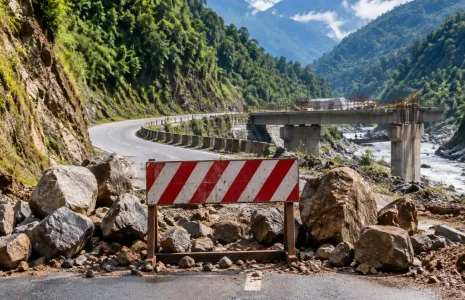
Road infrastructure that was built decades ago for relatively stable climatic conditions is now facing pressures it was never designed to handle. Cracked highways, submerged roads and landslide-damaged mountain routes are becoming more common reminders that climate resilience must now become a central part of infrastructure planning.

A Massive Network Facing New Realities India’s road network is among the largest in the world, stretching across more than 6.6 million kilometres. Over the past decade, the country has made remarkable progress in expanding connectivity. According to the Ministry of Road Transport and Highways, the total network grew by nearly 60 percent between 2013–14 and 2022–23.

This expansion has played a significant role in the strengthening of trade, mobility, and the creation of economic opportunities in these previously isolated areas. However, the sheer size of this expansion has resulted in a huge amount of infrastructure exposed at the mercy of climate change.

The nature of these risks differs considerably across the country. For instance, in the Himalayan states, heavy rainfall, together with topography, is responsible for landslides, which cause damage to roads and bridges. The coastal states, in turn, suffer from different types of risks, including cyclones, storm surges, and saline water, which causes corrosion.

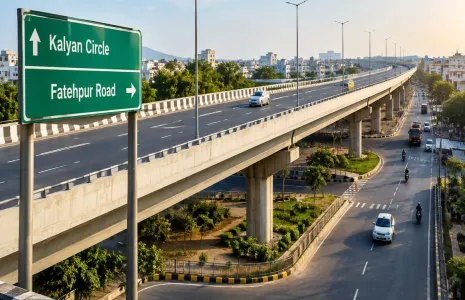
Meanwhile, the northern plains experience extreme temperature swings. The scorching summer sun can cause the roads to swell and crack, and the winter fog reduces visibility and increases the accident rate. In growing urban centres, another problem has become the norm: brief but intense rainfall that flood the roads because the urban drainage systems simply cannot handle the sudden volume of water.

Local Solutions Are Beginning to Emerge
Despite these problems, some states have begun exploring ways of improving the durability of their roads.
For mountainous regions, engineers are trying their best to improve the stability of the slopes using soil nails, retaining structures, and better drainage systems. This is done to prevent landslides, thereby protecting the roads that are crucial for the development of the tourism and agriculture industries.

Flood-prone regions have taken a different approach. In some areas, roads are being redesigned with elevated sections and improved water flow channels so that they remain functional even during heavy rainfall.

Heat is another factor engineers are trying to address. In certain high-temperature corridors, polymer-modified bitumen is increasingly being used in road construction because it performs better under extreme heat and reduces the likelihood of surface cracking.

There are also innovations in the materials used for paving. In many parts of the country, plastic-modified asphalt roads are being built by incorporating processed plastic waste into road surfaces. This technique improves pavement strength while also offering a practical way to recycle plastic that might otherwise end up in landfills.

These efforts may appear small when viewed individually, but collectively they reflect an important shift in thinking. Climate resilience is slowly becoming part of the conversation around infrastructure development.

Greener and Smarter Highways
The idea of resilient roads goes beyond stronger construction materials. It also involves smarter planning and more sustainable design.

One national initiative that reflects this thinking is the Green Highways Policy, which promotes large-scale plantation along highways and medians. Apart from improving the appearance of road corridors, these plantations help stabilise soil and regulate local microclimates around highways.

Construction techniques are changing too. New technologies like warm mix asphalt and cold recycling are being used in certain highway constructions. They help save energy and reduce greenhouse gas emissions during the construction period without compromising the structural properties.

In regions that frequently face cyclones, engineers are also incorporating flexible pavement designs and reinforced road signage so that evacuation routes remain operational during extreme weather events.

Together, these developments suggest that India’s approach to infrastructure is gradually becoming more forward-looking.


The Economic Case for Resilient Roads
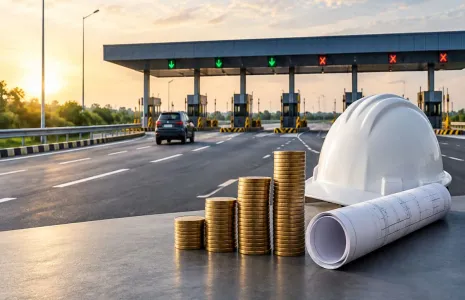
While the cost of building climate-resilient infrastructure may be higher in the initial stages, the long-term benefits cannot be ignored. It has been found that the cost of maintaining such infrastructure can be brought down by 25 to 40 percent.

In addition to the benefits mentioned above, there are several economic benefits that can be obtained from building climate-resilient infrastructure. For instance, the chances of interruptions in the supply chain will be lower when the roads are in good condition. For industries such as agriculture, retail, and e-commerce, even a single damaged highway can cause problems like shipment delays and rising operational costs.

Stronger, climate-ready infrastructure reduces these disruptions. It improves logistics efficiency, protects business continuity and helps maintain economic stability during extreme weather events.

Recognising these challenges, institutions such as the National Institute of Disaster Management, in collaboration with the Ministry of Road Transport and Highways, have begun identifying vulnerable highway stretches across the country. Their work includes climate risk assessments, hazard modelling and the development of adaptation guidelines that could influence how highways are planned and built in the future.

Looking Ahead
India’s roads have always been symbols of movement and progress. They have enabled trade, connected communities and supported countless livelihoods.

But as climate patterns become more unpredictable, the conversation around infrastructure is evolving. The challenge is no longer only about building more roads to meet growing demand. It is about building roads that can withstand the realities of a changing climate.

Investing in climate-resilient highways is therefore not simply an engineering decision. It is a long-term investment in economic stability, mobility and public safety.

For a country that relies so heavily on road connectivity, ensuring that these networks remain strong and reliable will be essential for sustaining growth in the decades ahead."

Why India Needs Climate-Resilient Roads and Highways That Can Withstand Extreme WeatherBy Mr. Sanjay Kumar Sinha, Founder & Managing Director of Chaitanya Projects Consultancy.For a country the size of India, roads do far more than move vehicles from one place to another. They connect farmers to mandis, small towns to larger economic centres, and remote villages to healthcare, education and employment. In many ways, the country’s development story has unfolded along its roads and highways.The weather patterns, which were previously predictable, are becoming increasingly unpredictable. The summers are witnessing longer and intense spells of heatwaves. The monsoon, which was previously one of the biggest defining factors of seasons, is no longer as predictable as it used to be. Heavy downpours, in many parts of the country, are becoming increasingly sudden, causing flash floods that overwhelm drainage systems.Road infrastructure that was built decades ago for relatively stable climatic conditions is now facing pressures it was never designed to handle. Cracked highways, submerged roads and landslide-damaged mountain routes are becoming more common reminders that climate resilience must now become a central part of infrastructure planning.A Massive Network Facing New Realities India’s road network is among the largest in the world, stretching across more than 6.6 million kilometres. Over the past decade, the country has made remarkable progress in expanding connectivity. According to the Ministry of Road Transport and Highways, the total network grew by nearly 60 percent between 2013–14 and 2022–23.This expansion has played a significant role in the strengthening of trade, mobility, and the creation of economic opportunities in these previously isolated areas. However, the sheer size of this expansion has resulted in a huge amount of infrastructure exposed at the mercy of climate change.The nature of these risks differs considerably across the country. For instance, in the Himalayan states, heavy rainfall, together with topography, is responsible for landslides, which cause damage to roads and bridges. The coastal states, in turn, suffer from different types of risks, including cyclones, storm surges, and saline water, which causes corrosion.Meanwhile, the northern plains experience extreme temperature swings. The scorching summer sun can cause the roads to swell and crack, and the winter fog reduces visibility and increases the accident rate. In growing urban centres, another problem has become the norm: brief but intense rainfall that flood the roads because the urban drainage systems simply cannot handle the sudden volume of water.Local Solutions Are Beginning to EmergeDespite these problems, some states have begun exploring ways of improving the durability of their roads.For mountainous regions, engineers are trying their best to improve the stability of the slopes using soil nails, retaining structures, and better drainage systems. This is done to prevent landslides, thereby protecting the roads that are crucial for the development of the tourism and agriculture industries.Flood-prone regions have taken a different approach. In some areas, roads are being redesigned with elevated sections and improved water flow channels so that they remain functional even during heavy rainfall.Heat is another factor engineers are trying to address. In certain high-temperature corridors, polymer-modified bitumen is increasingly being used in road construction because it performs better under extreme heat and reduces the likelihood of surface cracking.There are also innovations in the materials used for paving. In many parts of the country, plastic-modified asphalt roads are being built by incorporating processed plastic waste into road surfaces. This technique improves pavement strength while also offering a practical way to recycle plastic that might otherwise end up in landfills.These efforts may appear small when viewed individually, but collectively they reflect an important shift in thinking. Climate resilience is slowly becoming part of the conversation around infrastructure development.Greener and Smarter HighwaysThe idea of resilient roads goes beyond stronger construction materials. It also involves smarter planning and more sustainable design.One national initiative that reflects this thinking is the Green Highways Policy, which promotes large-scale plantation along highways and medians. Apart from improving the appearance of road corridors, these plantations help stabilise soil and regulate local microclimates around highways.Construction techniques are changing too. New technologies like warm mix asphalt and cold recycling are being used in certain highway constructions. They help save energy and reduce greenhouse gas emissions during the construction period without compromising the structural properties.In regions that frequently face cyclones, engineers are also incorporating flexible pavement designs and reinforced road signage so that evacuation routes remain operational during extreme weather events.Together, these developments suggest that India’s approach to infrastructure is gradually becoming more forward-looking.The Economic Case for Resilient RoadsWhile the cost of building climate-resilient infrastructure may be higher in the initial stages, the long-term benefits cannot be ignored. It has been found that the cost of maintaining such infrastructure can be brought down by 25 to 40 percent.In addition to the benefits mentioned above, there are several economic benefits that can be obtained from building climate-resilient infrastructure. For instance, the chances of interruptions in the supply chain will be lower when the roads are in good condition. For industries such as agriculture, retail, and e-commerce, even a single damaged highway can cause problems like shipment delays and rising operational costs.Stronger, climate-ready infrastructure reduces these disruptions. It improves logistics efficiency, protects business continuity and helps maintain economic stability during extreme weather events.Recognising these challenges, institutions such as the National Institute of Disaster Management, in collaboration with the Ministry of Road Transport and Highways, have begun identifying vulnerable highway stretches across the country. Their work includes climate risk assessments, hazard modelling and the development of adaptation guidelines that could influence how highways are planned and built in the future.Looking AheadIndia’s roads have always been symbols of movement and progress. They have enabled trade, connected communities and supported countless livelihoods.But as climate patterns become more unpredictable, the conversation around infrastructure is evolving. The challenge is no longer only about building more roads to meet growing demand. It is about building roads that can withstand the realities of a changing climate.Investing in climate-resilient highways is therefore not simply an engineering decision. It is a long-term investment in economic stability, mobility and public safety.For a country that relies so heavily on road connectivity, ensuring that these networks remain strong and reliable will be essential for sustaining growth in the decades ahead.

Next Story
Infrastructure Energy

CBL acquires majority stake in Green Marine Energy

CBL International has acquired a 50.5 per cent majority stake in Green Marine Energy Holdings (GMH) through its wholly owned subsidiary under a share sale and purchase agreement. The transaction includes a corporate guarantee from CBL to support payment obligations.GMH operates two complementary businesses in Malaysia. Its first division trades feedstock used in sustainable aviation fuel (SAF) and biofuel production, supported by an established supplier and customer network. Its second division holds licences to supply conventional bunker fuel and biofuels within Malaysian waters.The acquisiti..

Next Story
Real Estate

Mindspace REIT Partners GNFZ for Net-Zero Pathway

Mindspace Business Parks REIT has partnered with Global Network for Zero to transition its entire ~39 million sq ft portfolio to a net-zero certification pathway, marking one of India’s largest portfolio-level decarbonisation initiatives in commercial real estate.The collaboration shifts Mindspace REIT from asset-level certifications to a unified, portfolio-wide approach aligned with global climate benchmarks. It will involve a structured decarbonisation roadmap covering Scope 1, Scope 2 and Scope 3 emissions, alongside centralised energy tracking, renewable energy integration, and stronger ..

Next Story
Technology

TechnoStruct Group Leads BIM Placement Drive in Delhi

TechnoStruct Group conducted a BIM-focused placement drive at Aryabhatt Institute of Technology in collaboration with Delhi Skill and Entrepreneurship University, aimed at strengthening industry-ready talent in the Architecture, Engineering and Construction (AEC) sector.The initiative focused on building awareness around Building Information Modelling (BIM) while enabling direct employment opportunities for trained students. It aligns with national skilling priorities led by NITI Aayog and broader programmes such as Make in India and Build in India.The drive reflects a shift towards developing..

Advertisement

Subscribe to Our Newsletter

Get daily newsletters around different themes from Construction world.

STAY CONNECTED

Advertisement

Advertisement

Advertisement