All 21 CRRC Trains Likely For Bengaluru Metro Green Line
RAILWAYS & METRO RAIL

All 21 CRRC Trains Likely For Bengaluru Metro Green Line

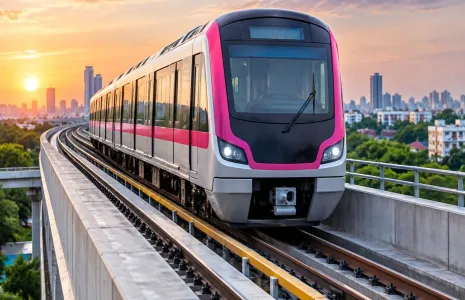
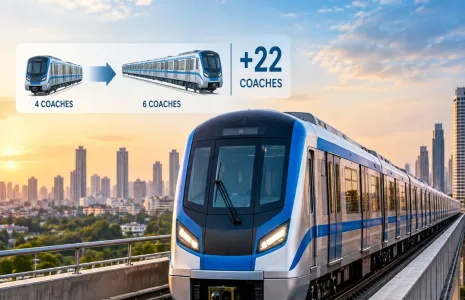
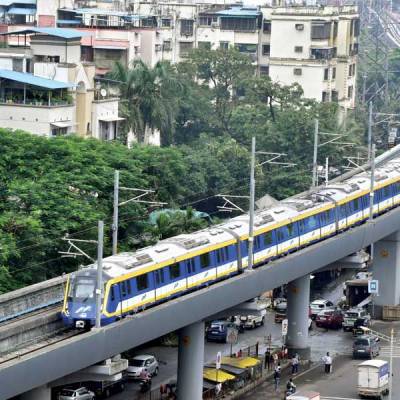
Bengaluru Metro’s 33-km Green Line between Madavara and Silk Institute is likely to receive the entire fleet of 21 six-coach trains supplied by China Railway Rolling Stock Corporation (CRRC), according to sources.

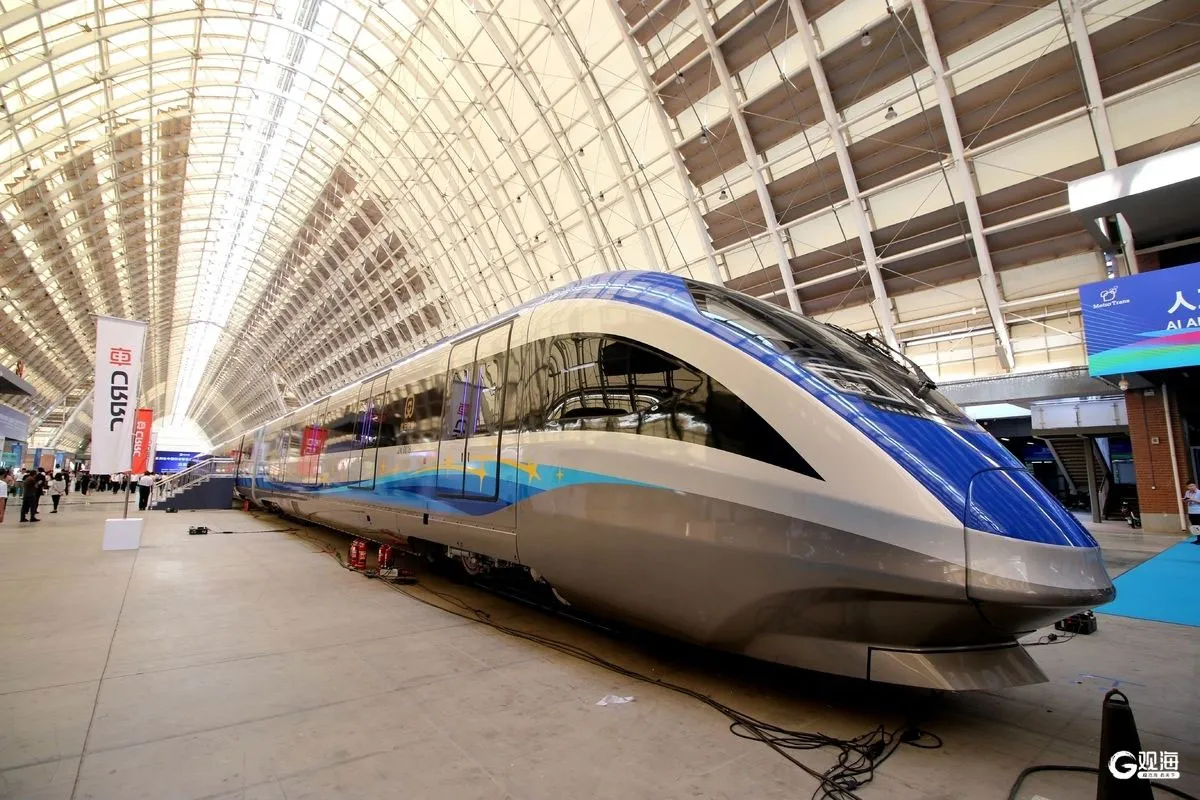
Bangalore Metro Rail Corporation Limited (BMRCL) plans to move existing Phase-1 trains from the Green Line to the 43-km Purple Line, which runs from Whitefield to Challaghatta and is currently the busiest corridor on Namma Metro. The prototype CRRC train, manufactured in China, arrived in Bengaluru in January 2025 and was initially intended for induction on the Purple Line, but is yet to enter revenue service.

A BMRCL official said testing by the Research Designs and Standards Organisation (RDSO) is under way during non-revenue hours between 11:30 pm and 3:30 am on the Green Line, specifically between Jalahalli and Mantri Square Sampige Road stations. The testing is expected to be completed by January 10. Approvals will then be required from RDSO, the Commissioner of Metro Rail Safety, the Chief Commissioner of Railway Safety and the Railway Board, with the target set to secure Railway Board sanction by March 2026.

The remaining 20 six-coach distance-to-go (DTG) trains will be manufactured at Titagarh Rail Systems Limited’s Uttarpara facility in West Bengal. Once approvals are obtained, the prototype train will be deployed on the Green Line, and one existing Green Line train will be shifted to the Purple Line.

For operational efficiency, BMRCL has decided that all CRRC trains will run exclusively on the Green Line. Maintenance facilities, spares and infrastructure will be centralised at the Peenya depot to avoid duplication across depots. As a result, all 21 CRRC trains will operate on the Green Line, while 17 existing Phase-1 trains will be transferred to the Purple Line. Net additions would see the Purple Line gain 17 trains and the Green Line four additional trains.

Officials said testing on the Green Line is limited to about four hours a day for four to five days a week during non-revenue hours, although most major tests have already been completed. Some tests still need to be conducted across the entire stretch.

The DTG trains, similar in design to the Yellow Line’s CBTC-equipped trains, will feature modern passenger amenities such as real-time train location updates and dynamic route maps displayed on LCD screens across doors and gangway panels.

Ideally, Bengaluru Metro requires one train per kilometre to maintain optimal frequencies of three to four minutes. However, the Purple and Green lines currently operate with only 57 trains. Namma Metro’s daily ridership stands at around 1 million passengers, with a sharp increase after connectivity was extended to Whitefield and Electronics City.

In December 2019, CRRC Nanjing Puzhen Co won a contract to supply 216 coaches over 173 weeks. Of these, 126 coaches, comprising 21 six-coach trains, are meant for the Purple and Green lines, while 90 coaches, or 15 six-coach trains, are allocated for the Yellow Line between RV Road and Bommasandra. The project faced repeated delays following the India–China standoff and the Covid-19 pandemic.

Bengaluru Metro’s 33-km Green Line between Madavara and Silk Institute is likely to receive the entire fleet of 21 six-coach trains supplied by China Railway Rolling Stock Corporation (CRRC), according to sources. Bangalore Metro Rail Corporation Limited (BMRCL) plans to move existing Phase-1 trains from the Green Line to the 43-km Purple Line, which runs from Whitefield to Challaghatta and is currently the busiest corridor on Namma Metro. The prototype CRRC train, manufactured in China, arrived in Bengaluru in January 2025 and was initially intended for induction on the Purple Line, but is yet to enter revenue service. A BMRCL official said testing by the Research Designs and Standards Organisation (RDSO) is under way during non-revenue hours between 11:30 pm and 3:30 am on the Green Line, specifically between Jalahalli and Mantri Square Sampige Road stations. The testing is expected to be completed by January 10. Approvals will then be required from RDSO, the Commissioner of Metro Rail Safety, the Chief Commissioner of Railway Safety and the Railway Board, with the target set to secure Railway Board sanction by March 2026. The remaining 20 six-coach distance-to-go (DTG) trains will be manufactured at Titagarh Rail Systems Limited’s Uttarpara facility in West Bengal. Once approvals are obtained, the prototype train will be deployed on the Green Line, and one existing Green Line train will be shifted to the Purple Line. For operational efficiency, BMRCL has decided that all CRRC trains will run exclusively on the Green Line. Maintenance facilities, spares and infrastructure will be centralised at the Peenya depot to avoid duplication across depots. As a result, all 21 CRRC trains will operate on the Green Line, while 17 existing Phase-1 trains will be transferred to the Purple Line. Net additions would see the Purple Line gain 17 trains and the Green Line four additional trains. Officials said testing on the Green Line is limited to about four hours a day for four to five days a week during non-revenue hours, although most major tests have already been completed. Some tests still need to be conducted across the entire stretch. The DTG trains, similar in design to the Yellow Line’s CBTC-equipped trains, will feature modern passenger amenities such as real-time train location updates and dynamic route maps displayed on LCD screens across doors and gangway panels. Ideally, Bengaluru Metro requires one train per kilometre to maintain optimal frequencies of three to four minutes. However, the Purple and Green lines currently operate with only 57 trains. Namma Metro’s daily ridership stands at around 1 million passengers, with a sharp increase after connectivity was extended to Whitefield and Electronics City. In December 2019, CRRC Nanjing Puzhen Co won a contract to supply 216 coaches over 173 weeks. Of these, 126 coaches, comprising 21 six-coach trains, are meant for the Purple and Green lines, while 90 coaches, or 15 six-coach trains, are allocated for the Yellow Line between RV Road and Bommasandra. The project faced repeated delays following the India–China standoff and the Covid-19 pandemic.

Next Story
Infrastructure Urban

Patil Reviews JSJB 2.0 Progress In Water-Stressed Districts

Union Minister of Jal Shakti C R Patil on Tuesday interacted with District Collectors and District Development Officers from 124 over-exploited and critical districts, as identified in the 2024 national groundwater assessment, to review progress on water conservation initiatives. Ministers of State V. Somanna and Dr Raj Bhushan Choudhary also attended the meeting, along with Secretary, Department of Water Resources, River Development and Ganga Rejuvenation, V L Kantha Rao, and senior officials from the Ministries of Jal Shakti and Rural Development. The review centred on Jal Sanchay Jan Bhagi..

Next Story
Infrastructure Urban

Jitendra Singh Inaugurates BRIC Secretariat In New Delhi

Ahead of the New Year, Union Minister of State (Independent Charge) for Science and Technology and Earth Sciences, and Minister of State in the PMO, Personnel, Public Grievances, Pensions, Atomic Energy and Space, Dr Jitendra Singh inaugurated the new Secretariat complex of the Biotechnology Research and Innovation Council (BRIC), calling it a key milestone for strengthening India’s future bioeconomy. The BRIC Secretariat office complex is located on the fourth floor of the NSIC Business Park in New Delhi. It will function as a lean coordinating mechanism to enhance collaboration among BRIC..

Next Story
Infrastructure Energy

PMO Pushes Listing Of Coal India Subsidiaries By 2030

The Prime Minister’s Office (PMO) has directed the Ministry of Coal to map and list all subsidiaries of state-run Coal India Limited (CIL) by 2030, according to sources. The move is aimed at streamlining governance, improving accountability and unlocking value through asset monetisation within the coal public sector undertaking. Coal India Limited accounts for more than 80 per cent of India’s domestic coal production and operates through eight subsidiaries: Eastern Coalfields Limited, Bharat Coking Coal Limited (BCCL), Central Coalfields Limited, Western Coalfields Limited, South Eastern ..

Advertisement

Subscribe to Our Newsletter

Get daily newsletters around different themes from Construction world.

STAY CONNECTED

Advertisement

Advertisement

Advertisement

Advertisement

Open In App